
A circular court below the buildings around it. A carved stone head combining human and animal features. A passage between tall earthen walls. Caral, Chavín and Chan Chan offer very different answers to what an ancient Peruvian city or sacred place can look like. Wari adds a planned city divided into walled sectors. There is plenty here to catch your eye beyond the familiar image of Inca terraces.
These four places make a useful comparison on the page, although they belong to different parts of Peru. Caral is in the Supe Valley near Barranca, Chavín in Áncash, Wari near Ayacucho and Chan Chan near Trujillo. Use the comparison to find a visit that interests you, then turn to the individual destination and route guides to work it into your trip.
Four names on one timeline?
The gap in time is considerable. Caral was an urban centre as far back as the third millennium BCE. Chavín was also a ceremonial and pilgrimage centre long before the Common Era. Wari belongs to the first millennium CE. The Chimú kingdom, with Chan Chan as its capital, reached its height much later, in the fifteenth century, before coming under Inca rule.
“Before the Incas” is a starting point for your curiosity rather than the name of a single people or style. Even the word “before” needs care at Chan Chan: Chimú history continues up to the Inca conquest. Keep the names Caral, Chavín, Wari and Chimú distinct. Differences in a museum collection or a site plan become much easier to follow that way.
Caral: a court below the city
At Caral, the large shapes tell much of the story: superposed platforms, buildings around open spaces and sunken circular courts. The change in level between a court and the structures around it gives you something specific to look for. On a plan, compare a circle with the straight lines of the buildings. The city starts to make sense as more than a collection of separate mounds.
The description published by the Zona Arqueológica Caral also draws attention to the materials. Platforms used stones joined with clay-and-gravel mortar; finishes and paint used different coloured clays. Those outlines represent work on walls, rooms and surfaces. You can approach Caral through the overall urban plan or through the more immediate question of how a platform was put together. Caral: a city long before the Incas
Caral is particularly interesting if you want to understand an early city: how buildings and gathering spaces form a settlement together. The Caral guide explores the place in more detail. Our Lima, Barranca and Caral itinerary gives the archaeological visit its own day, with two nights outside Lima. Use it as a starting point, then arrange the journey and the visit separately. Three days: Lima, Barranca and Caral
Chavín: carved stone and spaces inside
Chavín de Huántar was a ceremonial and pilgrimage centre. Plazas and terraces form part of its exterior; inside is a system of galleries with ventilation and drainage channels. That combination is worth understanding. During an explanation, ask how the open spaces related to the interior ones. A plan can reveal an arrangement that is difficult to grasp from a single viewpoint.
The carved stone combines human and animal features. Look at an image of a cabeza clava, a head carved in stone from Chavín. Then notice the shapes of the eyes, mouth and teeth. The sculpture becomes a subject of its own alongside the architecture, without requiring you to memorise a long list of divine names first. Chavín de Huántar: temples, carvings and galleries
The Museo Nacional Chavín describes a collection that includes tenon heads, ceramics, the Tello Obelisk and pututos: trumpets made from shells. These give you more ways into the subject than walls and galleries alone. The Chavín guide considers the monument and museum alongside each other. Our five-day Huaraz itinerary also treats them as separate choices for the Chavín day. Five days around Huaraz: valley, park and Chavín
Wari: the city behind the walls
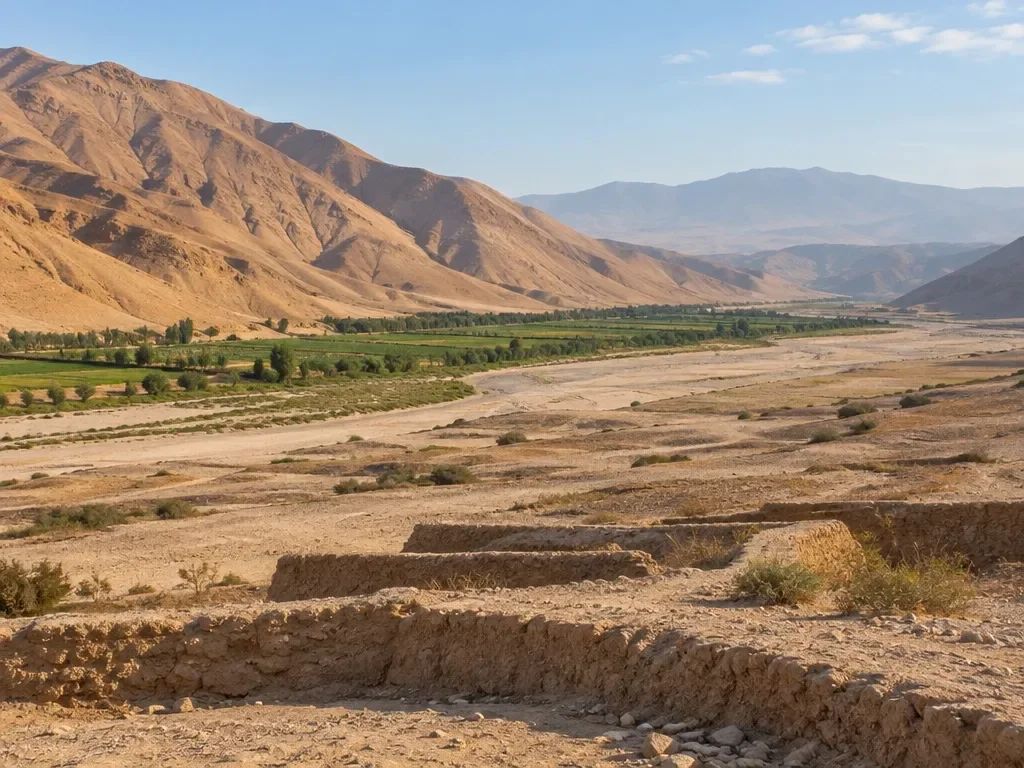
Wari, near Ayacucho, was a planned city. Large walls define sectors containing smaller structures, passageways, courtyards and terraces. Part of the city remains buried. An overview drawing is useful here: it lets you connect a wall to the wider arrangement rather than treating every surviving stretch of stone as an isolated fragment.
Among the rectilinear layouts are structures with D-shaped plans. That contrast makes a good detail to look for on a site map. The MINCETUR inventory also describes stone walls joined with earthen mortar. Following Caral and Chavín, you can look at materials again, this time alongside repeated shapes and the division of a much larger urban space. Wari Archaeological Complex
The site museum describes finds from Wari, including ceramics, stone objects, textiles and monoliths, together with a plan and photographs of sectors. The Wari guide explains the pairing. In our five-day Ayacucho–Quinua–Vilcashuamán itinerary, Wari remains an optional archaeological addition on the day towards Quinua. Decide how much attention to give it alongside the village and the Pampa. 5 days in Ayacucho, Quinua and Vilcashuamán
Chan Chan: a city built in earth
Near Trujillo lies the former capital of the Chimú kingdom. At Chan Chan, high, thick earthen walls enclose large rectangular complexes. Within them were buildings arranged around open spaces, storehouses, reservoirs and funerary platforms. After the stone of Chavín and Wari, your attention turns to earth as a building material and to the sequence of enclosed and open spaces. Chan Chan: the adobe city behind the high walls
Walls also carried decorative reliefs with abstract patterns and human and animal subjects. In an image, choose one repeated motif and follow how it is arranged across a surface. Decoration and urban layout offer different things to examine. A wall detail draws your attention inward; a plan shows how many spaces those walls divide from one another.
The Chan Chan guide distinguishes the Chimú city from the Moche sites in the same travel region. Keep that distinction in mind with our five-day Moche Route too. It brings together visits around Trujillo and Chiclayo, but the route name does not make Chan Chan a Moche city. Start with each place’s own history, then compare the visits. Five days on the Moche Route: Trujillo and Chiclayo
One detail to notice: an opening
An opening in a wall is a useful starting point for discussing a plan. Where would someone approach from, what space lies beyond it, and how far can you see? At Caral, compare the circular court with the platforms; at Chavín, the plaza with the galleries; at Wari or Chan Chan, a passage with its walled sector. You do not have to guess the function yourself. Take the question into the explanation.
Which subject will you take on your trip?
Start with Caral if early urban building interests you, or Chavín for sculpture and ceremonial architecture. Wari invites you to consider city planning alongside excavated objects. Chan Chan puts earthen architecture and the Chimú capital at the centre of the visit. Choose the subject you want to spend time with, then compare it with the region you already hope to explore. One well-chosen visit can leave you with plenty of new questions for the rest of the trip.