
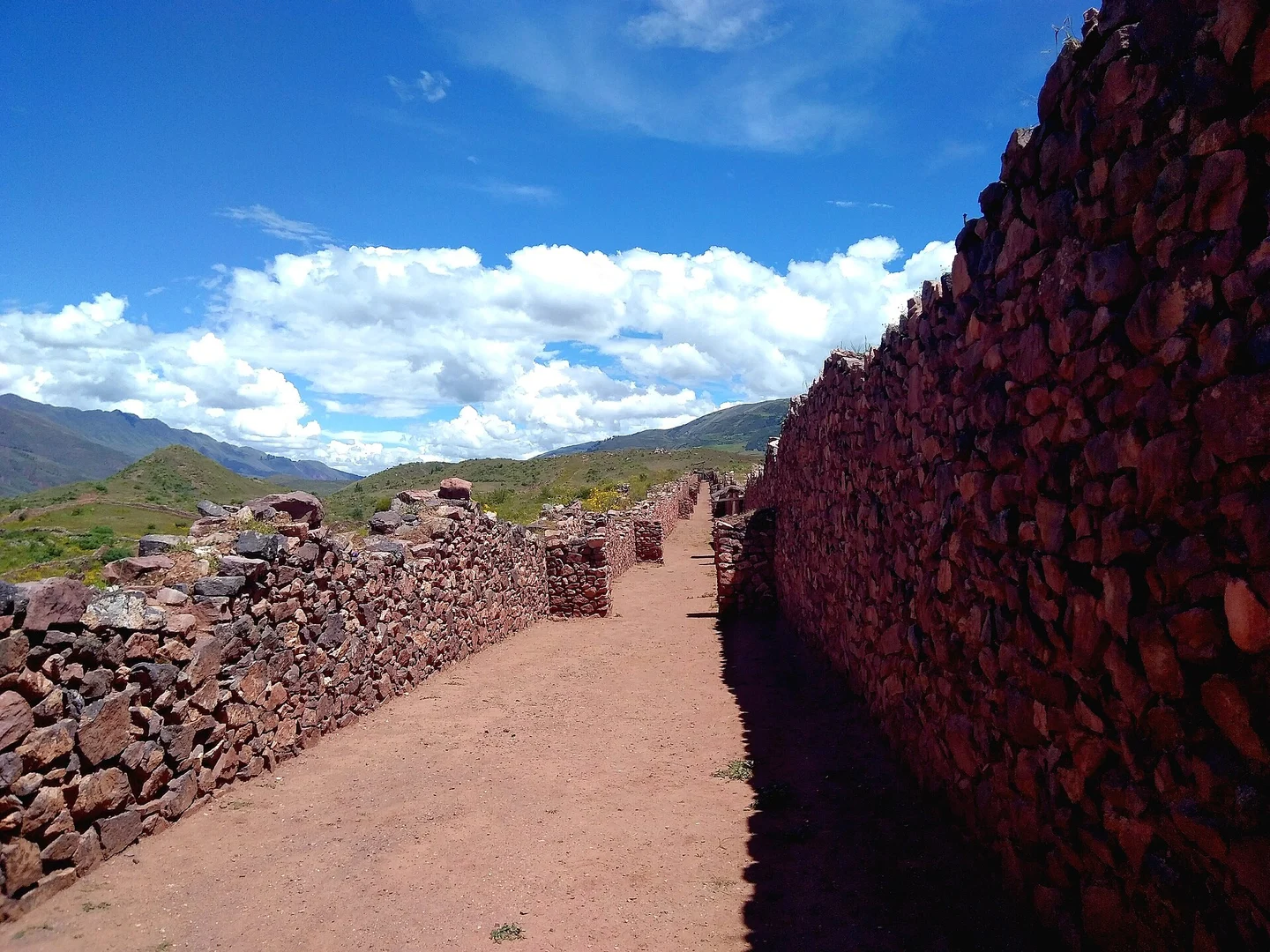
Pikillaqta calls for a different way of looking from an Inca terrace or a decorated church. Its story lies in the arrangement: straight streets, rectangular building groups and walls enclosing large spaces. The city belongs to the Wari culture and shows that the Cusco region formed part of wider political and urban developments before the Incas. Give the plan as much attention as any individual structure.

Read more than the largest wall
The cultural authority describes buildings, squares and courtyards arranged in groups separated by straight streets. Construction used unworked stone, earth and mortar. Many original walls were plastered and some carried painted decoration. The remains seen today therefore differ from the inhabited city’s appearance. A bare wall once belonged to an architecture that also included finishes, colour and use.
The manager also records evidence of buildings with two and even three storeys. It helps imagine the scale without memorising every estimated room or population count. Look at an entrance and the space beyond: how was movement through the city arranged? Where could people gather, and where did walls separate functions? The stones alone do not always answer. Let interpretation supplement what you can see rather than assigning a certain function to every space.
An overview, then one building group
Begin with the broad lines of the city plan, then choose one building group to examine more closely. Follow a street past several spaces and compare the repeated elements. Regularity becomes something visible rather than an abstract term in the interpretation. A photograph along a street may record this more clearly than the widest possible panorama. Understanding it does not require covering a larger portion of the site.
I would leave roughly an hour and a half to two hours for the archaeological visit, excluding the outward and return journeys. That is an editorial planning allowance; your circuit and interests determine how you use it. If you expect only “another ruin”, first consider what this city adds. Its difference from the Inca monuments is the reason to come, rather than a shortcoming to solve with a very quick stop.
If you have already seen Inca architecture, make one deliberate comparison: how are spaces and entrances arranged here? Avoid interpreting every difference as a general contrast between two entire cultures. A building’s original purpose and how much survives also affect what you see. Start small: one street, one boundary and one way of entering a space. That is a stronger basis for comparison than a quick judgement about which civilisation built better.
The exhibition room as a supplement
The ministry’s museum register describes an exhibition room at Pikillaqta with information about the monumental area, maps, photographs and recovered cultural material. It also mentions palaeontological material, a different layer from the Wari architecture outside. Confirm at the entrance whether the room can form part of your visit. Treat it as a supplement to understanding the city plan rather than a reason to reduce the archaeological circuit to a photograph stop.
Pikillaqta is south of Cusco near Lucre in Quispicanchi. The cultural authority distinguishes the approach to the parking area from access into the archaeological site, describing rocky ground and stone steps. Use the actual visitor entrance for transport and arrange the return. If you have specific walking or assistance questions, discuss that chosen circuit. A level arrival at a parking area does not describe the rest of the visit.
Pair it with Tipón without rushing the southern valley
Tipón and Pikillaqta tell different stories. At Tipón, follow the relationship between terraces and Inca water engineering; at Pikillaqta, read a Wari city plan. Choose Pikillaqta alone if society before the Incas is your main question. Combining them works when there is time for that comparison. Leave a generous day from Cusco for visits, a meal and driving rather than forcing both sites and several extra stops into a short morning.
COSITUC places Pikillaqta and Tipón in Circuit II alongside several Cusco visits. This helps you choose between a partial and integral boleto, but does not decide how much should be visited in a day. Compare the ticket with your actual plans and confirm its validity period at purchase. The FAQ excludes guiding and transport. For an organised southern-valley excursion, establish which admissions, interpretation and time on site the arrangement actually includes.
Places to stay in Cusco
Compare the locations of places to stay in Cusco as a base for visiting Pikillaqta.