
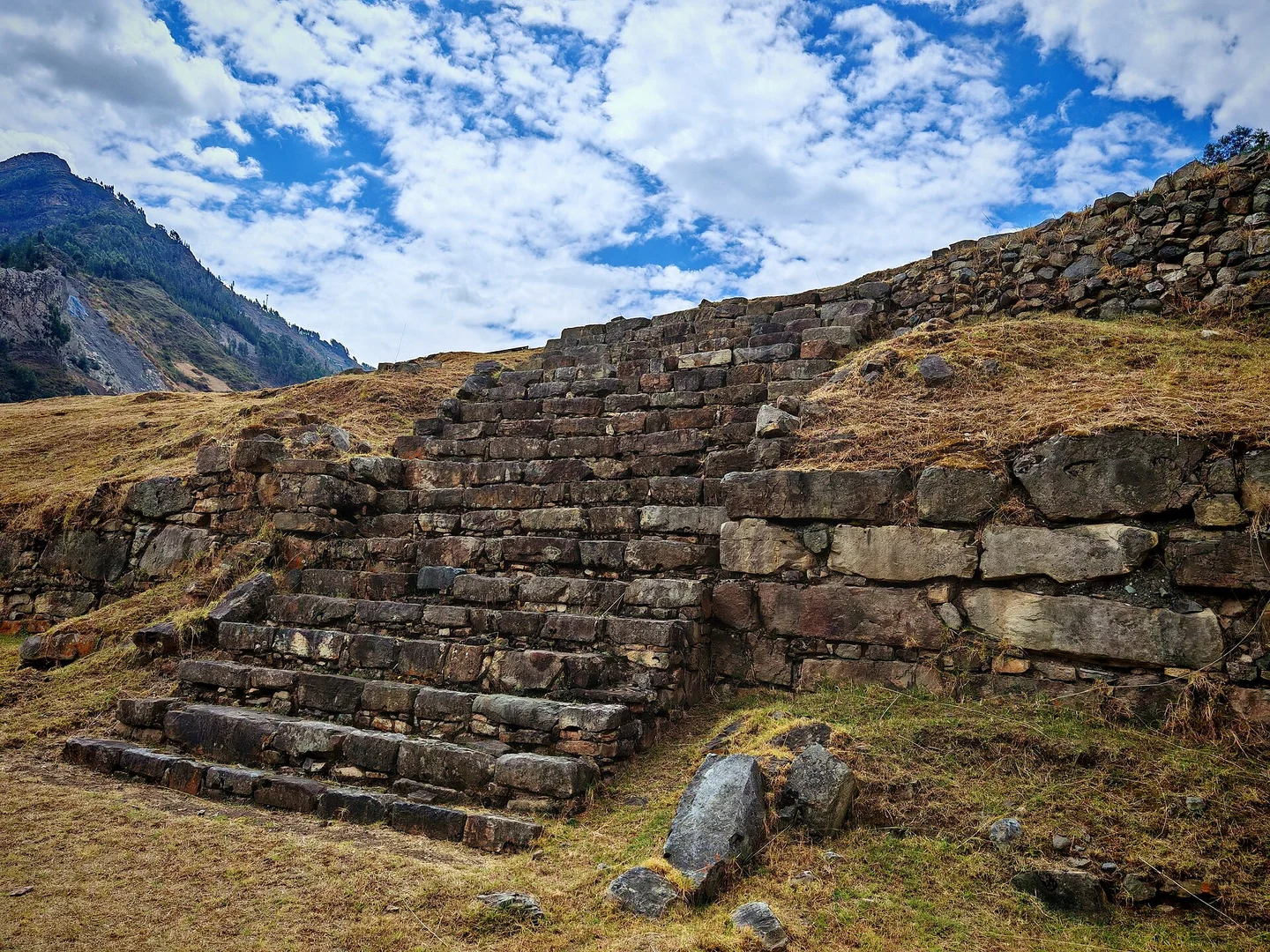

At Chavín de Huántar, stone takes on human and animal features. Heads, fangs and stylised forms belong to a ceremonial centre of terraces, courts and galleries. The buildings tell part of the story, and the carvings contribute another. Allow time to consider what an image represents as well as how many centuries it has survived.
UNESCO describes Chavín as a ceremonial and pilgrimage centre drawing people from different parts of the Andes. It belongs to a much earlier cultural tradition than the Incas. Its scale and complex imagery gain meaning when considered as a gathering and ritual place. Which way did a visitor move, and who saw which image? Those are worthwhile questions for a guided visit.
Look beyond the standing walls
Notice the relationship between open courts and built terraces. Within the buildings lies a system of galleries, with ventilation and drainage channels that UNESCO describes separately. The visible exterior therefore cannot tell the whole story. Have the guide explain how spaces connect, while distinguishing the structure of the monument from the parts actually included in that day’s circuit.
The cabezas clavas are carved stone heads that projected from the walls. They make Chavín’s imagery particularly recognisable. Look for human and animal characteristics together without expecting one fixed explanation for every motif. Archaeological interpretations can coexist; a useful explanation also tells you what supports an interpretation.
Give the Museo Nacional its own place
The Museo Nacional Chavín collection includes cabezas clavas, ceramics, the Tello Obelisk and shell trumpets known as pututos. These make the museum a substantial complement to the monument. Objects and details help explain the larger structures outside. The Ministry of Culture’s current museum record places it on Avenida 17 de Enero, Prolongación Norte. It is a separate visiting location, not a room automatically passed on the monument route. Chavín de Huántar
When arranging the day, check that both monument and museum are included and how much time each receives. If you prefer starting with objects, ask whether the sequence can accommodate that. Others will find the site first more useful. Choose by where you want the explanation, rather than by which sequence appears to tick the most boxes.
A day centred on Chavín
From Huaraz, I would treat Chavín as a separate visiting day. The monument, museum, transfers and a break together make a programme. Adding a mountain lake because it appears on the same regional map does not necessarily improve it. For a longer stay, consider Chavín de Huántar village itself and arrange onward travel separately.
PROMPERÚ’s visitor article dated 16 April 2026 lists Tuesday to Sunday, 09:00–16:00, for the monument, with tickets sold at its entrance. The current museum record gives the same days and hours for the Museo Nacional. Still have each admission listed individually on an excursion confirmation: matching hours for two locations do not establish a combined ticket.
Not every gallery on a plan or in a news report belongs to the visitor circuit. PROMPERÚ describes research areas as closed to the public. Ask which spaces the visit actually covers and how that part of the guiding works. The name of a newly discovered gallery is not a booking option. Base the visit on the current programme rather than an excavation photograph.
Places to stay in Chavín de Huántar
Compare the locations of places to stay in Chavín de Huántar as a base for visiting Chavín.