
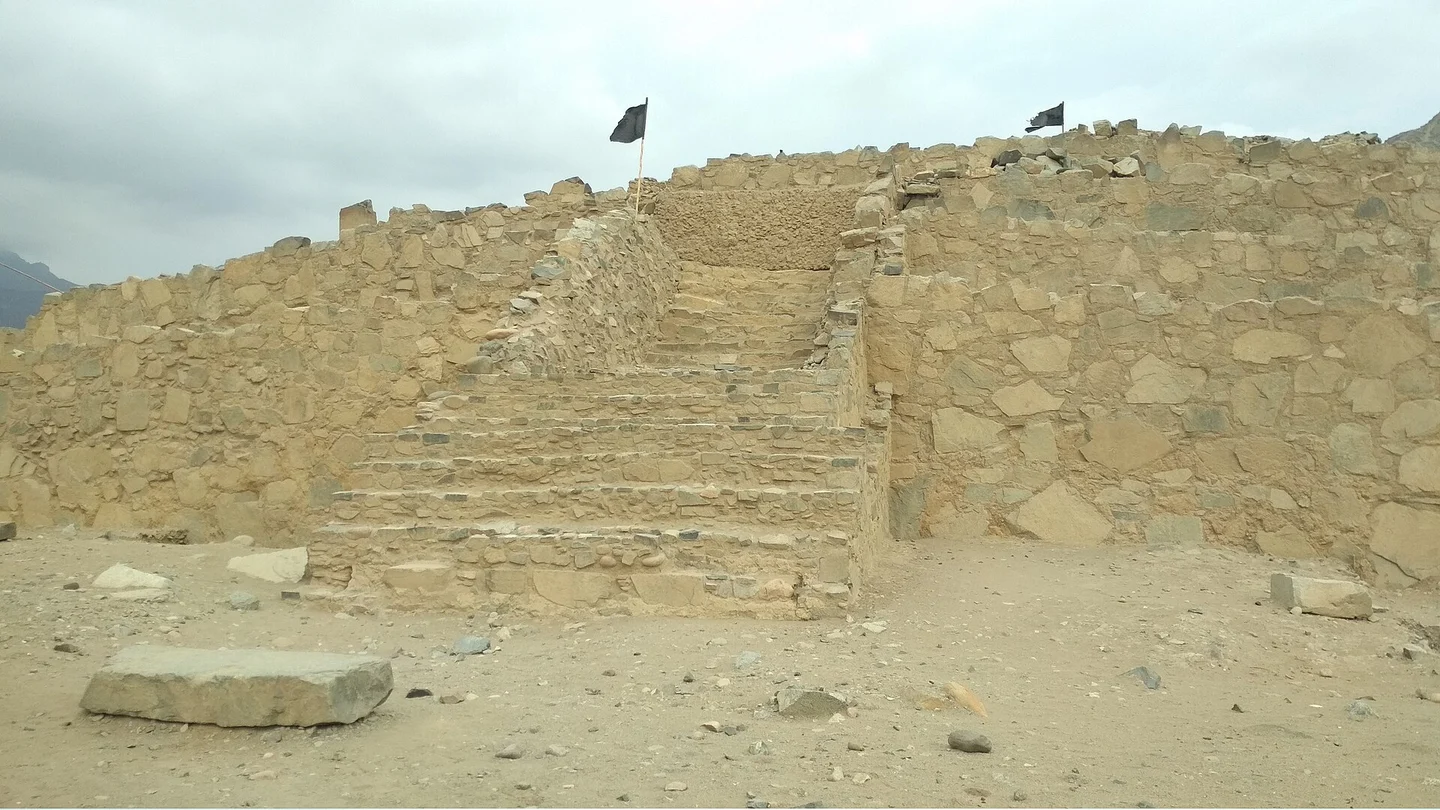

Large platforms stand on a dry terrace above the green Supe Valley. Sunken circular courts, clearly organised spaces and open ground separate the buildings. Caral asks for a different way of looking from a city of intact façades and roofs: its urban plan is read through shapes, changes in level and relationships between structures.
UNESCO places Caral’s development roughly between 3000 and 1800 BC, long before the Incas. Large buildings, ceremonial spaces and an organised city plan show a society capable of bringing people and resources together. Ask not only how old a platform is, but what its position tells us about the way the city was used.
Understanding what you see
The sunken circular courts are a useful starting point. Follow their relationship with the raised buildings and the open spaces between them. This is not a random scattering of stone piles. Repeated forms and the organisation of the site help you imagine the old centre. Have the interpreter distinguish what is visible evidence from what remains an archaeological interpretation. Áspero: fishing and early city life on Peru’s coast
Caral also belongs to a wider valley story. UNESCO places it among other early settlements in the area. Today’s Ruta Caral includes Áspero and Vichama, each a separate location with its own subject. Add one if you want to understand what it contributes to the Caral picture; several names in one day do not automatically create a better understanding.
Interpretation is part of the visit
Zona Arqueológica Caral’s current visitor service says the circuit is visited with a local orientation guide or cultural interpreter authorised by the manager. Groups are limited to ten participants. Arrange more than a car to the entrance: establish how interpretation will be organised, which language is available and which costs your agreement includes.
The manager suggests roughly two hours from arrival to departure. That is a useful planning allowance, not a reason to fit exactly two hours between transfers. Admission runs daily from 09:00 to 16:00, with the site closing at 17:00. The service page recommends entering by about 15:00 for an unhurried visit. Arrange the journey around that distinction.
From Lima or with a coastal overnight stay
You can plan a separate Caral day from Lima or combine the visit with a stay near Barranca. Decide how much travelling back and forth you want before arranging the interpretation. Agree the drop-off and collection points with the driver. Caral is in the Supe Valley; its label on a map is not an agreement about the last part of the journey to visitor reception.
If using a wheelchair or another mobility aid, discuss the complete arrival with the manager. The service page describes an adapted circuit; also ask about the connection from your drop-off, current surfaces and facilities. A listed circuit provides useful information but does not tell you exactly where your particular driver will stop. Match those arrangements together.
Admission for each individual site
Zona Arqueológica Caral publishes admission separately for each archaeological location. A Caral ticket does not automatically cover Áspero or Vichama. The service page describes cash payment at the ticket office and signing the visitors’ register. Bring cash for that described payment. To use another method, ask the manager beforehand what the selected sales point can accept.
Places to stay in Barranca
Compare the locations of places to stay in Barranca as a base for visiting Caral.