Peru was familiar territory for me. Twenty years earlier, I had spent seven months there with friends. This time Lysanne and the children were coming too, bringing plenty of new wishes alongside the old favourites. Sandboarding. Machu Picchu. The jungle. And, if at all possible, seeing a capybara. We had five weeks. It became a trip of dusty shoes, ever more alpaca clothing in our bags and plenty of reasons to stay a little longer.

We began in Lima, followed the desert coast south and headed into the Andes via Arequipa and Colca. Then came Lake Titicaca, a side trip to Copacabana in Bolivia, Cusco and the Sacred Valley. We saved Machu Picchu until after all those other Inca sites. From Cusco we flew to the Amazon; Lima got another whole weekend at the end. Here is how that journey unfolded for us.
Lima: settling in, exploring and seeing friends
After almost twelve hours in the air, even the taxi ride to Miraflores was an attraction. The traffic, the horns, suddenly the ocean beside us. A hotel room with bunk beds received the children’s approval, and up on the roof we toasted our arrival. The next morning we walked via Parque Kennedy and Larcomar along the Malecón to Parque del Amor. The sea below, paragliders above. Twenty years earlier I had been up there myself; this time we watched from the grass.
At Café de la Paz we met up with Mauro and his daughter. Out came Uno, an excellent way to get the children talking. Afterwards we went together to the Circuito Mágico del Agua. Darkness really brought the fountains and coloured projections to life. Miraflores made a lovely first base; we saved Barranco and the historic centre for our final weekend, with our friend and guide Zeze.
Paracas, Huacachina and Nazca: a busy first week
We boarded a Cruz del Sur bus to Paracas. After dropping our bags, it was time for shorts. That afternoon we drove mini-buggies into the reserve: first through ordinary traffic, then onto a sandy track and suddenly into nothing but rolling desert. At Yumaque and Playa Roja we stopped to look around and feel the wind. The red coastline, the sea and that immense empty landscape were beautiful in the late light.
The following morning we sailed to the Islas Ballestas. Pelicans in the harbour, sea lions among the rocks and penguins that were surprisingly hard to spot against all that white bird poo. On the way back we saw a sea turtle. The guide and captain reached for their phones too; apparently this was a special moment for them as well.
That same afternoon we reached Huacachina. It was busy because of Fiestas Patrias, and we changed a prebooked tour after finding out who would actually run it. Through WhatsApp we arranged our own buggy and a lesson on proper sandboards. That did not make the driver go any slower. We tore across the dunes, practised in a board park and watched the sun sink over the sand. Back at Banana Adventure Hostel, ceviche and something cold were exactly what we needed. Sleep was less straightforward: things stayed lively outside for a long time.
From Huacachina we continued to Nazca. Our host Reynaldo helped us get organised. The next day we flew over the lines: spectacular figures below us, plenty of turns in the air. Later Reynaldo took us to the spiral aqueducts at Cantayoc and a viewpoint in the evening light. Then we took our bags to the bus station. At 22:30 the overnight bus to Arequipa set off.
Arequipa and Colca: terraces, volcanoes and condors
The bus seats were spacious, but the bends made for a restless night. Luckily, we could get into our hotel room early in Arequipa. A shower and lunch in Tío Darío’s garden brought our energy back. We walked through Yanahuara, fed alpacas at Mundo Alpaca and wandered along Calle Santa Catalina. The following day brought a city walk, the brightly coloured convent and, later, food served on volcanic stone at Zig Zag. Arequipa gave us two days with plenty to see and taste, without moving our bags again.
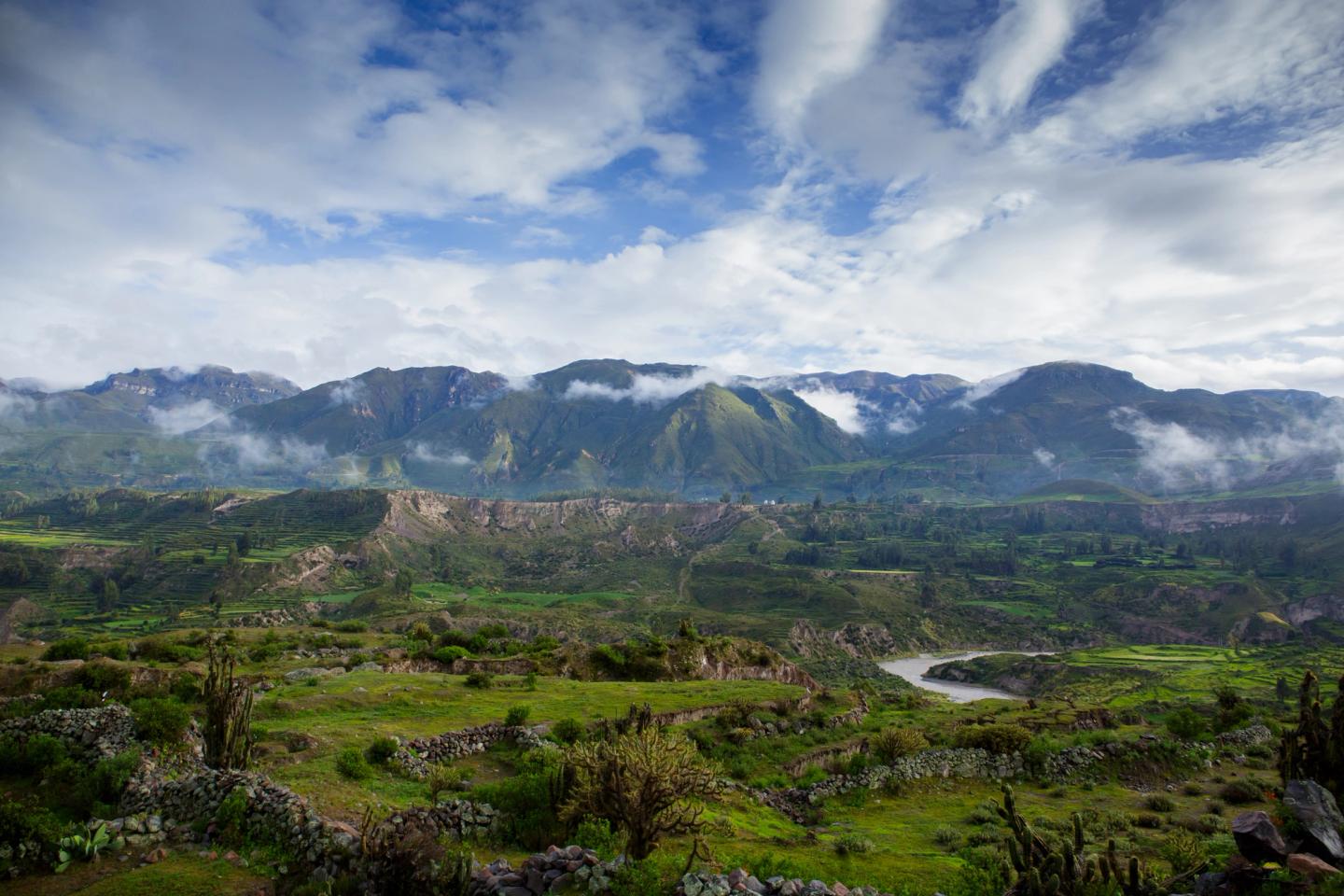
For Colca, Zeze had arranged a private driver. Elvis — not Presley, he immediately told us — drove us around for three days, from Arequipa through Chivay to Puno. Along the way we passed volcanoes and herds of vicuñas. We made a brief stop at the high viewpoint before descending into the valley. At the hotel we could hear the river and spend the evening in the heated pool.
The alarm did go off early the next morning. Through Yanque and the valley’s terraces, we drove to Cruz del Cóndor. Before we had properly reached the viewpoint, the children spotted the first birds. Soon several were gliding through the valley, and one passed right beside us. Back at the hotel came the hot pools. Later we were hanging above the Colca ourselves, attached to a zipline. A pretty successful day.
Titicaca: back to the Fundo, and into Bolivia
We reached Fundo Chincheros near Puno. It was a special return for me, to a place filled with memories from twenty years earlier. The farm now had electricity, hot water and Wi-Fi, but the cosy rooms and sweeping views felt familiar. Zeze and Gabriela were waiting for us. The puppies immediately received plenty of attention; later the fire was lit and the stories began. The following day left time to potter around the farm and go riding.
This part of the journey did not stay within Peru. During our stay in the Titicaca area we also made a side trip to Copacabana on the Bolivian side of Lake Titicaca. The map below shows the main Peruvian route; that border crossing is part of our story, even though it is not drawn on it.
Cusco and the Sacred Valley
We spent three days in Cusco. I walked past the hostal where I had stayed twenty years earlier, then continued with the family to the Plaza de Armas. One morning we started at Mercado Wanchaq. Later, on a city walk, our guide pointed out courtyards and architectural details we had simply walked past. Returning to a familiar city still brought plenty of new discoveries.
Then we headed into the Sacred Valley. One outing took us to Chinchero, the circular terraces of Moray and the salt pans of Maras. We tasted salt and chocolate and, naturally, took some with us. That afternoon we were back in the garden at Kallpawasi. The children painted bags with artist Adriana Iraola while we caught up with Zeze. Those afternoons belonged to the trip just as much as the major sights.
We stopped at a hummingbird sanctuary on the way to Ollantaytambo. Then we dropped our bags at El Albergue, our hotel in the railway station. Behind the entrance was a whole world: a garden, farm, coffee roastery and distillery. We walked into the village and climbed the terraces of the archaeological site. That evening we ate in the station restaurant as trains arrived outside.
Machu Picchu, after all those other Inca sites
We managed to fit in a chocolate workshop before our train journey. Our own bars came along to Aguas Calientes. The journey passed increasingly green mountains; we kept looking through the large train windows. In town we met Fredy, our guide for the next day. The admission tickets had been arranged well ahead, so all that remained that evening was a good meal and an early night.
Our entry was at 11:00, for circuit 2. There was a long queue for the buses down below, but at the top we entered exactly on time. The weather was clear. After Cusco and the Sacred Valley sites, so much came together here: terraces, temples, enormous stones and those steep green mountains behind them. Fredy kept explaining and pointing things out. We took our time looking. It was one of those days when you keep thinking: we are actually standing here.
After the visit we returned to town and took the train to Ollantaytambo. Our main luggage was still at El Albergue. We collected it before the taxi took us to Cusco. It was a long day, ending with a delicious return to Campo restaurant.
The Amazon: outings and a swimming pool
We flew from Cusco to Puerto Maldonado. The heat hit us as we stepped out. We stayed at Enai on the Madre de Dios, with a river view from our room. A hotel with a pool and separately booked excursions worked very well for us. We wanted to see the jungle, but also loved being able to cool off afterwards and sleep in a comfortable room.
For Lago Sandoval we first travelled by boat, then walked through the forest and finally paddled onto the lake in a canoe. The children used a chart to identify the animals they saw. Monkeys in the branches, a caiman by the water, birds making themselves heard. It was dark by the time we returned, and the same forest path became a very different adventure. We had not packed a torch; we would have appreciated one here.
During our stay we walked high among the treetops on the hanging bridges at Inkaterra. The following day we learned to weave baskets and headed out on the water one more time. First came sloths, tucked away high in the trees. But the big wish was still waiting. Then our guide received a message: capybaras spotted. The boat turned around and soon we saw two walking along the riverbank. Mission accomplished.
One last Lima weekend, with plenty of appetite
For our final weekend we flew back to Lima. Zeze came especially for our final weekend, and Gabriela joined us later. While they enjoyed an evening with the children, Lysanne and I went to Central. It had been on our list for a long time. The menu travelled through Peru’s different elevations, with ingredients from places we had visited over the previous weeks. A special way to revisit the journey.
The next day we explored Barranco together. Ceviche at Canta Ranita, browsing stalls, eating ice cream, looking at street art and having a nose around Dédalo. On Sunday we took the bus to the historic centre, where Zeze showed us around, right down into the catacombs of San Francisco. Then more ice cream in Miraflores and one last pisco sour. Lima deserved that second round.
On departure day there was still time for breakfast, last-minute shopping and lunch with our friends before the airport taxi arrived. The following day we were home. Five weeks, and leaving still felt too soon.
Our journey at a glance — summer 2025
- 23–24 July: arrival in Lima and Miraflores.
- 25–28 July: Paracas, Ballestas, Huacachina and Nazca, followed by the overnight bus.
- 29 July–1 August: Arequipa and the Colca Valley.
- 2–8 August: Lake Titicaca area, Fundo Chincheros and the side trip to Bolivia.
- 9–11 August: Cusco.
- 12–15 August: the Sacred Valley, finishing in Ollantaytambo.
- 16–17 August: Aguas Calientes, Machu Picchu and back to Cusco.
- 18–21 August: staying near Puerto Maldonado.
- 22–25 August: Lima and the flight home; home on 26 August.
What would you change for your own trip?
Our coastal days were quite full. Afterwards we more often spent several days in the same place, and at the Fundo the people we were seeing again were a big part of the stay. You do not have to follow that exactly. Without Bolivia, you could spend longer on the Peruvian side of the lake or add days elsewhere. If nature is your main interest, a remote jungle lodge might suit you better than our hotel. And anyone who dislikes sleeping on buses will want a different arrangement for that Nazca–Arequipa night. Use our journey to discover which parts appeal to you; your best memories need not be the same as ours.