
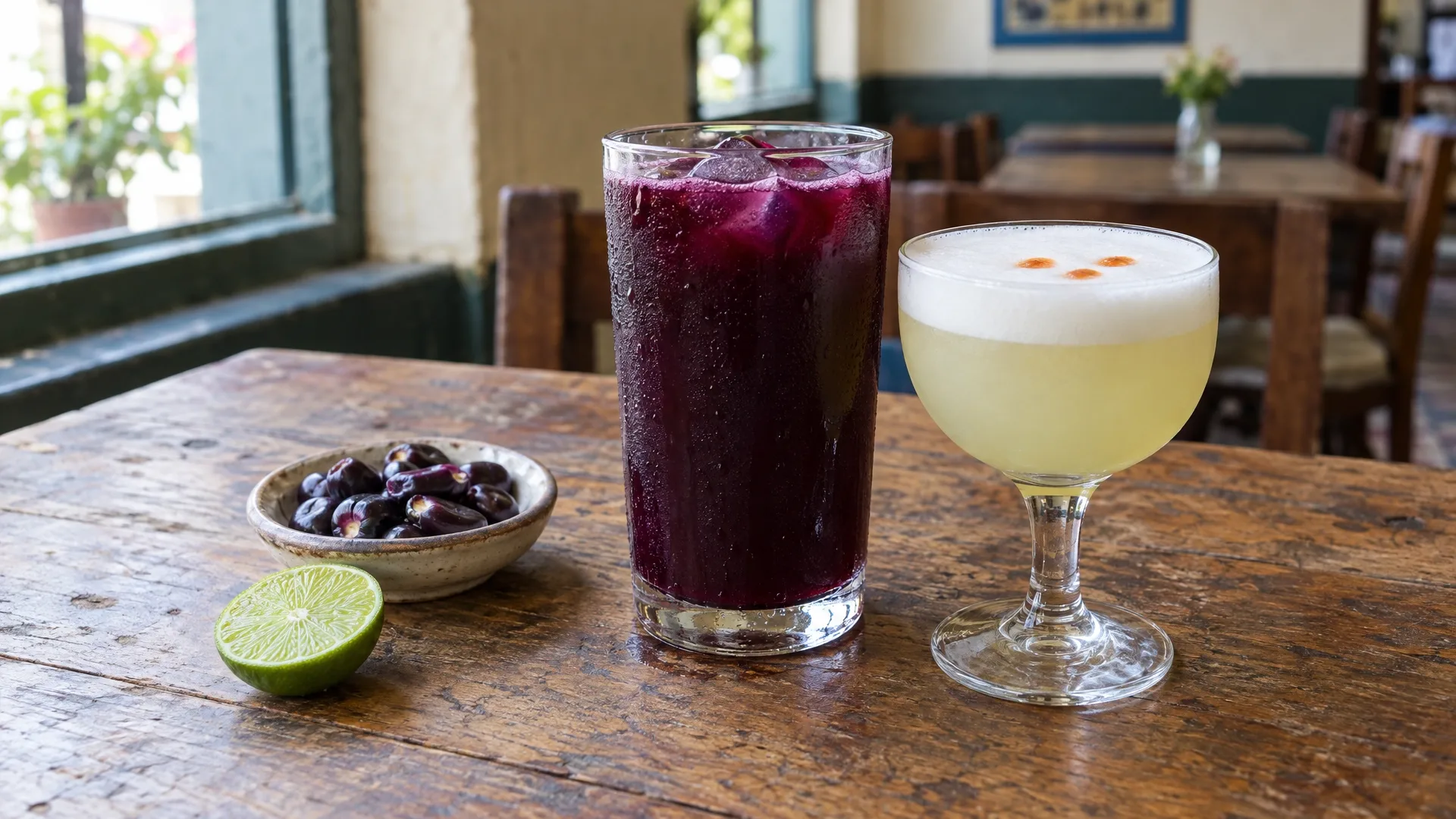
On our last Sunday in Lima, we had one more Pisco Sour in Miraflores. You’ll probably recognise that name on the menu. Chicha takes a little more explaining. Order it with lunch in Lima and you might get a deep-purple maize drink. At a picantería in Arequipa, a jug of fermented chicha might arrive at the table. And then there’s bright yellow Inca Kola.
Chicha morada and chicha de jora
Chicha morada gets its deep-purple colour from maize. The maize is simmered with ingredients such as pineapple peel, cinnamon and cloves. Served cold with a squeeze of lime, it’s a refreshing, spiced drink to have with lunch. Chicha morada is alcohol-free.
Chicha de jora is made by fermenting sprouted maize. It has a tangier taste and contains alcohol. At a traditional restaurant in Arequipa, you might also come across chicha de guiñapo, a local version made with sprouted dark maize. Further north, Magdalena de Cao has its own longer-aged version, chicha de año. Arequipa
Inca Kola, the bright yellow soft drink
You can spot it from the other side of the table. Inca Kola is a sweet, bright yellow soft drink that’s been made in Peru since 1935. A good place to try it is a chifa, a Peruvian-Chinese restaurant. Order a bottle with a plate of arroz chaufa, wok-fried rice. Eating in Lima: what to try in two or three days
Something warm: mate de coca and emoliente
Mate de coca is an infusion of coca leaves you’ll come across in the Andes. Here, mate means a herbal infusion. You might also see mate de muña on the menu, made with a mint-like Andean herb.
You may spot emoliente at a street stall, particularly in the morning or evening. It’s a hot drink made with toasted barley, linseed and herbs. Each vendor has their own recipe.
Pisco Sour, Chilcano and Colca Sour
A Pisco Sour starts with pisco, a grape spirit. Lime brings the sharpness, sugar syrup rounds it out and egg white gives it a foamy top. If you’d like something fizzy, try a Chilcano. It mixes pisco with ginger ale, often with lime and a few drops of bitters. If you’d like to taste pisco itself, a bodega near Ica is a good place to learn about the grapes and how they’re distilled. Ica
In the Colca Valley, look out for a Colca Sour. Its tartness comes from sancayo, the fruit of an Andean cactus. Willari in Yanque also serves sancayo juice on its own, so you can try the fruit without the pisco. Arequipa and the Colca Valley
Our pick in Ollantaytambo is Matacuy, a herbal drink made with a sugarcane spirit. The recipe started with plants from the garden at El Albergue, behind the station. That’s also where you’ll find El Herbario, the original home of Destilería Andina. Ollantaytambo
Fruit juice from the Amazon
You’ll see different names around Tarapoto. Jugo de cocona is juice made from the cocona fruit. Aguajina is made with aguaje, the fruit of a palm. If you order a juane, rice and chicken wrapped in a leaf, it’s a good chance to try a juice you rarely see on the menu back home. Tarapoto