
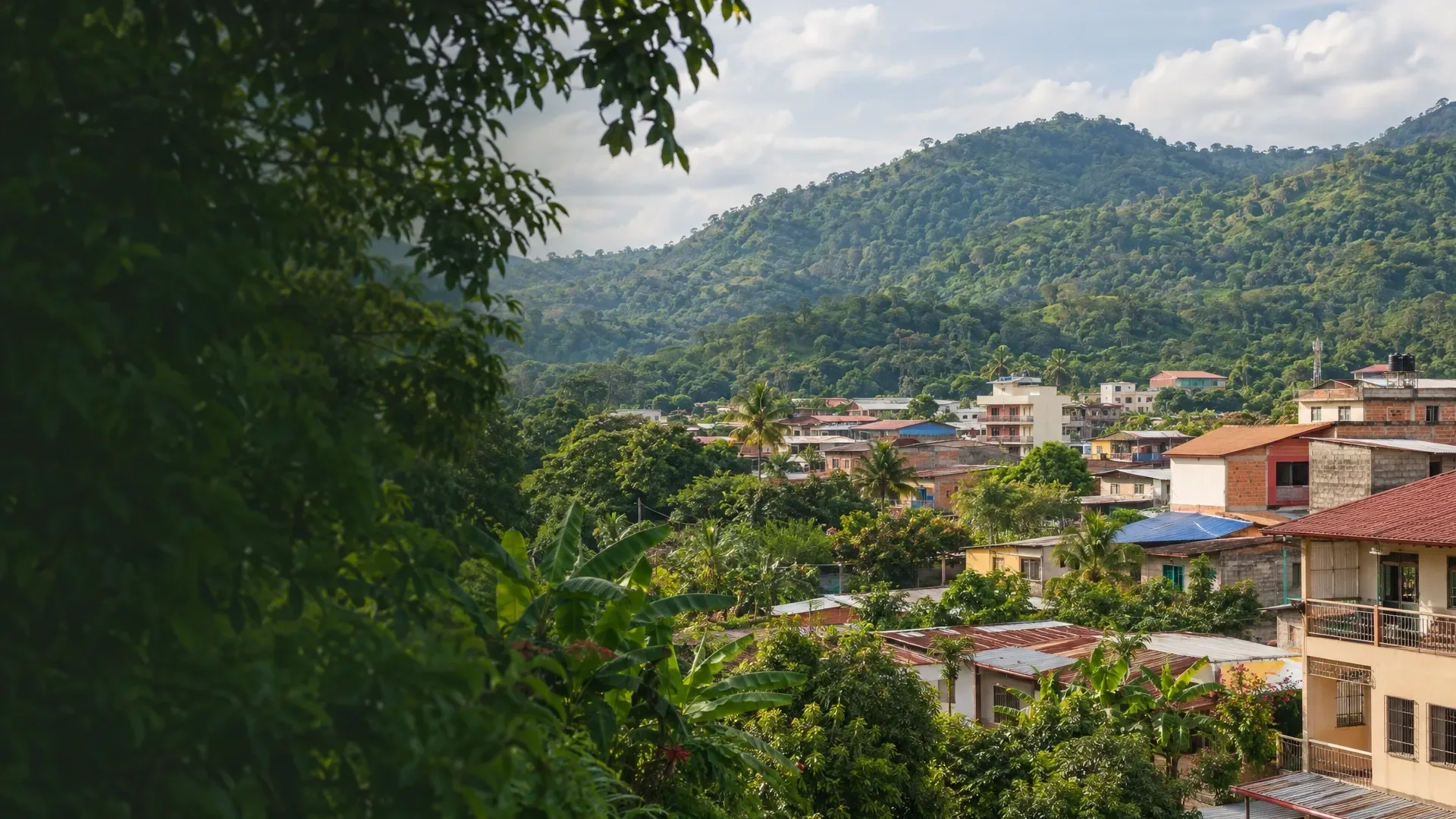
Tarapoto, a city among green hills
Tarapoto sits among the green hills of San Martín, in northeastern Peru. It is a city with hotels and places to eat, in a region where coffee, cacao and bananas are grown. The forest lies beyond the built-up area; in town, you have the services that make independent travel possible. That combination is part of Tarapoto’s appeal: waterfalls and nearby towns to explore, without packing your bags again for every outing.
Food gives a stay here its own character, too. Amazonian menus feature plantain, cassava, rice parcels and fruits such as cocona. The city need not be just somewhere to sleep between excursions. Choosing a meal, trying something unfamiliar and having no plans afterwards deserves a little time of its own.
Juane, tacacho and a glass of cocona juice
A juane is a parcel of rice and chicken wrapped in a leaf. Tacacho is made from plantain and may be served with cecina, dried meat, or chicharrón. Inchicapi is a soup with chicken, peanuts, coriander and cassava. For a drink, look out for cocona juice or aguajina, made from aguaje fruit. These dishes and ingredients belong to the wider cuisine of the Peruvian Amazon, which includes San Martín.
Ahuashiyacu: through the forest to the waterfall
Ahuashiyacu lies along the road towards Yurimaguas, in the Cordillera Escalera protected area. From the entrance, a path leads through forest with ferns, mosses and bromeliads. The waterfall is the destination, but the walk there makes this more than a quick stop at a viewpoint. Leave time to notice the plants along the path, too.
Access may be restricted after heavy rain. Before setting off, ask whether the path is open and what rules apply at the water that day; do not count on being able to swim. If you arrange your own transport, sort out the return journey too. With a tour, the useful question is how much time you actually get there: after pickups and driving, how long is left to walk and enjoy the place?
Lamas and the craftspeople of Wayku
Lamas is home to El Wayku, a Kichwa community. Pottery and textiles offer a way to learn more about the place. At the Llutakuna Wasi workshop, Manuela Amasifuen Sangama makes ceramics, and textile products are also available. Pieces are displayed at the front, with the working area behind. If you are interested in how they are made, ask whether someone can explain the process during your visit.
Arrange a visit to the workshop in advance if you are going specifically for it: it may be closed when the craftswoman is away at a fair. Visiting Wayku does not mean homes or workshops are automatically open to visitors. Ask permission before photographing people and their work.
Laguna Azul is by Sauce
For Laguna Azul, head to Sauce. MINCETUR describes a route via Puerto López with a ferry crossing of the Huallaga, followed by another stretch overland. Before setting off, check which route and crossing are being used on the day you travel. The lake is not a quick detour from central Tarapoto. You can take a boat trip or stay by the lake. When comparing day trips, check how much time you will have by the water and what the boat trip includes; with a longer stay, Sauce becomes a destination in its own right.
How it fits into a journey
Plan the Tarapoto nights and outings first. Then decide whether Moyobamba gets enough extra time to justify moving.
Places to stay in Tarapoto
Compare the locations of places to stay in and around Tarapoto.
Where is it?
Tarapoto and the surrounding area.