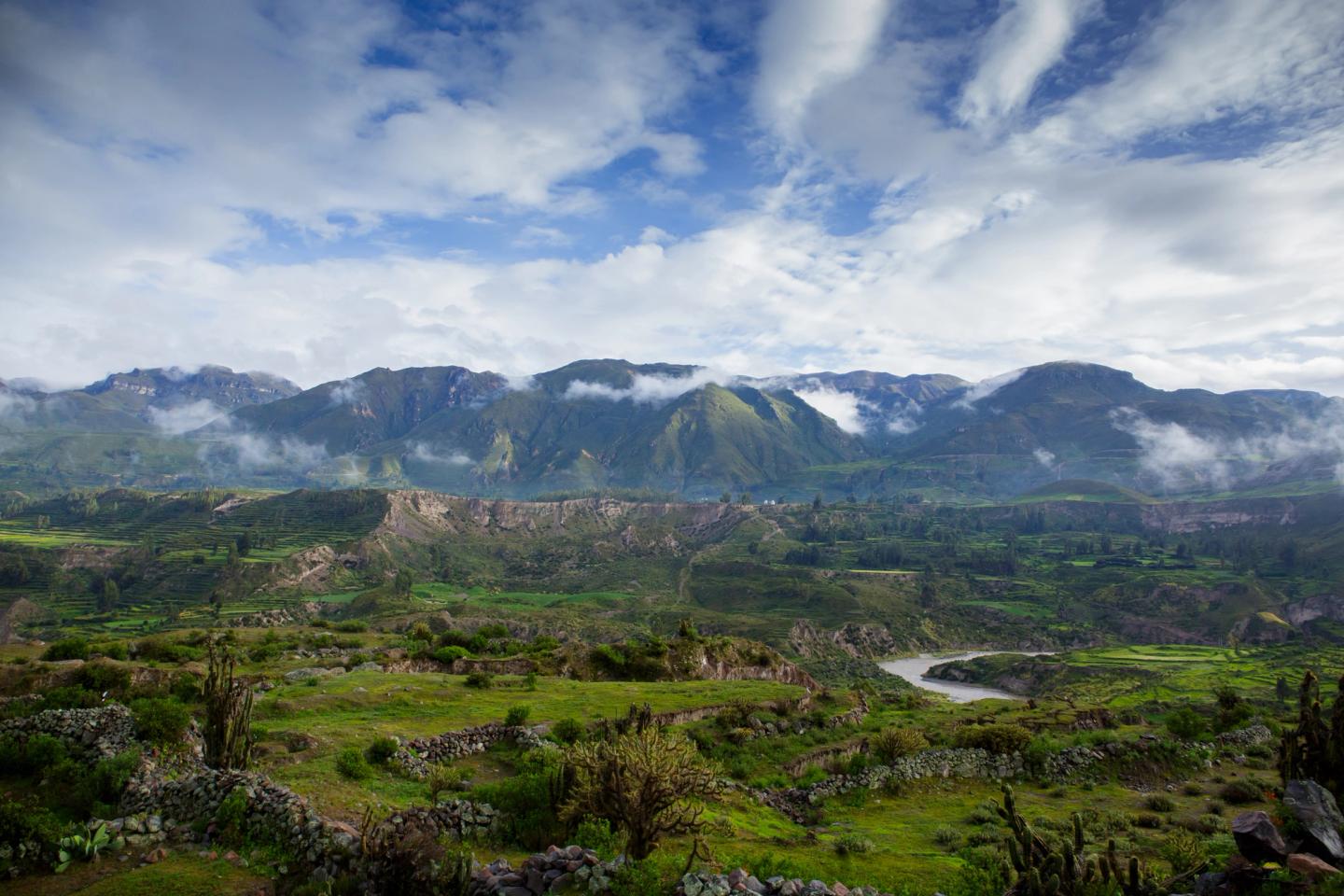

Arequipa and Colca share a volcanic mountain landscape but reveal it in different ways. In the city, pale sillar becomes façades, arches and courtyards. In the Colca Valley, fields form terraces along the slopes, with villages above the river. Farther on, the view opens into the canyon: rock walls, a winding river and sometimes a condor overhead.
Colca is also an inhabited, cultivated landscape. The history of Collagua and Cabana communities continues through farming, villages and clothing. Yanque has an elaborate church façade and a square that offers a glimpse of village life; Chivay and Cabanaconde play different roles in a valley visit. The famous condor stop is one part of that larger story.
Arequipa: a city visit in its own right
Arequipa's historic centre brings European building forms together with Indigenous construction and decoration techniques. Its volcanic sillar is not only white: pink stone exists too. Look at the carved ornament on La Compañía and the scale of the Santa Catalina monastery complex. The city deserves more than being somewhere to join a Colca excursion.
If you want to explore interiors, eat in the city and walk through its neighbourhoods, give those visits their own days. Time in the valley does not replace an afternoon in Arequipa. Our city guide covers its monasteries, market, districts and picanterías; here the focus is on what changes beyond the city.
Farming on the slopes
The agricultural terraces on both sides of the Colca River connect farming with the management of soil and water. Their lines follow the slopes, with settlements and routes between cultivated areas. Look beyond the distant mountain wall: smaller features nearby show how people use this landscape. Fields remain workplaces, so keep to public routes and ask before entering farmland.
Chivay, Yanque and Cabanaconde offer different stays
Chivay: a starting point for the valley
On routes from Arequipa, Chivay is an important arrival and departure point for village visits. Staying here fits a trip focused on several valley destinations and arranging transport between them. Do not make Chivay just a breakfast stop: spend some time in the square and find a meal before moving on.
Yanque: a church façade and flavours of its own
The Inmaculada Concepción church is a reason to stop in Yanque. Its decorated façade brings different architectural traditions together. The village also has a food identity of its own, with dishes called convido, p'esqe and picante de olluco. A village walk and a meal make a different kind of stay from driving to one viewpoint after another.
The tourism inventory names chicha yanqueña as a village speciality. Lunch here fits well between visiting the church and looking at the terraces, leaving time to sit in the square too.
Cabanaconde: the village beside the walking routes
Routes towards Sangalle and Llahuar in the canyon begin around Cabanaconde, making it a different base from Chivay. If you are considering a descent, the exact route matters: sleeping arrangements and travel are different from a trip along villages and viewpoints. Include the climb out of the canyon in your walking plan too.
Pachamama in Cabanaconde lists wood-fired pizzas, alpaca dishes and vegetarian options on its own restaurant page. It is a specific dining option in the village, including for visitors staying without a trekking package.
Cruz del Cóndor: a view without a canyon descent
Cruz del Cóndor lies on the route through villages on the river's left bank. The viewpoint reveals the canyon's depth and is associated with watching condors. Visiting it does not require walking down to the river. Take time to look even if no bird appears in front of your camera: wildlife does not follow your departure schedule.
Across the river
Not every village lies on the same through-route. Coporaque, Ichupampa, Lari and Madrigal belong to a different bank-side route from Yanque, Maca and Cabanaconde. Put your accommodation and intended visits on the same map. Places that appear close can have different access routes. Booking somewhere labelled simply ‘Colca’ is not precise enough.
Choose the kind of Colca visit you want
- Villages and landscape: consider staying around Chivay or Yanque and build a day around a village visit, a meal and a viewpoint. Discuss the transport needed for those choices.
- Into the canyon: start with a specific walking proposal from Cabanaconde. Have the descent, ascent, terrain, overnight stops and return explained before deciding.
- The other bank: choose somewhere such as Coporaque deliberately and organise visits around that location, rather than copying an itinerary from across the river.
For transport from Arequipa, confirm where you will actually be dropped off and where the return journey starts. For walks, current trail and crossing conditions matter; ask about the exact route. If you intend to travel onwards after Colca, agree the finishing point before booking accommodation and onward transport. No single standard itinerary describes a city visit, a village circuit and a canyon trek at once.
Do you have to trek to enjoy Colca?
No. Terraces, villages, Yanque's church and canyon views give a visit substance without descending. Choose a few villages along the same bank and leave time for a meal along the way. If walking is your priority, organise your stay around the canyon route you have chosen.