
A little clay church on a tiled roof in Quinua. A wooden box filled with painted figures in Ayacucho. A large tinaja from Wayku in Lamas, made to hold water or chicha. And on Taquile, a knitted hat alongside a woven belt. Four very different ways of making objects that have a place in people’s lives. Their uses give you a reason to look beyond colour and size.
Ayacucho and Quinua can be explored within the same regional trip. Lamas belongs to San Martín, while Taquile is on Lake Titicaca in Puno. This guide puts their crafts alongside each other so you can explore the differences. Take one subject with you: how a maker fits a story inside a box, how a pot’s shape relates to its use, or how thread becomes a pattern.
Quinua: from a roof-top church to a musician
The ceramic churches are part of Quinua’s village scene: tiled roofs topped by a small church, with cobbled streets between the houses. Architecture and craft sit close together here. Look at the proportions of a miniature. What has its maker emphasised to make a small object recognisable as a church? The towers and the arrangement of the front already give you something to pause over.
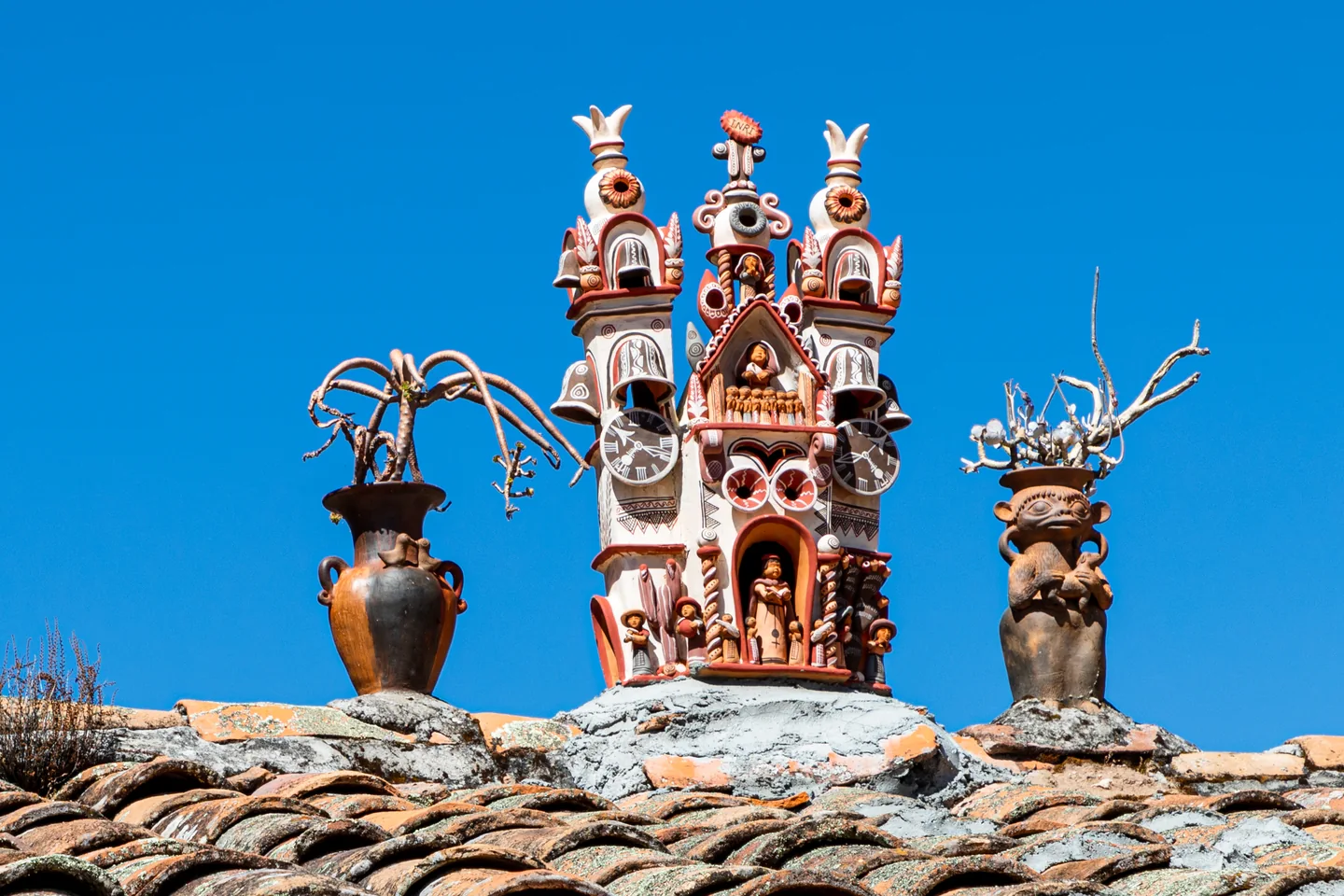

The repertoire is wider than churches. Quinua’s description includes little bulls, musicians, nativity scenes, religious subjects and everyday life, as well as useful household objects. A musician figure and a jug ask different things of their maker. With one, you can follow posture and expression; with the other, the body, neck and opening. Compare two different pieces rather than looking only for the largest.
Knowledge passed down around this pottery includes domestic uses, rituals and celebrations. If a piece catches your attention, ask what it is made for. Is it a practical form, a scene from an event, or this maker’s own variation? The Quinua village guide offers more background. Keep the pottery village distinct from the Pampa de Ayacucho, the separate historic landscape outside it. Quinua
Ayacucho: a story with doors
An Ayacucho retablo uses a wooden box as the setting for small figures. Doors, painted decoration and the placement of the characters all play a part. Look across the whole scene first, then choose one figure. What is happening, who stands where, and how has the maker divided the available space? Even a small box can hold your attention for quite a while.
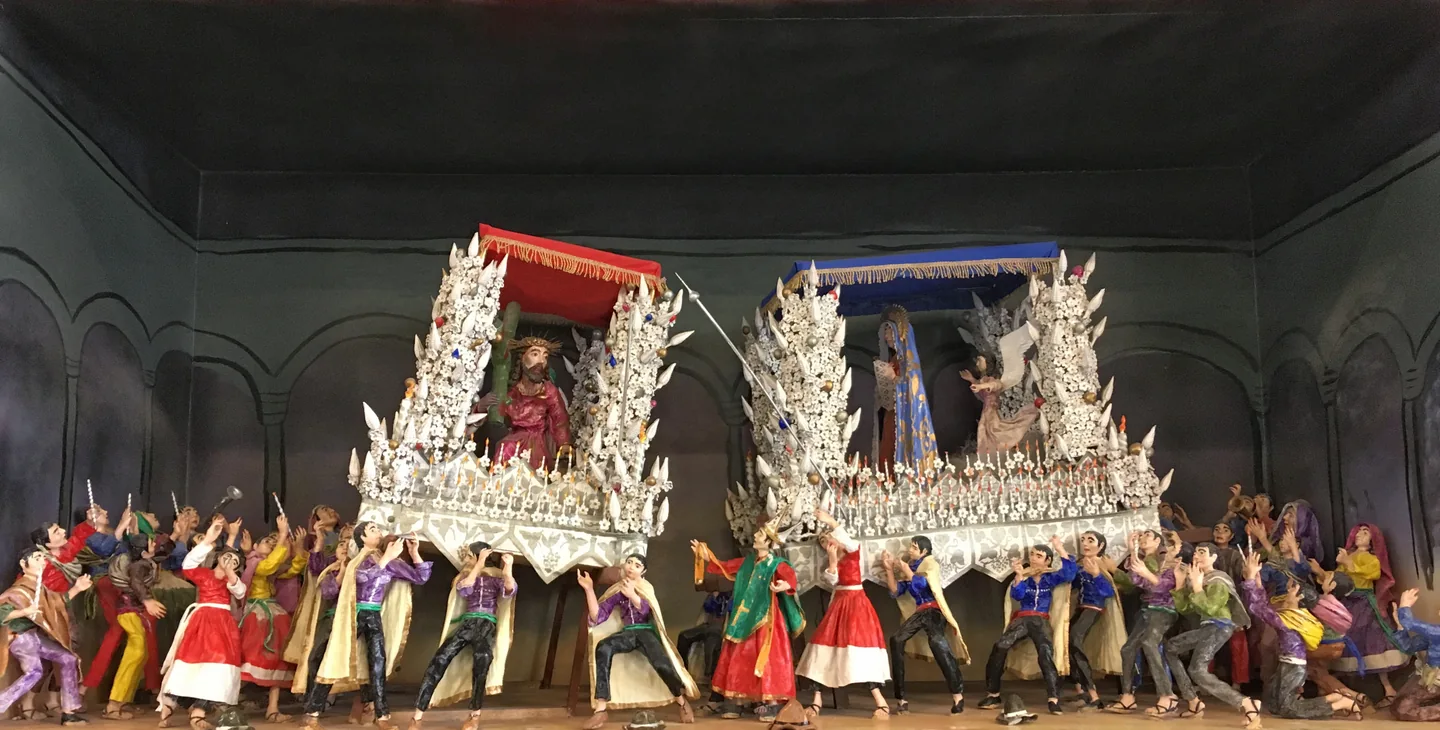

The history leads back to wooden boxes containing saints. In the Andes, cajones San Marcos or San Lucas were used in rituals asking for the protection and fertility of livestock. Makers later broadened their subjects. Joaquín López Antay played an important role in developing retablos with scenes from Ayacucho life. The arrangement could change too: more levels and different formats made room for new stories.
The box and its figures involve different stages of work. The ministry’s description covers preparing and painting the box, shaping figures from paste, then drying, finishing, painting and fixing them in place. Those stages make useful subjects for a conversation. Ask which parts of this particular retablo were done by the same person and what the maker added to the scene. The answer may differ from one work to another.
In Ayacucho, retablos sit alongside other crafts, including tapestry, pottery and Huamanga stone carving. You do not need to cover the whole list during one stay. If the figures hold your interest, spend your attention on retablos; if materials interest you most, compare them with another craft. The city guide helps connect that interest with the rest of Ayacucho. Ayacucho
Lamas: a shape with a purpose
Wayku in Lamas is a Kichwa community in San Martín. Its pottery belongs to a particular cultural setting, with knowledge learned and passed on within families. The ministry’s account discusses how girls, young women and women learn the technique through daily life. That opens a different conversation from simply asking where else you might find a similar pot.
A tinaja is a large vessel used, for example, to store water or ferment chicha. There are also ollas for cooking and kallanas for serving food. Compare the forms with those different uses in mind: how much does a vessel hold, how wide is its opening, and how does a dish present a meal? The publication on Wayku pottery gives these everyday objects a clear place in the story.
Cotton weaving is also part of Lamas, including the bands known as chumbi and watu. You can compare pottery and textiles within the same place while keeping their techniques distinct. Ask for an object’s local name and how it is used. Add the name to your photo or note so that the piece remains connected to a place and a maker when you look back at it. Lamas and Wayku
Taquile: knitting alongside weaving
On Taquile island in Lake Titicaca, the ministry’s Ruraq Maki craft programme describes textile knowledge passed down in families from childhood. It identifies chullos knitted by men and belts, llicllas and bags woven by women on the horizontal awana loom. Even within one place, there are different tools and ways of working to understand. Taquile and its textile tradition
Next, compare the patterns on a hat and a woven belt. PROMPERÚ describes rivers, stars, birds, alpacas and flowers among Taquile’s motifs. Choose one as a starting point and ask what it means in this particular work. There is no need to assign the meaning of one image to every similar-looking figure yourself. Keep the explanation connected to the object.
The Taquile guide gives more background on the island and its textiles. For an initial choice between islands, the Uros, Taquile or Amantaní overview compares interests in totora, textiles and an island stay. Compare visit programmes by the space they leave for your subject. A list with more island names tells you little about the time available for one conversation. Choosing Uros, Taquile or Amantaní
One detail to notice: how it is put together
In a retablo, notice how a figure sits within the scene; with a tinaja, the transition from body to neck; with a textile, how a pattern repeats. Then choose one question about the making. Which stage takes a lot of work? Which part was made separately? What has the maker changed in this design? You can look closely without arriving with a ready-made verdict on quality.
If you want to examine work, photograph someone or ask questions at length, start by asking whether it is a good moment. If you hope to buy something, ask who made it, which material was used and what the seller can explain about the process. That starts a conversation; a sales address or a short answer alone cannot establish the complete origin of an object or how its proceeds are shared.
Make room for the subject in your trip
The Ayacucho–Quinua–Vilcashuamán itinerary brings the city, pottery village and archaeology together over five days. If crafts are your main interest, start by deciding what you want from Ayacucho and Quinua, then weigh the rest. In the Tarapoto–Moyobamba proposal, Lamas is the day-two alternative to Ahuashiyacu; doing both calls for an extra day. Taquile belongs to a separate choice around Puno. Pick the regional trip that appeals to you and give one craft some extra attention. 5 days in Ayacucho, Quinua and Vilcashuamán