
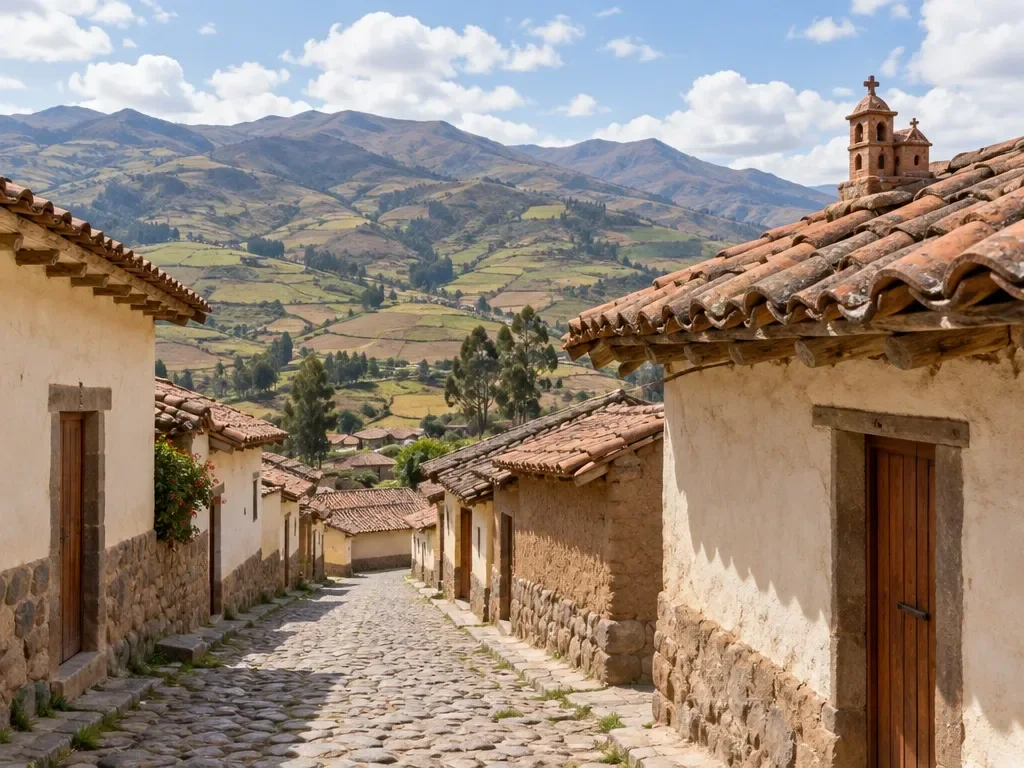
Small churches stand on the roofs in Quinua. Made of pottery, they belong to a village of pitched, tiled roofs and cobbled streets. The village church, with its single tower, stands on the paved square. You can see the connection between the village and its pottery before examining an individual piece close up.
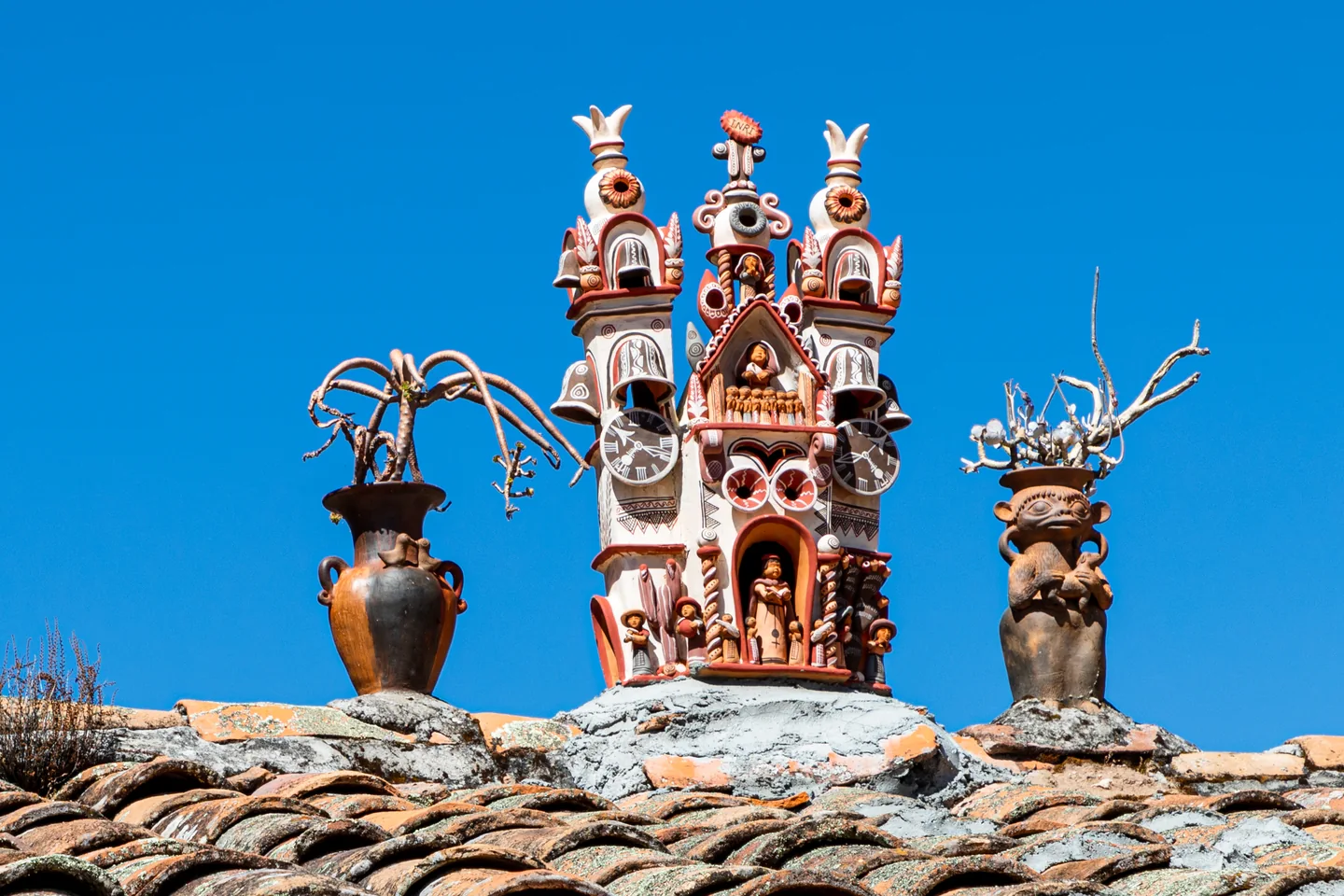
Photo credits

Cropped around the ceramic church and its roof setting, resized and converted to WebP. No image content generated or reconstructed. Derivatives retain CC BY-SA 4.0.
Pottery for homes, celebrations and everyday use
Quinua’s pottery extends beyond the churches on the roofs. Bulls, musicians, religious subjects and scenes of daily life appear in the work too, alongside practical household objects. Pieces may have a place in ordinary domestic life, rituals or festivities. If something interests you, ask what the motif refers to and how that kind of object is used.
Knowledge passes between generations. The tradition provides work and income as well as a way to express memories and customs. When considering a purchase, ask about the materials and method, or about the difference between a decorative object and something intended for use.
The Pampa lies outside the village
Santuario Histórico de la Pampa de Ayacucho preserves a different story. The Battle of Ayacucho took place on this elevated, gently sloping plain on 9 December 1824. A commemorative monument stands within that landscape. Visiting the village and going to the historic field are two different parts of a trip: houses and pottery invite a different kind of attention from a place of remembrance. Give each some time if you want to combine them.
Wari’s site museum on the road to Quinua
Wari’s site museum is on the road between Ayacucho and Quinua. Its collection includes pottery, textiles and stone objects, with interpretation of the archaeological site. It can add depth if you want to understand the region’s earlier archaeology too. The museum, village and Pampa each deserve attention; ask which parts a proposed outing actually includes.
Stay in the village or visit from Ayacucho
Our five-day route includes one night in Quinua. You can also choose a separate day trip from Ayacucho, arranging the return journey at the same time. The accommodation map on this page shows addresses in Ayacucho, not Quinua. If you want to stay in the village, confirm the actual address and arrangements for your next travel day directly with your accommodation.
Quinua and the Pampa de Ayacucho
Is Quinua the same place as the Pampa?
No. Quinua is the village; the Pampa is the separate historic landscape outside it. Check whether an excursion actually visits both.
Before or after Quinua: stays in Ayacucho
This map shows stays in Ayacucho only, for a night before or after visiting Quinua, or if you choose separate day trips from Ayacucho. It does not show stays in Quinua. An overnight in Quinua is another option; arrange the return for each day trip from Ayacucho.
Where is it?
Quinua and the surrounding area.