
A reed-boat bow, a heavy fortress wall, a wooden lookout above a rock. Along the Peruvian coast, the sea has very different neighbours. Callao tells a story of a port and its defence; Huanchaco of fishing and the material used to build boats; Paracas of desert meeting water. Ilo shows how a coastal city also made places simply to look out to sea. There are good reasons to give the coast more attention than an afternoon on the beach.
These places lie in different parts of Peru. They are separate possibilities rather than a circuit to complete. Choose the coastal story that fits your trip: maritime history in Callao, totora culture in Huanchaco, the landscape around Paracas or the old waterfront in Ilo. A few distinctive details make that choice more interesting than comparing the colour of the sand.
Callao: the sea as a route
In Callao, it helps to think of the water as a road. The port connected Lima with the wider world; protecting that connection took physical form in Real Felipe. The fortress walls belong to the same story as the quays and the maritime names around the squares. This is a coast shaped by arrivals, departures and defence.
Real Felipe was built in the eighteenth century to defend the port and Lima against attacks. Its plan is an irregular pentagon, with substantial walls and defensive positions at the corners. Look at that shape before trying to remember individual buildings. How does a fortress face the coast, and what space lies behind it? A great wall becomes easier to understand when you see the concern it was meant to address. Real Felipe Fortress in Callao
Around Plaza Grau, another layer emerges: the memory of seafaring. The square stands by the harbour basin, surrounded by buildings with maritime functions and histories. It takes its name from Miguel Grau. Place names, maritime buildings and views towards the harbour work together here. It is worth pausing to consider what the city commemorates before moving to the next building.
Callao suits a stay around Lima if you want to get to know a different edge of the city. Give the fortress or the old harbour area the main role and leave room for a meal. A museum visit and time beside the water each deserve attention. The separate place guide can then help you choose the parts of Callao to visit and arrange transport around them. Callao
Huanchaco: the boat begins on land
The caballito de totora gives Huanchaco a distinctive outline. This craft is made from totora, a plant whose stems and leaves provide building material. Its elongated shape is associated with artisanal fishing. La Libertad’s regional culture authority describes the balsilla as part of a wider body of knowledge and customs involving the plant. A boat on this coast also tells a story about materials.
That story begins in the balsares: cultivated pools where totora grows. Fishermen maintain the landscape that supplies the raw material for their craft. The land behind the coast takes on a different significance when you know this. The connection runs from pool to plant, bundle to boat, and then to fishing. Looking at the boats alone gives you the finished object; learning where the material comes from adds another part of the place.
Huanchaco is appealing if you enjoy giving one craft your attention. Look at the boats’ shape, the totora and their relationship with the town alongside the sea view. Trujillo’s historic surroundings can become a second subject afterwards. For a first introduction, the question of how a boat is made is enough to give a coastal walk a focus. Huanchaco
One detail to look for: the bow
A caballito has a narrow, upward-curving bow and a wider rear. Look at that transition. The broader rear provides space for the fisherman. Keeping that difference in mind makes an explanation of building with stems and leaves much more tangible. Shape and the choice of material belong to the same craft.
Paracas: a bay surrounded by desert
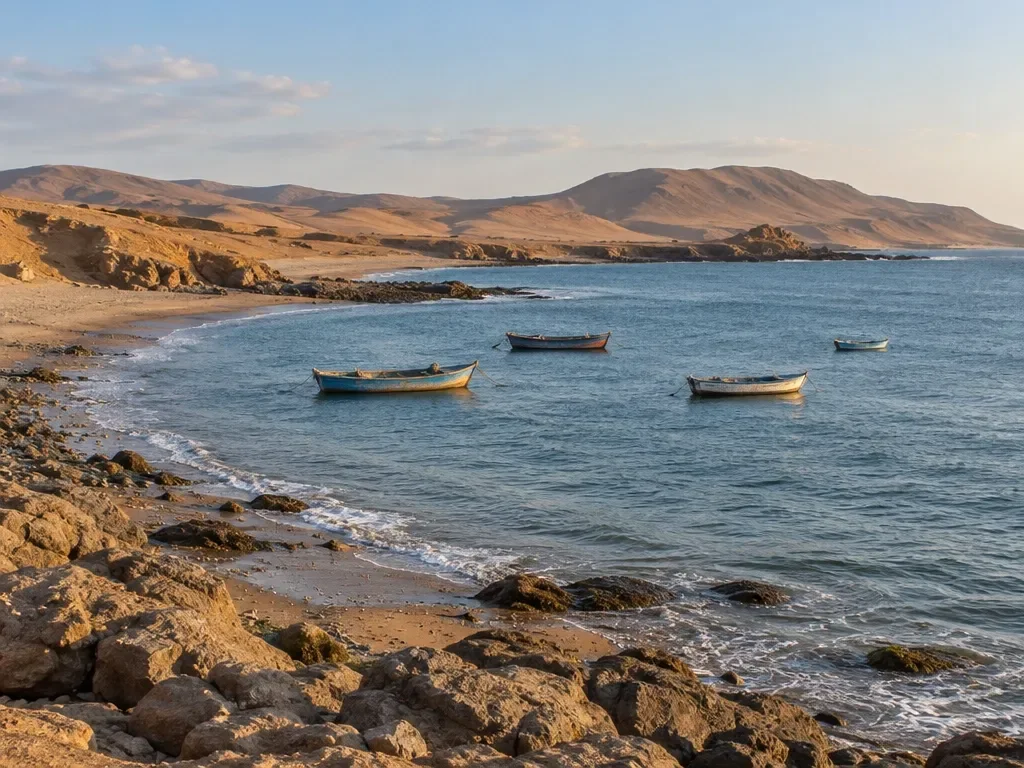
Around Paracas, the contrast works on a larger scale. Ica’s dry coast meets a protected area that is largely sea. The Paracas National Reserve protects marine and coastal ecosystems as well as archaeological heritage. Seen that way, an apparently bare plain takes on more meaning: the water, coastal landforms and evidence of settlement belong to the same environment.
Vegetation is sparse here. Much of the abundance of life is in and around the water. SERNANP describes seabirds, marine mammals, fish and invertebrates as parts of the area. Paracas rewards an interest in habitats. A bird above the bay or animals around a rocky shore make more sense when you also understand something about the water and the food web.
Earlier inhabitants belong to this coastal story too. Archaeological remains of the Paracas culture lie within the reserve; fishing and shellfish gathering feature in the area’s description. Paracas is the name of both a landscape and a culture. If that connection interests you, include archaeological interpretation and the museum’s subject when deciding what kind of visit you want.
Choose Paracas to explore that relationship between dry land, sea and settlement. Give the peninsula your attention if landscape is the main draw. A boat visit to the offshore islands is a separate choice, with a different perspective from the water. The place guide explains those distinctions further. Start here with what you would like to learn to notice. Paracas
Ilo: a port city looking out to sea
In Ilo, the Muelle Fiscal gives the waterfront a historic shape. Building the old pier was part of the port’s nineteenth-century development. The tourism inventory describes an elongated platform with a metal-and-concrete substructure and a wooden deck. That mix of materials is an interesting starting point: a pier links city and water while revealing some of the work needed to make that connection. 6 days in Moquegua, Ilo and Tacna
The Glorieta José Gálvez has a different character. This hexagonal lookout stands on a rock in the sea, with wooden railings and an open pergola. Bridges connect it to a small square. The pier draws a line into the water; the glorieta creates somewhere to pause. That distinction gives Ilo’s waterfront more interest than a single harbour photograph.
Ilo suits an interest in a coastal city in southern Peru. Look at the relationship between buildings, rocks, pier and lookout, and give a meal as much space as a monument. If you want to add a nature-area visit or time at a beach, make a separate plan for it. The harbour architecture already offers a subject of its own for a stay. Ilo
Which coast would you like to understand?
Callao places the sea within the history and defence of a major city. Huanchaco brings you closer to a plant, a craft and fishing. Paracas invites you to understand the scale of a protected landscape. Ilo puts maritime infrastructure alongside places made for spending time outdoors. Your interests can come first here, with accommodation chosen afterwards.
Sometimes a small shape stays with you longer than a list of sights: the corner of a fortress, an upturned bow or a wooden railing above the water. Choose a coastal place that makes you curious about that detail. The sea then has a story on land as well.
Places to stay on the coast
Choose Callao, Huanchaco, Paracas or Ilo to explore accommodation locations.