A canoe on a quiet lake, birds above a clay lick or the descent from the Andes into cloud forest: the Peruvian Amazon offers very different journeys. Iquitos suits a combination of city and rivers in Loreto. Puerto Maldonado is the starting point for Tambopata. With Manu, the transition from highlands to lowlands can itself be an important part of the trip. Start with landscape, accommodation and travel.
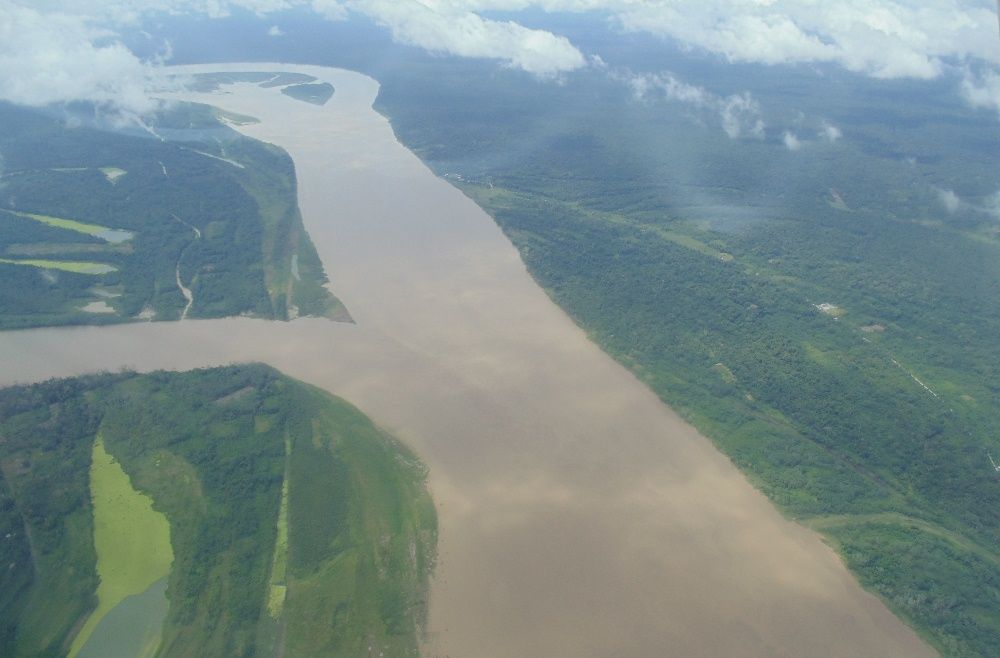

If you want to add a few forest days to a trip through Cusco, begin by comparing Tambopata options. If northern river landscapes appeal, look at Iquitos and a separately chosen river programme. Consider Manu especially if you want to spend time travelling through different forest zones, or specifically reach the visitor sectors along the Manu River. The exact lodge makes a big difference within each choice.
Three departure regions on the map
Iquitos is in the north. Puerto Maldonado and the approach to Manu are in southeastern Peru.
- Read about Iquitos. Iquitos and Nauta: city and rivers in Loreto. For a programme via Nauta, the river journey follows the drive from Iquitos.
- Read about Tambopata. Puerto Maldonado: departure city for Tambopata. Sandoval and Alto Tambopata are different visitor areas, not the same outing.
- Read about Manu. From Cusco through Paucartambo towards Pilcopata: the descent from the Andes is part of the described approach to Manu.
The map shows departure cities and their surroundings, not plotted excursion routes.
Iquitos: city, rivers and different directions
Iquitos is a city with things to do before or after a forest stay: walk beside the Itaya, visit the Plaza de Armas and try food from Loreto. An overnight stop between flight and lodge can have a purpose of its own. Then locate the lodge on a map. A stay sold from Iquitos is not necessarily in Pacaya Samiria; different rivers and natural areas surround the city.
For a programme via Nauta, you first travel by road from Iquitos and then continue by water. Much of Pacaya Samiria is floodable forest, with channels and cochas: lakes within the river landscape. The reserve has several visitor routes, including Yanayacu-Pucate. Water levels influence where boats can go and which walks are possible. Ask about the programme for your dates, particularly if you want plenty of canoeing or walking.
A lodge's name and where you sleep are not the same thing as your excursion. Pacaya Samiria Amazon Lodge, for example, states that it stands in the buffer zone on the Marañón and that its transfer runs through Nauta. You can therefore sleep outside a reserve and visit it on an organised outing. Ask which route actually enters the protected area and whether admission is included.
Tambopata: choose your lodge around the outings
Puerto Maldonado is a logical place to begin a southern Amazon leg. Check which Cusco–Puerto Maldonado flight LATAM offers on your date and coordinate arrival with the lodge's pickup time. A combination of road and boat travel often follows from the city. Landing at the airport is therefore not the start of your free afternoon in the forest.
Lake Sandoval and the clay licks farther along the Tambopata are different destinations. At Sandoval, the visit centres on the lake, surrounding forest and observation from the water; getting there combines river travel with a path. A hotel closer to Puerto Maldonado may suit you if you want separate excursions and free time. Check which outings the operator actually runs from that hotel.
For a collpa, a clay lick where parrots and macaws take in minerals, location matters more. SERNANP identifies Chuncho and Colorado in Alto Tambopata, while Sandoval is a different sector. A more distant lodge can bring your chosen morning outing closer, but takes more travel to reach. Compare the full outward journey and the distance between accommodation and activity. A stay called ‘Tambopata’ does not automatically include every well-known lake and clay lick.
Manu: cloud forest and a longer river journey
Manu protects a transition from high Andean landscapes through mountain and cloud forest to lowland forest. This makes the route from Cusco via Paucartambo towards Pilcopata and Atalaya interesting in its own right: the landscape changes along the way. A shorter programme may focus on that descent, walks and a stay around the Andean foothills.
When comparing Manu offers, you will see terms such as ‘Cultural Zone’ and ‘Reserved Zone’. Those sales labels are not enough to tell you where you will go. A programme through cloud forest and lodges in the surrounding area or buffer zone differs from a journey to more distant visitor sectors inside the national park. The larger biosphere region is not the same as the park either. Ask for accommodation, rivers and visitor sites on a map; do not automatically treat ‘cultural zone’ and ‘buffer zone’ as synonyms.
For lowland visits, SERNANP lists places including Limonal, Otorongo and Salvador. Reaching them involves longer boat journeys; operators describe approaches via Atalaya and onwards towards the Manu River. Have the park sector, access arranged by the operator and overnight locations clearly specified. A short Manu tour need not reach those river sectors. It is a different trip, with a different balance of forest visits and transport.
How many days will you actually have?
Count nights and full visiting days. Four days with arrival on day one and departure on day four leave two complete days; what fits on the travel days depends on the transfer. This is a calculation example, not a minimum for every area. In a more distant Manu programme, travelling may fill much of those days. Read each stage: how long will you be in a vehicle or boat, how much time is spent on a trail or lake, and when will you return to your departure point?
What kind of stay suits you?
A fixed lodge means returning to the same room between excursions. On a travelling itinerary, you change overnight locations and repack more often. A river cruise has another rhythm: your accommodation moves with you. Compare more than room photographs: look at excursion departure times, free periods, group size and what you can adjust locally. For children or limited mobility, ask about actual boat boarding, walking sections and room layout rather than assuming a ‘family lodge’ fits every need.
For wildlife watching, a specific interest helps: birds at a clay lick, life around a lake or a walk where a guide points out plants and small animals. Photographs of a jaguar or giant otter show what may live there, not what your group will see. Ask how the guide works, how many people join and whether animals are fed or handled. Binoculars, time to wait and attention to small sightings fit all these areas.
Compare two quotes using the same details
- The exact lodge and overnight locations, plus the natural area and sector actually visited.
- Pickup and finishing points, road and boat journeys, a suitable arrival time and the earliest feasible return flight after the lodge transfer.
- Included excursions, admission, meals and guiding; which elements are optional?
- Group size, guide's language and options for a different walking pace.
- Room, bathrooms, electricity and luggage arrangements for each accommodation.
- What happens to the programme and costs if weather or water levels change a chosen outing?
For a compact addition to Cusco, Tambopata is a good first comparison. For a city and northern rivers, Iquitos makes the starting point. For the transition from Andes to forest and perhaps farther up the Manu River, choose a Manu programme that includes those particular sections.