
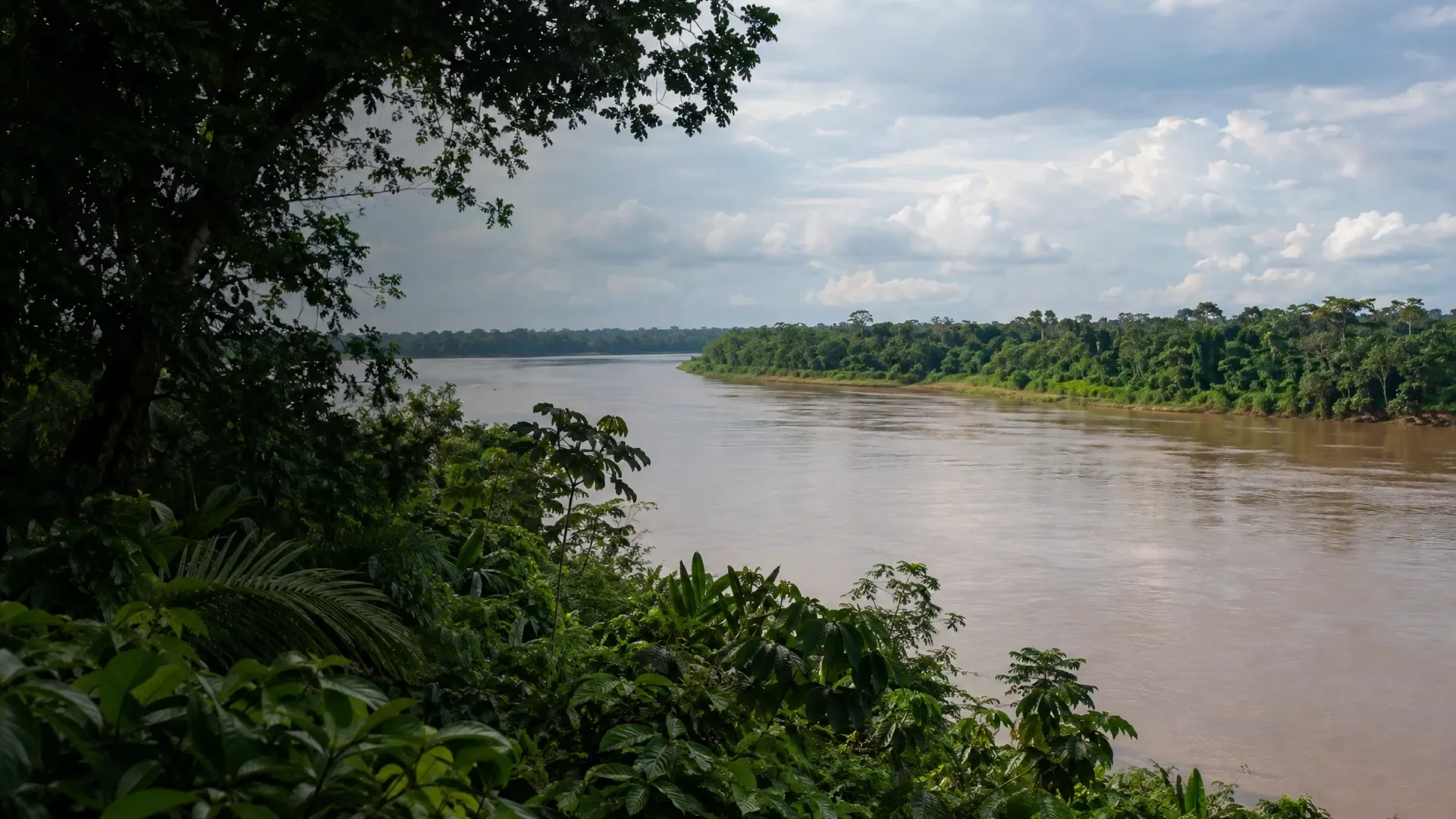
The Itaya waterfront and Museo Amazónico
Walk from Plaza de Armas to Malecón Tarapacá beside the Itaya. You do not have to board a boat immediately to make the river part of your day. The Museo Amazónico on the same waterfront provides a specific cultural stop; check its current visitor information before going. Leave time for a meal afterwards. Your flight arrives in Iquitos, but the boat to your nature stay may leave elsewhere: settle that before booking extra nights.
What the rubber trade left behind in Iquitos
Start at the metal façade of Casa de Fierro on Plaza de Armas and follow Calle Próspero to the corner of Morona. Look up at Casa Cohen’s arches and coloured tiles. Those tiles came from Europe at a time when the rubber trade was making Iquitos rich.
The buildings give you a sense of how much money rubber brought into the city. They also have a violent history. Indigenous communities in the Amazon region were forced to harvest rubber.
Belén market and the houses along the Itaya
Belén shows you what ends up on the table in the Amazon. Stalls sell river fish and fruit such as aguaje and cocona. In Pasaje Paquito, traders sell plants and tree bark. Go in the morning to see the market at work. Lower down by the Itaya, houses stand on stilts or float on the water. How you can visit depends on the river level. A guide from the neighbourhood can explain what it’s like to live with the rising and falling water.
How it fits into a journey
A city night can separate arrival from the river departure. Agree where you will be dropped off after the trip, too.
Places to stay in Iquitos
Compare the locations of places to stay in and around Iquitos.
Where is it?
Iquitos and the surrounding area.