
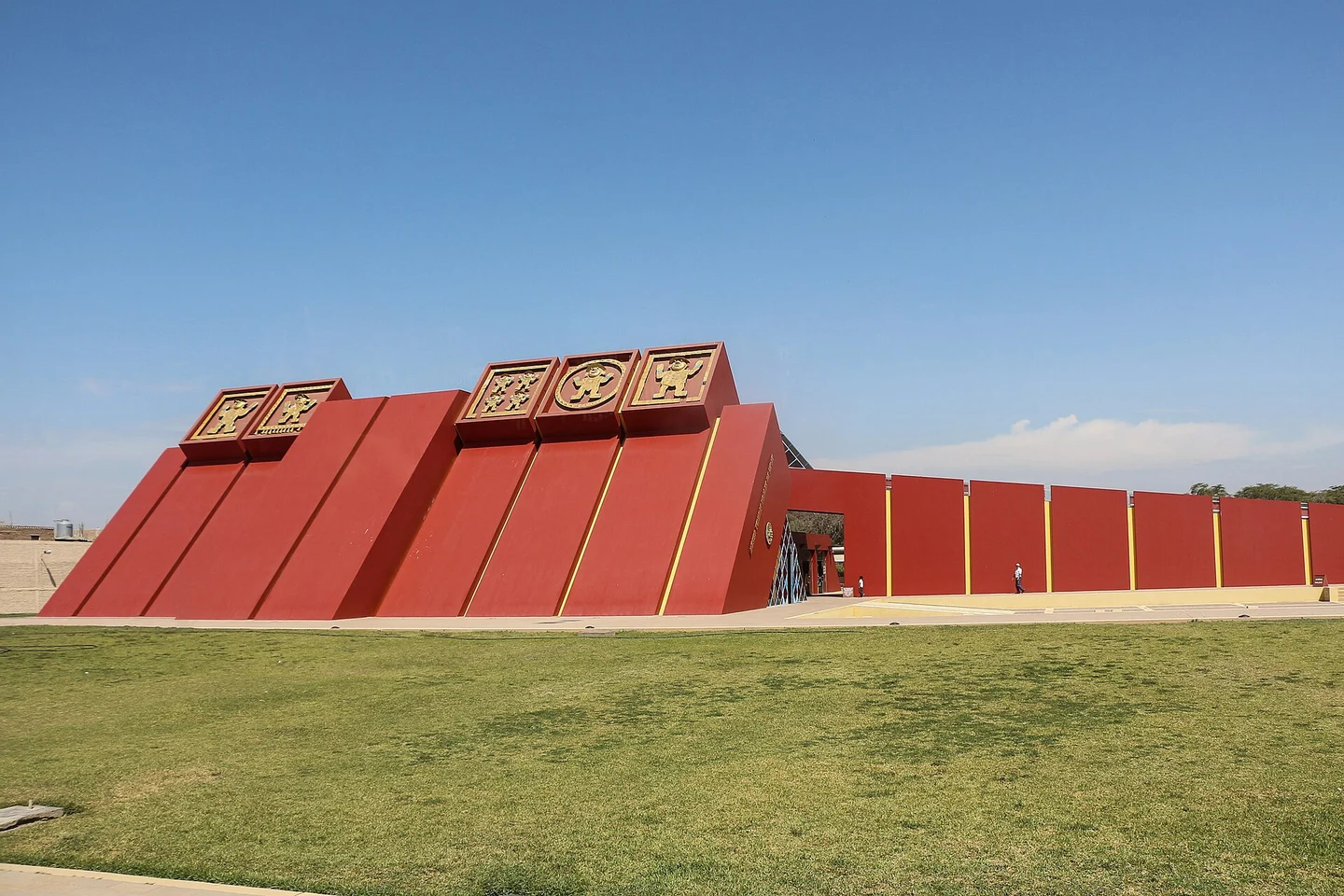

Gold, silver, turquoise and shell give the Sipán burial finds plenty of visual impact. Their importance goes beyond what shines. Ornaments, clothing, insignia and offerings belonged together within a burial context. They help explain how rank was expressed and what a society considered important to place with the dead. That makes Museo Tumbas Reales de Sipán a visit with a clear purpose.
Research around the Lord of Sipán began in 1987 at Huaca Rajada. The museum presents the discoveries in Lambayeque. Those two place names matter: the excavation and the museum are not at the same address. The useful travel question is whether you mainly want to understand the burial finds or also visit the setting where they were discovered.
Look at how objects work together
MINCETUR’s description identifies ear ornaments, pectorals, standards and objects of gold, silver and gilded copper. Notice fastenings, combinations of materials and the position of an object on a body. A large ornament creates a different impression from the same material used as a small detail. This offers a way into the visual language of status without treating every object as treasure with a price tag.
Archaeology also depends on position: what lay together, what was above or below it and which traces helped investigators understand the find? Official descriptions say the museum narrative follows the gradual revealing of the burial context. Use that structure. At a reconstruction, ask which information comes from excavation and which elements help present it clearly to a visitor.
The inventory also describes specialist conservation and recording work. It is a useful counterpoint to the word “treasure”. Excavation is one stage, followed by research, conservation and documentation. Ask how a material was studied or preserved, as well as what it is. Understanding an object’s function and find context creates a different memory from passing another case of gold.
Follow the story without ticking off every case
Official museum interpretation describes a downward sequence that echoes the discovery. That is a curatorial narrative rather than proof that every visitor can use the same physical route. Establish the current visiting sequence on arrival. If you enjoy making connections, choose three subjects: the burial itself, how objects were worn and the materials used by skilled makers.
You do not need to give every case equal time. Choose an object that interests you, read its explanation and compare it with another form or material. Small decisions make a museum feel less overwhelming. Particularly after several archaeological visits, one well-understood find can give this day its own character rather than add another collection to a list.
Official descriptions include human remains and reconstructed burial contexts. For a family visit, consider how you want to discuss them. Questions about people, society and archaeological work offer more than pointing at the most dramatic detail. If you would rather omit a component, discuss that with your guide. Interest in ancient cultures does not need to take the same form for everyone.
Lambayeque is the address; Chiclayo is often the base
The museum’s own listing gives Av. Juan Pablo Vizcardo y Guzmán 895 in Lambayeque. Use the full name, Museo Tumbas Reales de Sipán, when arranging transport. “Sipán” alone can point towards the excavation site instead. Agree the outward journey, drop-off and return, and establish whether you are buying transport or interpretation too. Your hotel’s city does not identify the museum entrance for a driver.
The listing publishes a standard schedule of Tuesday to Sunday, 09:00–17:00. The same page announces extended opening until 20:00 for 9–13 November 2026. Treat this as a dated museum announcement and confirm your own travel date; it is not a recurring November schedule. Check the applicable ticket category rather than using a headline amount to infer the price for everyone in your group.
The listing names guiding, toilets and a cloakroom among its facilities. These are published services, not confirmation of spaces, a particular language or acceptance of your luggage. If visiting during a travel day, ask specifically about your bags and collection arrangements. A simpler alternative is to leave luggage at your accommodation first and make the museum a separate outing.
Huaca Rajada is a second destination
Museo de Sitio Huaca Rajada–Sipán has its own listing on the Sipán–Pampa Grande road, beside the archaeological site. Its subjects include later excavations of tombs 14, 15 and 16. This is a different museum with its own collection, rather than a second name for Tumbas Reales. Add it if the discovery setting interests you and you want to make the additional journey.
Pay attention to that museum’s own visitor notice: the Huaca Rajada listing contains a temporary closure notice. Establish which museum or archaeological component is available on your date for that separate destination. Tumbas Reales opening hours cannot answer the question. Do not book a programme assuming two open museums simply because both names end with Sipán.
Túcume or another museum is a choice rather than an obligatory continuation. If understanding the burial finds is your priority, allow Tumbas Reales and a quiet break in Lambayeque their space. If you want an outdoor second visit, give it separate transport and visiting time. A longer list of museums does not automatically create a better day, especially when you spend the final one watching the clock.
A clear starting point is a museum day centred on Tumbas Reales: travel to the correct Lambayeque address, give the narrative time and choose a continuation in town or return to your accommodation. This is our planning example rather than a fixed programme. To add Huaca Rajada, reshape the day around that extra destination and its confirmed arrangements instead of fitting it between two other commitments.
Choose Tumbas Reales for the connection between a person, a burial and exceptionally made objects. You do not need to remember the entire collection to take something from that relationship. Carry one question with you: what do these objects reveal about how a person was understood? The museum becomes more than a place containing a great deal of gold.
Places to stay in Chiclayo
Compare accommodation locations in Chiclayo as a base for visiting Museo Tumbas Reales de Sipán.