

At El Brujo, a plaza, a stepped temple and the contents of a burial belong to the same story. Huaca Cao Viejo’s painted reliefs depict warriors, prisoners, animals and mythological beings. The Lady of Cao adds a person to that picture: a woman from the Moche elite, buried with a carefully prepared funerary bundle. Architecture and burial research both reveal power, ritual and skilled work.
The complex is near Magdalena de Cao in the Chicama Valley, outside Trujillo. It is not simply another entrance beside Chan Chan or Huacas de Moche. That distinction matters to your journey: this is a separate outing with the complex as its main reason. Knowing which part of the Moche story interests you makes the extra journey more rewarding.
A temple built over earlier temples
El Brujo’s researchers describe Cao Viejo as a building formed through successive construction phases. Earlier spaces were carefully filled with blocks of adobe before new spaces were built above. It was not a single design completed on one occasion. This helps explain why archaeologists compare floors, walls and decoration. Their sequence reveals more than the monument’s present outline alone.
The relationship between plaza and temple is worth considering too. The project description distinguishes the large northern plaza, stepped pyramid and spaces higher in the building. Ceremonies could therefore involve different scales and audiences. Ask where people stood, how they moved and what supports the suggested function. A plan becomes easier to understand without inventing a ceremony to fill it.
The reliefs are more than a colourful border to a route. Notice the sequence of figures and differences between people, animals and composite beings. Researchers connect some compositions with ceremonial practices while recognising interpretation as part of the work. Ask your guide to point out one detail you might otherwise miss. It often stays with you longer than a long list of divine names.
The Lady of Cao is understood through her burial
The discovery matters for more than valuable ornaments. Project researchers describe the preparation of the body, the wrapping of the funerary bundle and the placement of objects. Together they raise questions about rank and a woman’s position within Moche power structures. “Queen” is an easy label; we prefer the documented elite status and explanations grounded in the recovered materials.
For ornaments and insignia, ask more than which material was used. How were they worn, when might they have been seen and how were they recovered? The same questions work for textiles or an apparently modest object. Connecting an object with a person, space or action turns a display from a sequence of impressive things into a way of understanding people.
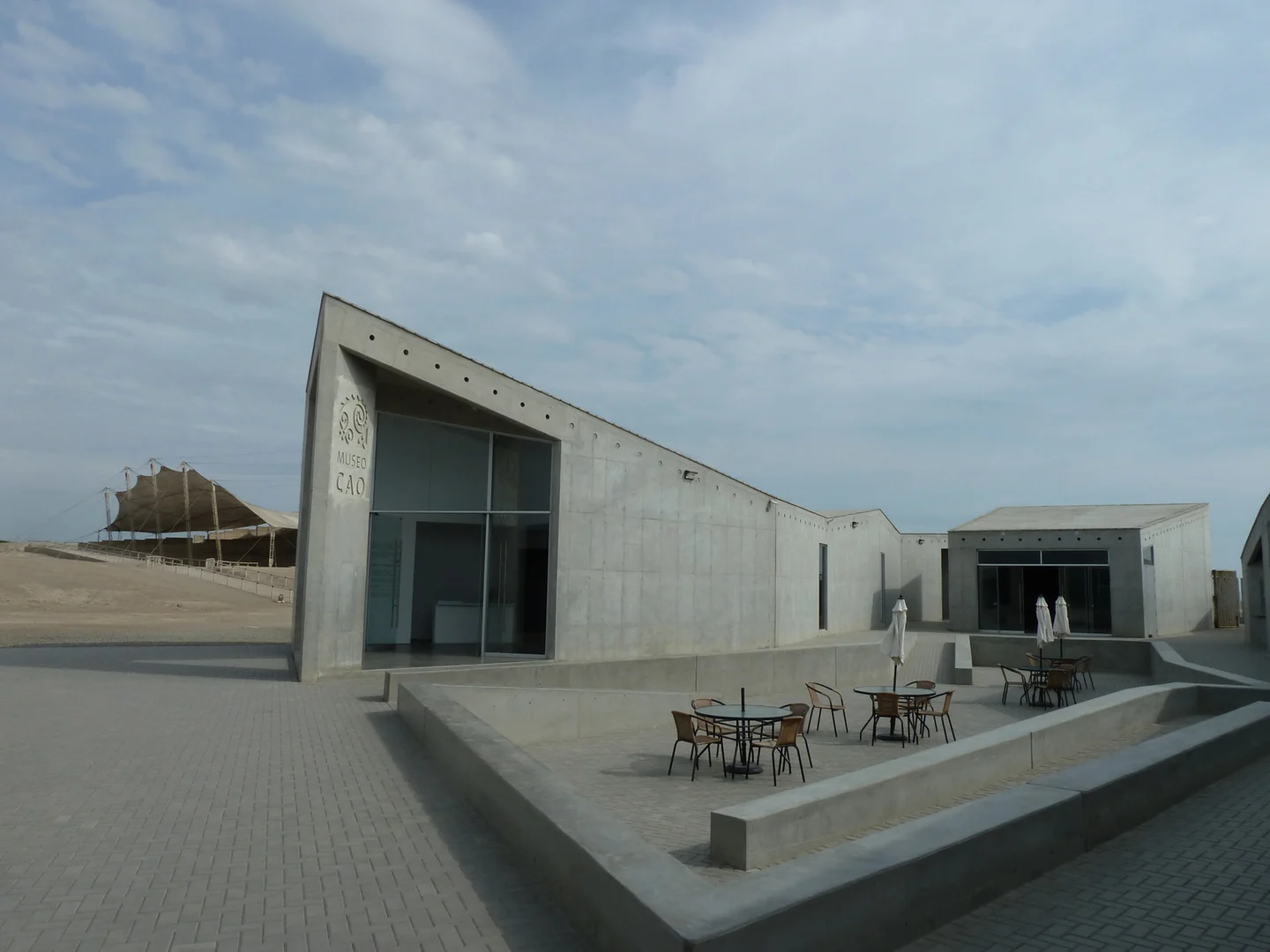
Cao Viejo and Museo Cao belong together
The published classic route names the colonial area, Huaca Cao Viejo and Museo Cao. The museum is a distinct component within the complex rather than another name for the outdoor walk. For a booked outing, establish which components are included and how much time remains for the galleries. “El Brujo” on an itinerary does not yet describe the substance of the visit.
The complex describes the museum as the place where the Lady of Cao and materials from Cao Viejo are displayed. Its background articles also connect the galleries with textiles, fishing, architecture and ritual. Do not spend the earlier rooms merely waiting for the best-known exhibit. They give the burial its context. Older gallery descriptions do not guarantee that every object remains in the same case on your date.
Visitor information also describes the display of the mummified body. That is a different kind of encounter from viewing ceramics alone. Decide beforehand whether you want to see that component and, for a family visit, how you want to approach it. Research, burial objects and the person behind the discovery can remain the focus without turning human remains into a curiosity.
Arrange the complete visit
The visitor page publishes daily opening from 09:00 to 16:00, excluding 25 December and 1 January. It says the admission ticket includes Huaca Cao Viejo and the museum. That does not describe transport, personal guiding or a town visit. Have those components stated separately and check the programme for the date you actually intend to travel.
Give a transport provider more than the name El Brujo: specify the complex, museum, any time in Magdalena de Cao and your final drop-off. Ask where the driver waits and whether the same person provides interpretation. Agree a particular language with the guiding arrangements. The most meaningful difference between two offers may be how they distribute your time rather than which vehicle they use.
Magdalena de Cao can be a separate pause rather than an assumed part of every complex visit. Decide whether you want lunch, a look around or a direct return. If archaeology is the reason for the day, give the site and museum that time. A town deserves more than a compulsory shopping stop added because an itinerary needed a third name.
Continue the Moche story rather than repeat a stop
If you have already seen Huacas de Moche, compare how research explains power. There, temple imagery and urban context are central; here, successive building phases and an elite woman’s burial can be considered together. Chan Chan offers a contrast between cultures instead. More Moche archaeology is optional, but a focused question keeps El Brujo from becoming another version of the same earthen wall.
One possible approach is to make Cao Viejo and Museo Cao the main event, adding only a chosen meal or a short town pause afterwards. This is our planning suggestion, not a published timetable or promise about the length of a guided visit. Put any onward bus or flight beside the actual collection and return agreement before adding stops.
El Brujo is particularly rewarding when you want to connect objects with their architectural setting. Notice how a wall image, a building phase and a burial object each raise a different question. The Lady of Cao then becomes more than a famous name on a tour board, and the journey from Trujillo belongs to a visit you have chosen for a reason.
Places to stay in Trujillo
Compare accommodation locations in Trujillo as a base for visiting El Brujo.