
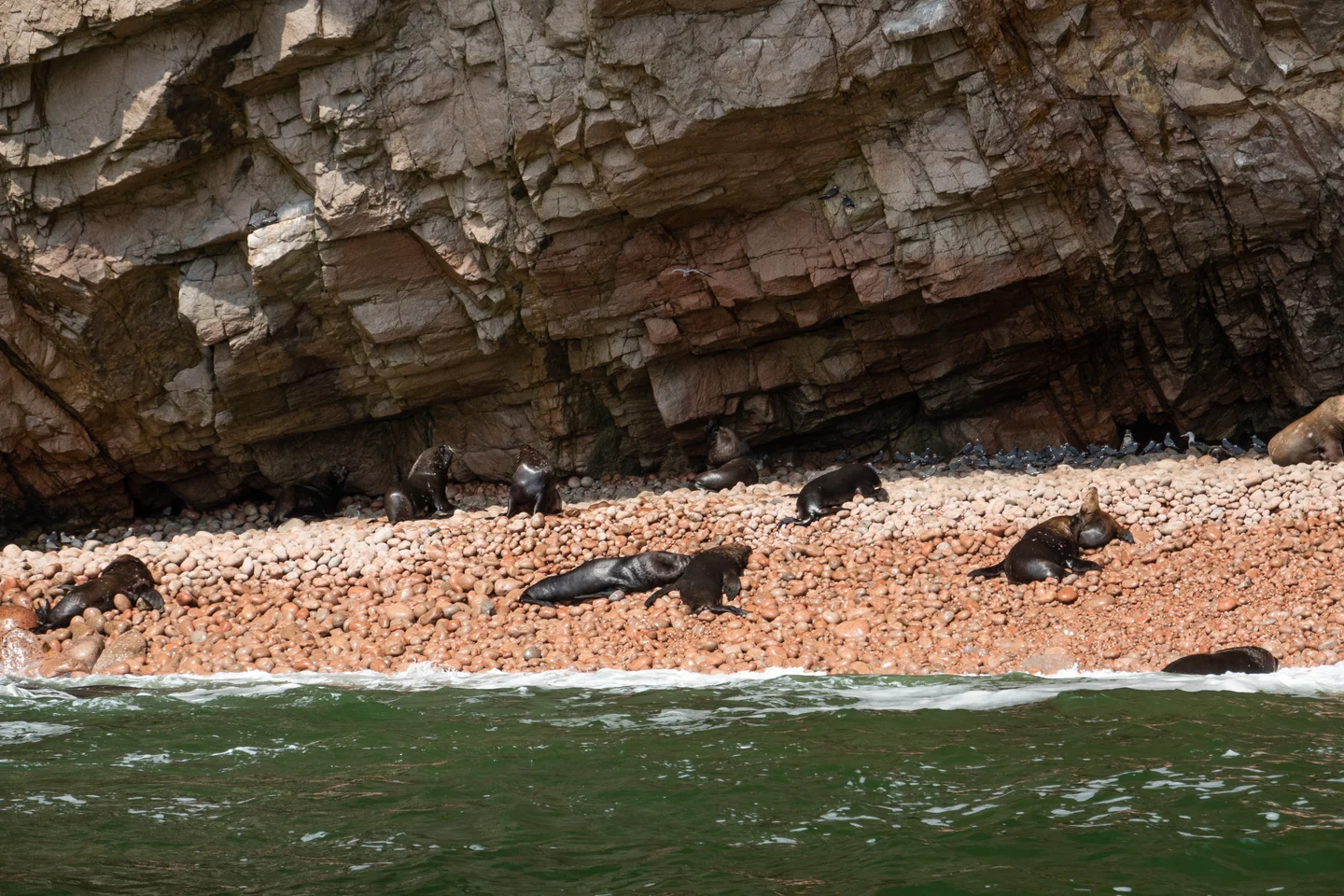

Off the coast of Paracas, the Ballestas Islands turn your attention towards the water. Sea lions, Humboldt penguins and birds use these rocky islands. You look at a habitat with a boat as your viewing point. It is a different experience from the beaches, bays and desert scenery of the peninsula.
Marine wildlife provides a clear reason for coming. If you prefer exploring quietly on land, the Paracas coast can fill your day differently. Compare those two interests before automatically booking a boat trip and a land excursion on the same day. Sharing a place name does not make the two offers a single visit.
A habitat for sea lions and seabirds
The Ballestas Islands belong to the Reserva Nacional Sistema de Islas, Islotes y Puntas Guaneras. PROMPERÚ and MINCETUR’s tourism inventory describe sea lions and Humboldt penguins; the inventory also mentions guano birds such as guanay cormorants and Peruvian boobies. The protected coastal ecosystem is associated with the cold Humboldt Current. Its value lies in the animals and their setting, rather than one isolated species for a photograph.
Guano belongs in this picture too: bird droppings are a natural resource here. MINCETUR connects the island area with guano deposits and marine conservation. Look at the relationship between rock, bird colonies and water. You need not be a birdwatcher to notice different animals using the same coastline in different ways.
Do not turn the named species into a checklist the skipper must complete. A photograph on a booking page does not establish which animal will appear on your departure. Choose the opportunity to observe the habitat and give the guide time to explain what is happening. The visit still has a purpose if one hoped-for species remains out of view.
Compare the boat experience as well
A typical visit centres on travelling and observing from the water. Ask where you will board, who will operate the trip and how the programme is arranged. Distinguish the meeting time, actual departure and return. Those three points matter particularly if you want to catch a bus or another excursion later.
A guide who only names animals offers something different from one who makes time for behaviour, habitat and questions. Ask what guiding is included and which language will be used. If photography matters to you, discuss how observation takes place too. Clear explanations and time to look are more useful selection criteria than a general promise of “lots of animals”.
Weather belongs in the departure arrangements
The MINCETUR inventory notes that departures depend on weather conditions. That is not a forecast for your travel date. Have the operator confirm how and when you will hear whether the trip is running. Ask what you have booked if the programme changes: another destination, a new departure time and a cancellation are different outcomes.
Get the rescheduling or refund arrangements in writing without assuming a standard entitlement. A seller may use different conditions from the company actually running the boat. Keep the booking confirmation and their contact details. Plan another use for the time that might become available, rather than making the whole day depend on one departure.
With children: discuss boarding and time aboard
Before booking, ask how boarding works, what help is possible and which life jackets are available for the people travelling. Give the operator specific information about your party and any practical limitations. Have them explain the actual programme; “family friendly” does not answer those questions. Questions about individual medical suitability belong with a healthcare professional.
PROMPERÚ advises remaining in your place during observation, avoiding sudden movements and not feeding the animals. Include that in your choice of operator and your conversation with children. Luring an animal closer for a photograph does not fit observing wildlife in its habitat. Follow the instructions of the crew and guide.
Ballestas or Paracas on land?
At Ballestas, you choose the water as your perspective and marine life as your subject. On the peninsula, you can focus on the coastline, bays and desert scenery instead. They are separate visits with separate programmes. Give each its own place in your stay if you want both. On a short stop, one deliberate choice may offer more than two programmes scheduled immediately after one another.
Finally, compare what the boat-trip price includes. Ask about transport to the boarding point, guiding and the different admission charges or fees mentioned. Have the provider give a total for your party and establish what remains to be arranged locally. A low headline price becomes comparable only when the components are listed beside it.
Paracas is where these choices come together: accommodation, arrival, a boat visit and perhaps a day on land. Use our place guide for the rest of the stay. For Ballestas itself, one starting point helps: you are booking time on the water to observe wildlife going about its own life.