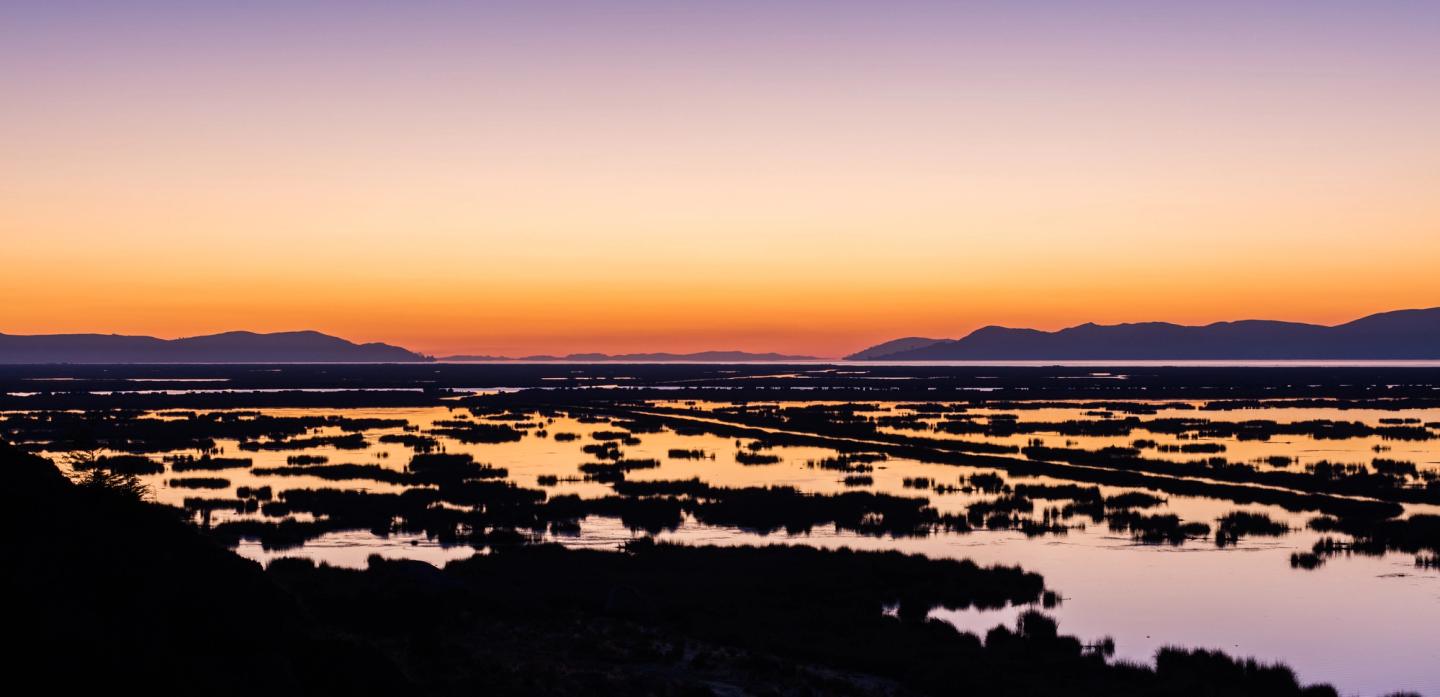

At Lake Titicaca, broad stretches of water alternate with reed beds, cultivated slopes and villages above the shore. Around Puno, that landscape takes many forms: the totora used to build Uros islands, Taquile's textiles and Amantaní's terraces. Colonial churches and older burial towers stand on the mainland. There is a great deal of history around this water.
You can discover the lake region from both a boat and the shore. Puno has museums and restaurants; the Capachica and Chucuito peninsulas offer stays beside the water. Farther south lies Juli, whose churches tell part of the colonial story. These differences shape a visit well before you choose a tour.
Totora and the Uros
The floating Uros islands are built using totora, a reed growing in the lake. Residents also use it for boats and handicrafts. Looking closely at the material makes a visit more interesting: how are bundles joined, where is the reed still green, what needs replacing? These questions give an explanation of island-building something tangible to focus on.
A visit may include an explanation of the islands, handicrafts and a ride in a totora boat. Ask which parts your booking includes. A short visit and an overnight stay offer different amounts of time on the water; choose the experience and hosts you want rather than treating every Uros island as the same accommodation.
Look along the reed beds
Titicaca National Reserve protects parts of the lake ecosystem. Totora and other aquatic plants provide habitat for birds, including the Titicaca grebe associated with this lake. If birds are your priority, choose a nature outing that allows time to watch them. Bring binoculars and pay attention to the reed edges as well as open water.
Taquile and its textiles
On Taquile, men and women make textiles that are worn in everyday life. During a demonstration, watch the technique and ask what the maker has put into a pattern. It helps you understand the work behind a piece of clothing. UNESCO has recognised this textile tradition.
Taquile has several landing places. The route from the boat may follow steps or another uphill path to the village. The arrival pier therefore matters when choosing a visit, not just the island's name. Combine a walk with time for textiles and a meal, allowing yourself somewhere to sit and linger.
Amantaní: stay among the terraces
Amantaní suits an overnight stay on a natural island. Houses and fields climb the slopes beneath the ceremonial hills of Pachatata and Pachamama. A night allows time for a walk, meals at your accommodation and a morning beside the lake. Two nights leave a full island day in between.
Capachica: Llachón and Chifrón
Llachón sits on the Capachica peninsula, with terraces, sandy shores and resident-run accommodation. It can be reached by road or across the lake. That makes it appealing if you want to stay beside the water without making a long crossing the centrepiece of your visit.
In Llachón, you can focus on the village surroundings, with a walk and an arranged activity on the water. Chifrón, on the same peninsula, is a departure point for crossing to Amantaní. Your accommodation can help arrange a combination: time on Capachica followed by an island night.
Luquina on the Chucuito side
Luquina is on the Chucuito peninsula, on a different side of the bay from Capachica. Local associations arrange stays and activities involving farming and fishing. It offers a stay in an Aymara community beside the lake. Discuss what is possible during your visit; a meal and a walk nearby can also be the main plan.
Juli: churches along the southern shore
Farther south is Juli. Its churches of San Pedro Mártir, Nuestra Señora de la Asunción, San Juan de Letrán and Santa Cruz reflect the town's colonial history. Dominicans and later Jesuits made Juli a centre of Catholic missionary activity. Comparing the buildings and their settings gives that history a physical presence in the town.
Juli fits a route along the southern shore and travellers looking to add architecture to their lake visit. Choose which church or church museum you would like to enter and plan the stop around its access arrangements. Looking at the four exteriors does not require organising a full tour inside every building.
Sillustani stands beside Lake Umayo
Sillustani's burial towers occupy a peninsula on Lake Umayo outside Puno. Different forms of masonry include carefully worked blocks and rougher constructions. They reveal that the complex developed through different building phases. Walk past several towers and notice their setting above the water too.
This is a land outing, separate from the islands of Titicaca. The finds in Puno's Dreyer museum make a good pairing: see the objects and then the place they came from, or the other way around. If arriving on a transfer via Juliaca, you can ask about a separately arranged stop, allowing for luggage and the onward journey.
Which combination suits you?
For an introduction, combine Puno with one focused island outing. For more time beside the water, choose accommodation on Amantaní or one of the peninsulas. Add Juli or Sillustani if architecture and archaeology interest you. These lie in different directions; you do not need to visit them all from one hotel.
Compare a boat trip's departure time, islands, arrival piers and time ashore. Agree how you will return and what happens if sailing plans change. The label ‘Titicaca tour’ does not explain how your day will divide between the boat and land.