
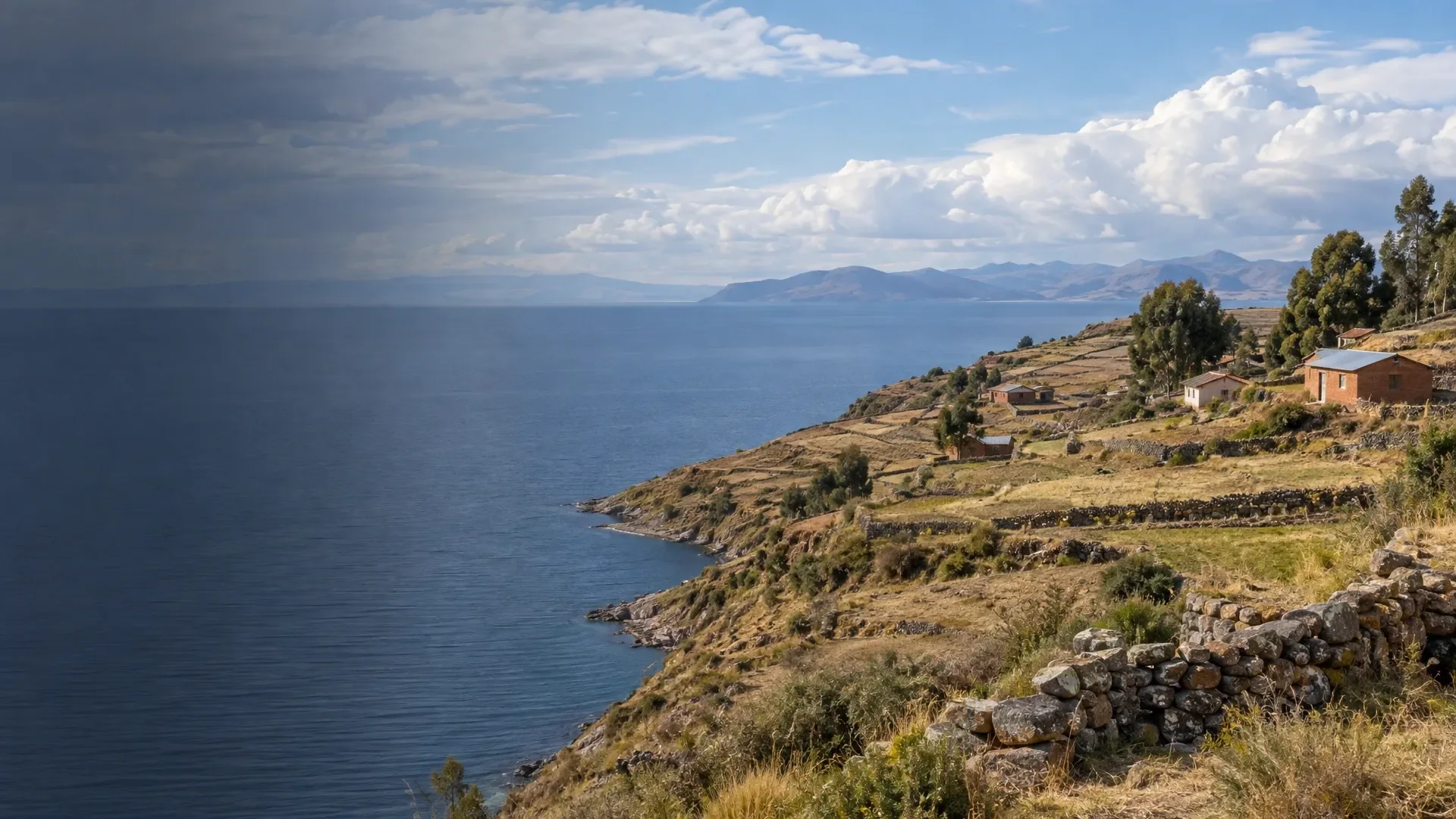
From the boat you can see how Amantaní’s fields rise up the hillside. Once ashore, you walk between stone walls and plots where people grow potatoes and oca, an Andean tuber. Above the fields are Pachatata and Pachamama, two hills that the islanders connect with the farming year.
What Pachatata and Pachamama mean
Amantaní’s communities come together each year for the ritual of Pachatata and Pachamama. Peru’s Ministry of Culture describes how people make offerings to the sacred hills and ask for rain and a good harvest. Walk up from the fields and you can see how closely that tradition is tied to the land.
If you want to walk uphill, ask at your accommodation which path suits your group and where visitors are welcome. Allow time to walk back down if you’re going for sunset. For a shorter walk, stay closer to the fields and the shore.
What you can do with a night on the island
Stay overnight and you can finish your walk without hurrying to the last boat. Spend the afternoon on the paths between the terraces, then have dinner where you’re staying. If you’d like to watch someone weaving or visit a field the next morning, ask your hosts or a local tourism association if they can arrange it.
Arrange the return boat before you go
If you want a walk after breakfast, first check what time you need to be at the landing. When you arrange the outward crossing, confirm your departure pier for the return and whom to contact if plans change. Puno to Amantaní by boat