
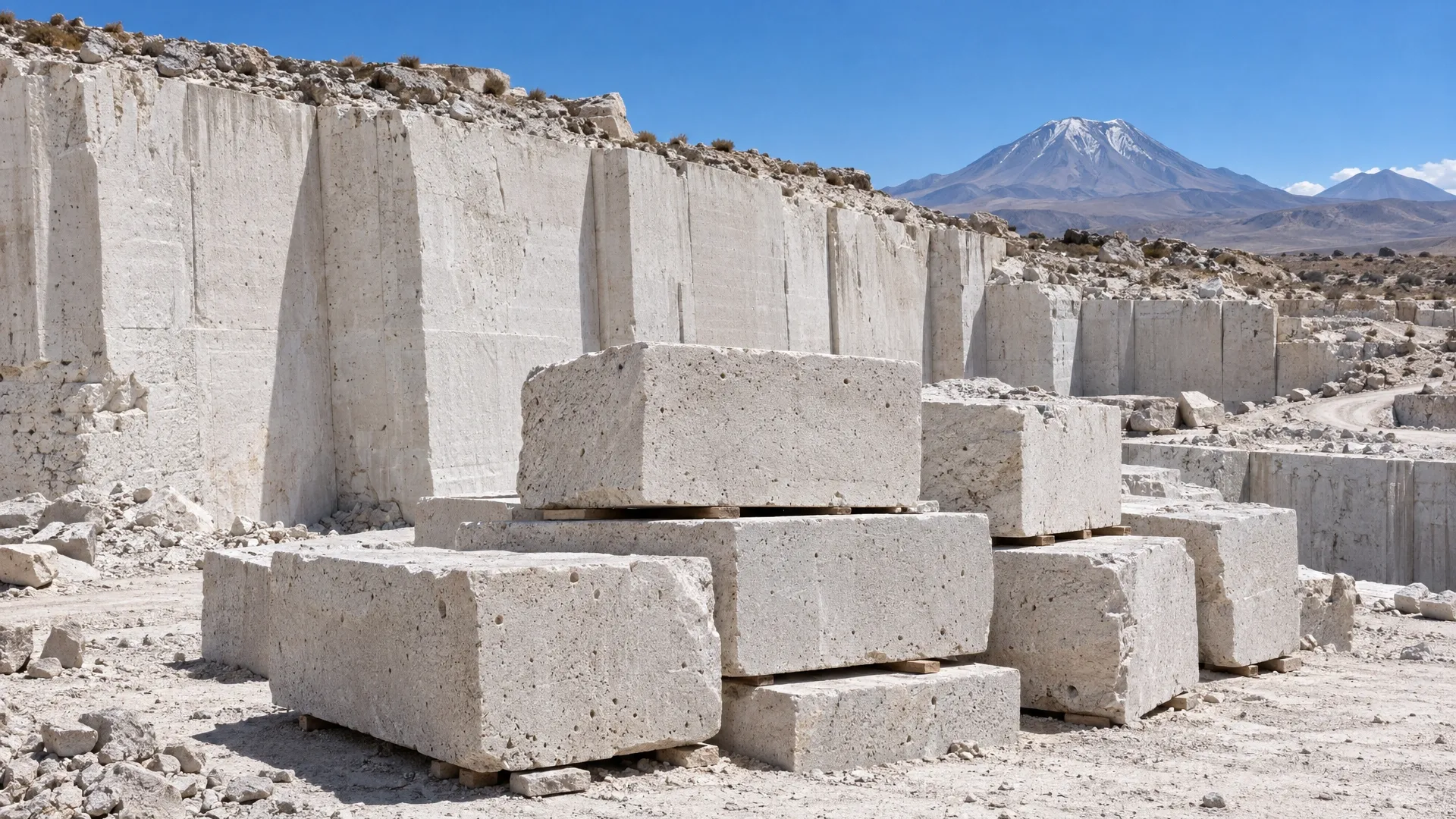
Take a close look at the façade of the Iglesia de la Compañía near Arequipa’s Plaza de Armas. Its details are carved from the same pale stone you see in nearby arches and convent walls. It’s called sillar. At Añashuayco, on the edge of the city, you can see it still in the rock face.
The Añashuayco quarry
Sillar is a porous volcanic rock. It formed when hot material from an eruption settled in a thick layer and fused into stone. Stonecutters quarry large blocks and shape them by hand. To split a block, they drive a row of wedges into it until the stone breaks along the chosen line. Peru declared the knowledge and techniques for quarrying and carving sillar part of its national cultural heritage in 2014.
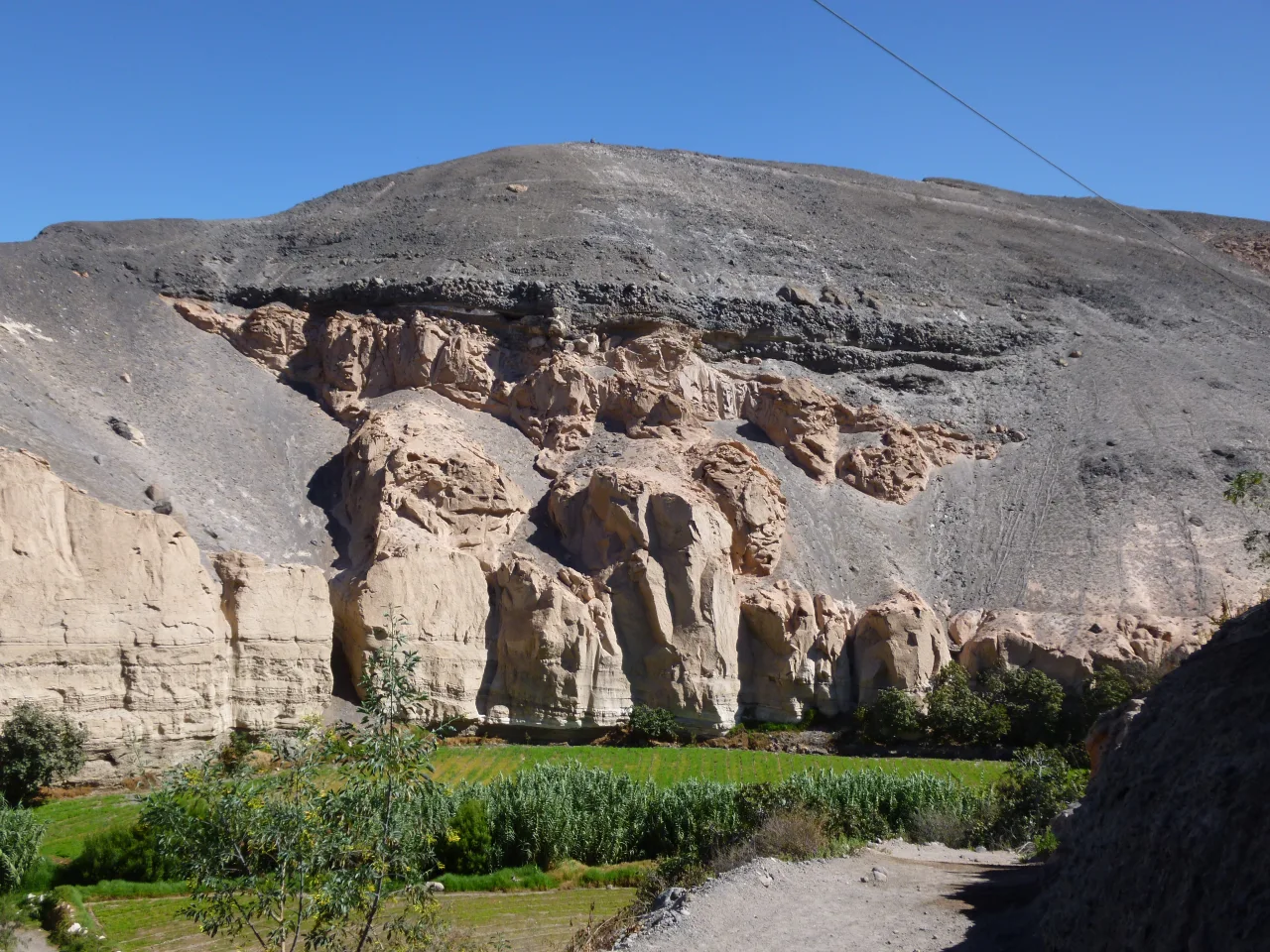
Photo credits

The quarry also has sculptures and reliefs made by the stonecutters. The large carving modelled on the façade of La Compañía is worth comparing with the original in town. If you mainly want to see a block split or dressed, ask when booking whether a stonecutter will be there to demonstrate.
Culebrillas for the gorge and rock carvings
Culebrillas is a separate stop beyond the quarry. On foot you enter a gorge that narrows to just a few metres across in places, with uneven ground underfoot. Farther along are petroglyphs, old figures carved into the rock. Some only catch your eye when you stop and look closely at the wall.
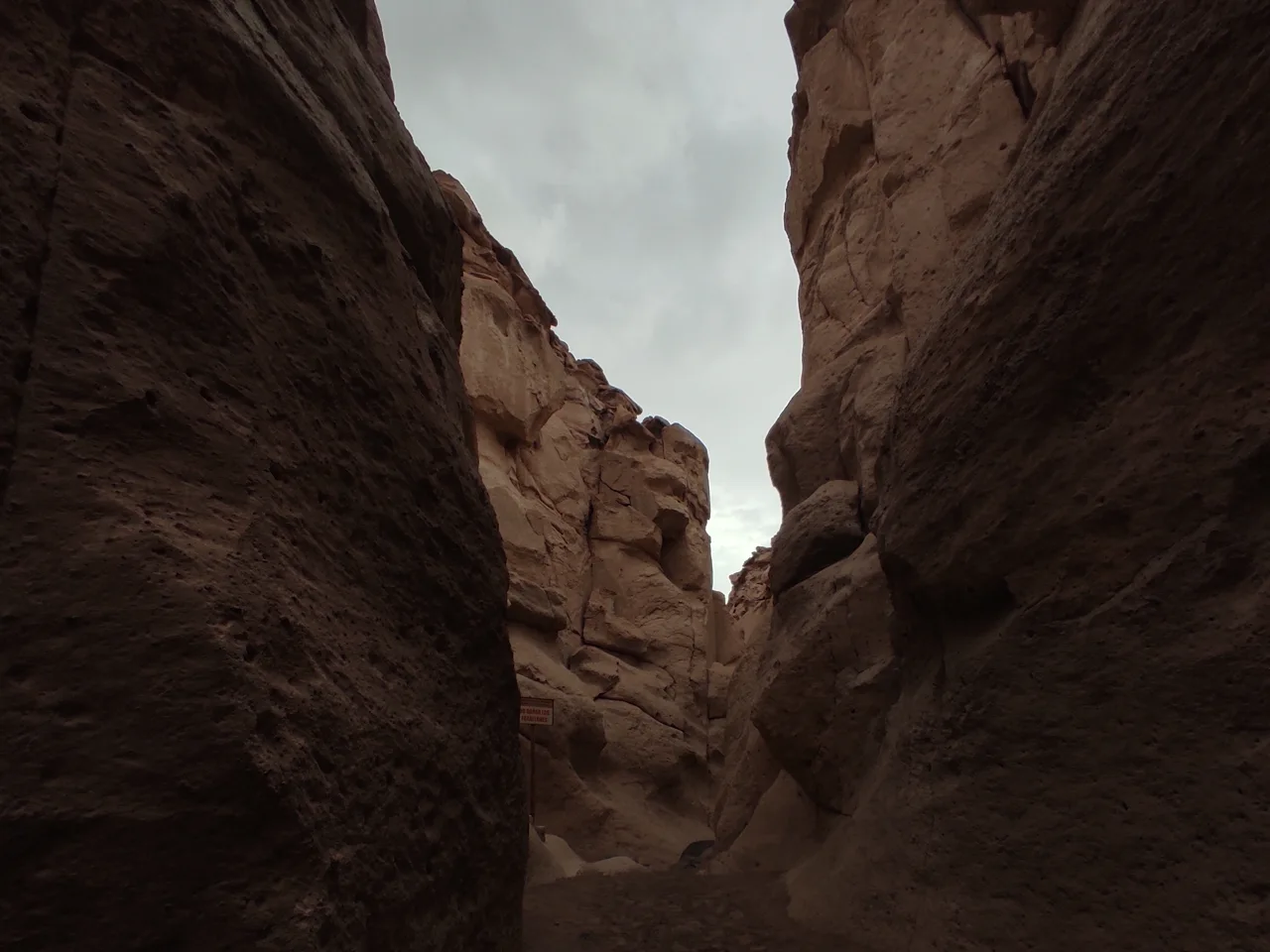
Photo credits

Half a day outside Arequipa
Allow half a day for both stops. If you’re booking a tour, check that it includes Culebrillas if you want to walk into the gorge. If the stonecutting is what drew you out here, take a taxi to Añashuayco and arrange the return ride. Arequipa