
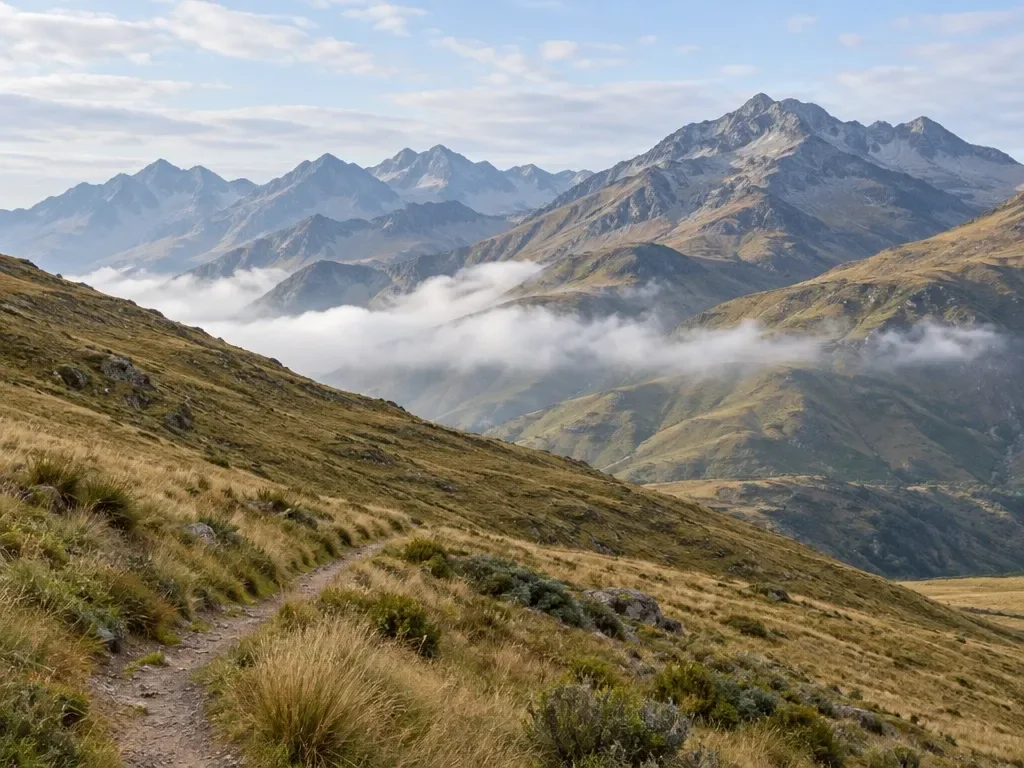
Four treks can look much the same in a photograph: a path, a backpack and snow above the clouds. On the ground they differ. You might pass archaeological sites, cross an exposed mountain pass or arrive in a village where fields and weaving are part of daily life. Start with what you want from the walking itself. Machu Picchu can be the destination, but it does not have to be.
Before comparing routes, put the days outside the trek in your calendar too: arrival, preparation, the drive to the trailhead and your return. A four-day programme need not contain four full walking days. A train journey or a sightseeing day may be included in that count. Read the daily plan before treating the headline duration as time on the trail.
Inca Trail: heritage along the path
On the Inca Trail, the historic road network is a major part of the journey. Peru’s Ministry of Culture lists several authorised routes, including Piskacucho via Wayllabamba and Wiñaywayna to Machupicchu, and a shorter approach from Chachabamba via Wiñaywayna. Ask for the exact route. The name Inca Trail alone does not tell you which section you will walk.
This is a useful starting point if the connection between paths, ruins and the approach to Machu Picchu appeals to you. Compare time on the historic route and overnight stops separately. A shorter version may suit someone who wants that heritage experience without choosing a longer camping trip. “Shorter” describes the programme; it does not establish medical suitability.
Have the operator confirm the trail, date and subsequent Machu Picchu visit before booking. A trek with Machu Picchu in its name does not automatically give you a free choice of every circuit. Use our ticket guide for that separate decision, then compare your preferred visit route with the trek proposal.
Salkantay: mountain walking and the onward connection
Salkantay is worth comparing if mountain scenery and the transition towards greener valleys are your main interests. In Alpaca Expeditions’ five-day programme, Soraypampa and Humantay are followed by Salkantay Pass and Wayracmachay. The operator gives the pass as approximately 4,630 metres. This is one itinerary example, not a universal elevation profile for everything sold as Salkantay.
Pay particular attention to what happens next. The official Inca road network also includes a route through Soraypampa, Salkantaypampa and Inkachiriaska that joins Wayllabamba and Wiñaywayna. Another offer may use a different approach to Machupicchu Pueblo. The trek name is therefore insufficient to establish access arrangements, reservations or the final travel days.
Put the overnight stops side by side when comparing two offers. Alpaca describes glass cabins and domes in that particular programme; these describe its product. They do not establish the showers, heating, shared facilities or accommodation used by another organisation. If you prefer camping, compare the mattress, sleeping bag and what you carry yourself. The photograph of a dome cannot answer those questions.
Lares: villages along a mountain route
For Lares, the inhabited highlands can be an important part of the decision. Apus Peru describes a four-day version through Chaullacocha and Rayancancha, followed by a transfer and train to Aguas Calientes. Mountain passes and campsites come before the Machu Picchu visit in that programme. It is not a continuous footpath that simply ends at the citadel.
The same example gives a high point of 4,438 metres and a campsite around 3,730 metres for its second walking day. Compare both figures: the day’s highest point and the place where you sleep afterwards are different features of an itinerary. Ask for the numbers for your particular version. Describing a trek as cultural does not remove its mountain passes.
An encounter needs its own arrangements too. Ask who organises a proposed visit to a weaver or host family, how much time it receives and what the host wants to share. A village on the route is not an activity catalogue open to passing visitors. Give the meeting substance rather than treating it as another stop between two passes.
Ausangate: give the mountains their own place in your trip
Consider Ausangate when the mountain landscape itself is the purpose of your journey. Apus Peru’s five-day Ausangate programme combines Vinicunca, several passes and the seven lakes, returning through Pacchanta to Cusco. That itinerary does not finish at Machu Picchu. A visit there needs its own onward travel, accommodation and entry arrangements.
A camping circuit and a lodge-based trek are also different ways to travel here. Andean Lodges describes several versions with stays at its own lodges. Compare the valleys, passes and overnight locations as well as the number of days. A shorter version may show different parts of the landscape; fewer days need not mean the same circuit completed faster.
You do not have to keep your trek near Cusco
If you mainly want several days among mountains and Machu Picchu is not a requirement, compare Santa Cruz and Huayhuash in our separate guides too. Santa Cruz belongs to the Cordillera Blanca; Huayhuash is a different range. For Choquequirao, the archaeological site and the approach trek are central to the choice. Give these journeys their own place rather than adding them as minor extras to a full itinerary.
What should the proposal actually tell you?
List each day’s start and finish, overnight stop, elevation, ascent and descent, and expected walking time. Establish which sections use transport, where your main luggage goes and what you carry while walking. Have guiding, meals, entry and equipment itemised. Then compare prices for the same components; an included sleeping bag may be more useful than a grander product name.
Also discuss what happens if one person needs to turn back or the programme changes. Who accompanies them, how is the return organised and what costs or reservations are affected? Discuss altitude and exertion plans with a qualified healthcare professional, and the practical arrangements with the operator. A review score or fixed number of preparation days cannot establish what suits your travelling companions.
If two treks still appeal, write down the difference you would actually notice: a historic approach, another landscape, more time with a host or a different kind of bed. Then see what must come out of the rest of your itinerary to make room. The right trek for this journey need not be the longest. It should be one you actually want to spend those days doing.