
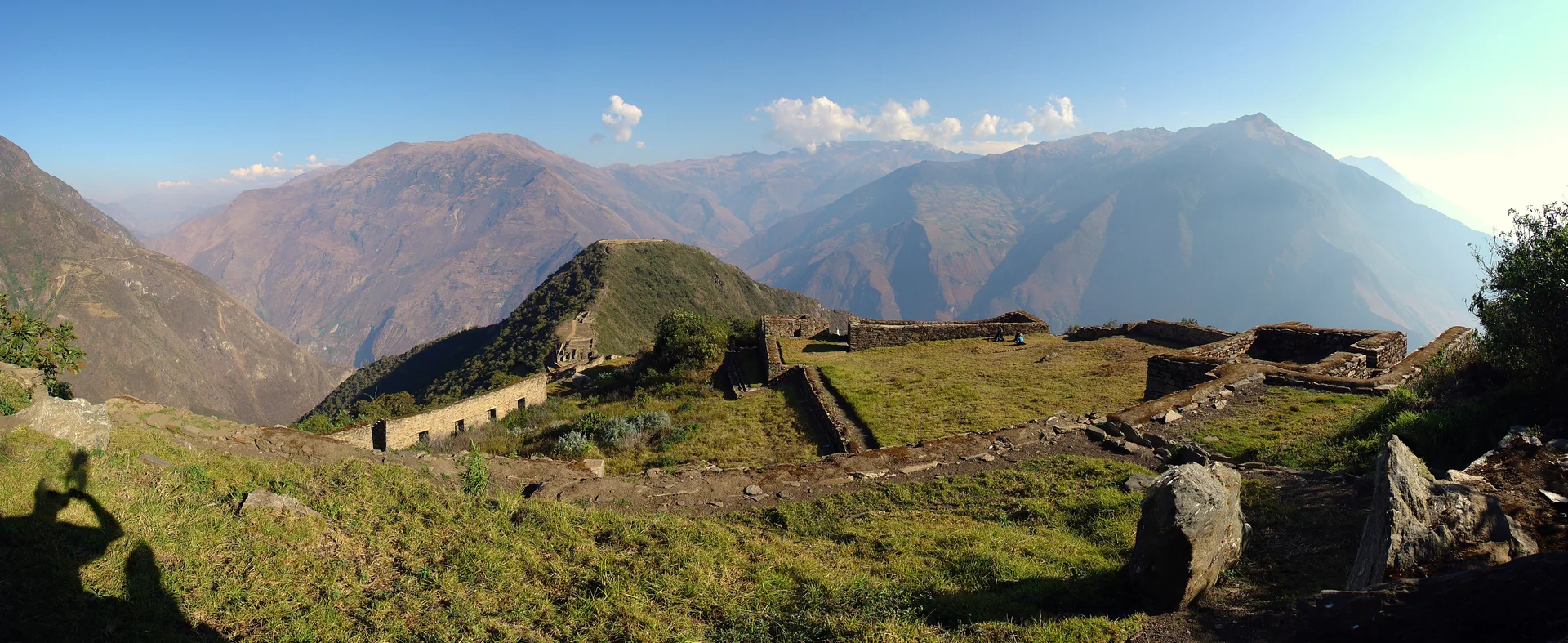

From the main plaza at Choquequirao you look out over a deep valley. The walls of long stone halls stand nearby. Farther down are farming terraces, and on the western slope the builders set white llamas into the walls. Start at the plaza, then look down the sides of the mountain to see how far the Inca city extended.
Why did the Inca build here?
Choquequirao lies in the Vilcabamba mountains west of Cusco. The ridge may seem remote, but old paths linked the settlement to other places in the region, including Vitkus. Archaeologists have found pottery from before the Inca. Under Inca rule, the settlement grew in the fifteenth century to include large plazas, halls and terraces. Archaeologists have identified buildings used for administration, alongside houses and ceremonial spaces.
Colonial records suggest to researchers that Choquequirao may have belonged to an Inca ruler’s estate. The plazas, temple buildings and platform on the levelled hilltop point to a place where ceremonies were also held. It remains uncertain which ruler commissioned work here and what rites took place.
There was an everyday side to the city too. People grew food on the slopes and carried water along the terraces through channels. Harvests could be kept in storerooms known as qollqas. Researchers found platforms with ventilation ducts in some of these buildings. The ducts let air circulate beneath the stored food.
Spanish colonisation changed life around Choquequirao. Towards the end of the sixteenth century, colonial authorities brought people from the surrounding area together in Cachora, the village many trekkers now pass on their way to the site. How long people continued living at Choquequirao after that remains uncertain.
What can you see of the city today?
At the main plaza, take a look at the long halls known as kallankas. Some have several doorways in a row. These were large spaces where people could gather. Look at the houses and courtyards nearby too. It gives you a sense of how close daily life and gatherings were to each other here.
The view from the ushnu
Near the plaza is a hill with a summit the Inca levelled. At the top is the ushnu, a walled platform probably used for ceremonies. From there you can see how narrow the ridge is and how steeply the land falls away on either side. It makes the decision to build a city here all the more striking.
Look for the white llamas
The llamas are on the western slope, below the plaza. Look closely at the dark walls and you’ll see white stones forming long necks and little feet. Up close you can see how the figures were put together stone by stone. Step back for a look at how the llamas are spread across the terrace walls.
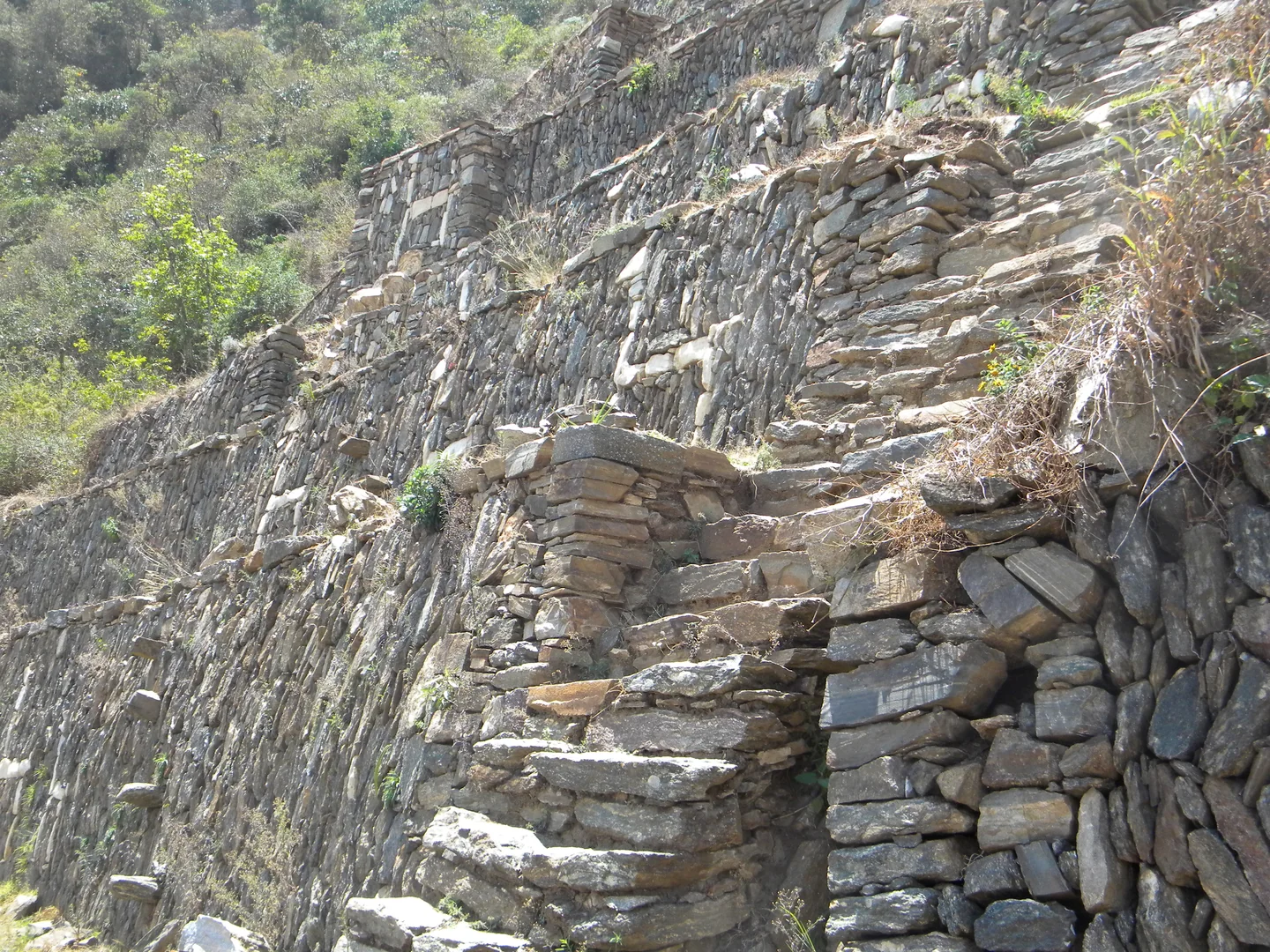
Photo credits

Did the builders picture a herd heading towards the mountains? That is one interpretation. Archaeologist Patrice Lecoq suggested the Andean celestial llama, a figure in the Milky Way. What the makers meant by these llamas is still an open question.
Make time for the llama terraces. You’ll walk down to them and have to climb back up. I’d spend an extra day at Choquequirao if the alternative is a quick turn around the plaza before setting off back down. On a guided trek, ask how much time you’ll actually have here.
Water between the terraces
If you’re curious about how the Inca farmed here, ask about Paqchayoq too. Its terraces lie in a side ravine, with steps and water channels between them. The terraces also helped support the steep slopes. Ask on site which areas you can see and what you have time for alongside the llamas.
There’s also Pikiwasi, where long stone halls flank narrow passages and short flights of steps. It’s quite a change from the open plaza.
The walk to Choquequirao
The usual approach starts at Capuliyoc, near Cachora in Apurímac. You descend to the river and climb via Santa Rosa and Marampata to the ruins. On a return trek you cross the same canyon again. If you’re coming from Cusco, allow time for the drive to the trailhead.
Four or five days, or on to Machu Picchu?
Many return treks take four or five days. Ask how the operator uses the extra day. Some split the walking days differently, or include a separate visit to Machu Picchu in the package.
The onward trek towards Machu Picchu continues deeper into the mountains, including towards Yanama. It needs more time and different preparation from the return trek. Current access also matters. In its notice of 27 March 2026, Peru’s Ministry of Culture still described the section at Río Blanco as impassable. Before booking, have the operator confirm the route it will use and whether it has been cleared for access.
How to compare trek programmes
Check where you’ll sleep the night before the visit. That tells you how far you still have to walk in the morning and how long you’ll have for the terraces before you start back.
If you want to understand what the buildings were used for, a guide who knows the city can help. On an organised trek, also ask who’ll walk with you and what’s included for transport, meals, accommodation, luggage and admission. Inca Trail, Salkantay, Lares or Ausangate: which trek suits you?
What is happening with the Choquequirao cable car?
There is a plan for cable cars intended to make Choquequirao much easier to reach from the regions of Cusco and Apurímac. They form part of a larger project with improved access roads and visitor facilities. In October 2026, Mincetur was still discussing a forthcoming project presentation by ProInversión. That was not an opening announcement. Plan for the trek rather than a cable car ride.