
Planning accessible travel in Peru: arrivals, rooms and museums

Practical questions about transport, hotel rooms, toilets and visits beyond Machu Picchu, with examples from Lima and MINCETUR’s official 2026 guide.

View my plan

A beautiful museum gallery is little use if its entrance can only be reached by stairs. A spacious hotel room tells you nothing about the shower or the pavement outside. When planning around mobility, vision, hearing or the way information is presented, you need specific answers. Start with what you use and need during an ordinary travel day. This guide helps you have that conversation, with examples beyond Machu Picchu.

The whole day needs to connect

In 2026, MINCETUR published the Guía de Turismo Accesible: Turismo para Todos. It is aimed at tourism providers and site managers. Its central idea is the entire chain: finding information, arriving, using transport, staying somewhere, visiting a place and returning. That is a useful starting point for your preparation. The document does not establish that every hotel or destination mentioned is suitable for your circumstances.

Write down what makes a difference for you. Can you use a few steps, or do you need a route without steps? Do you want to remain in your own wheelchair? What help do you want, and what would you prefer to do yourself? Explain your communication preferences too. Ask providers to address you directly, including when someone is travelling with you. This keeps the conversation about your trip and gives you more than the word “accessible” in response.

Start with how you will actually board

Lima Airport lists facilities including ramps, lifts, tactile wayfinding and information desks with support for travellers with different requirements. For assistance throughout the airport journey, it directs passengers to their airline. Ask the airline where assistance begins and ends, who will meet you on arrival and what happens during a connection. Borrowing a wheelchair at an information desk is a different service from assistance all the way to your aircraft seat.

For a transfer, discuss the actual vehicle that will be used. Ask about boarding, steps, equipment and room for your own mobility aid. If you are taking a wheelchair or another device, send its dimensions and the information requested by the carrier. Have them explain whether you can remain in your own chair during the journey or need to transfer, and how this is arranged. Agree boarding assistance in advance; leave assessment of the transport arrangement and its suitability to the provider involved.

Match the drop-off point to the entrance you can use. Ask for a photograph of the route between them, including kerbs and any ramp. Repeat the question for the return journey. A driver who knows the correct entrance saves a lot of searching on a museum day. Ask the same of a restaurant stop: entering the building and reaching your table are both part of the arrangement.

Ask for photographs of the room you are booking

A general room category does not confirm the particular room you need. Ask which room number or layout the accommodation can reserve for you. Have them show the route from the entrance to the room: which floor is it on, are there intervening steps and how do you reach any lift? Request clear door and lift openings, space beside the bed and bed height. Compare those details with what you use; a badge or a photograph of the lobby does not replace them.

Ask for separate bathroom photographs, preferably from the doorway and from the shower area. Where is the toilet, which side has clear space and what supports are fitted? Is there a shower lip, what seating is available and how do you reach it? Request measurements when a photograph does not answer the question. These details need to describe your particular room, rather than another bathroom elsewhere in the hotel.

Consider toilets during the day too. Ask the museum or restaurant where they are, how you reach them and what space and facilities they have. A well-equipped hotel bathroom does not fix a broken link in your day out. Choose one visit with clearly confirmed facilities rather than several stops described only by their main entrance. That also leaves time to look around without rushing.

Two museums, different questions

Museo Larco in Lima describes ramps to its exhibition galleries and gardens, toilets for visitors with disabilities and wheelchairs available to borrow on the first level. Those are specific starting points for further questions. Ask the museum to explain the entrance, the route to your chosen galleries and the toilet for your visit. If you want to borrow a wheelchair, confirm availability for your time. This description is not a personal assessment of usability for every visitor.
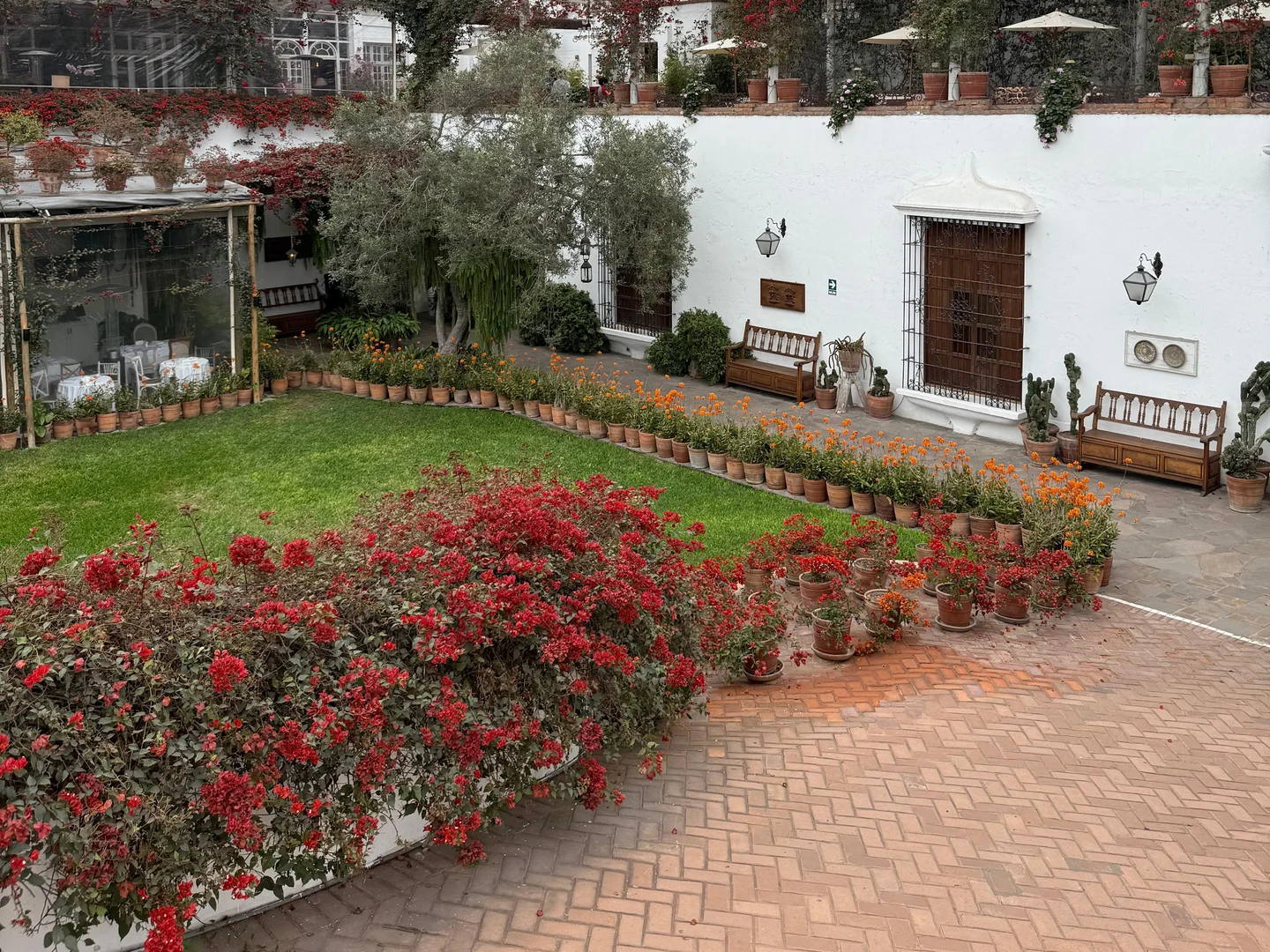
Museo Larco courtyard with white walls, benches, potted plants and flowering bougainvillea.
The courtyard at Museo Larco in Lima.
Photo creditsIn3sc1v2025SourceCC0 1.0Modified · Image credits

At Pachacamac, the distinction between the museum and the archaeological zone matters. The museum lists a Braille map and descriptive Braille guides for its permanent exhibition. It also states that its loan wheelchairs cannot enter the archaeological zone. For the outdoor site, it describes a separate electric-cart service by arrangement, listed on the published page from Tuesday to Friday. Contact the museum beforehand to discuss the visit available on your date. Facilities inside the gallery do not establish a fully wheelchair-usable route through the sanctuary.

Include information in your arrangements

Ask for the format you use: written instructions, descriptive explanation, larger text or captions. An audio message alone does not work for everyone, nor does an undescribed photograph. For a guided visit, ask how the explanation is delivered and which language is used. Do not assume a shared sign language. A short description of the order of a visit can also help when you want to know beforehand what will happen.

Discuss with your accommodation and visit venue how you will receive warnings and what support has been arranged for leaving the building. Ask whom you can approach on site. This is a conversation about their facilities and procedures; this guide does not give evacuation instructions or assess individual safety. Keep the answers with your confirmations so you do not have to explain everything again to each new staff member.

Finally, send back one short summary: date, traveller, mobility aid, vehicle, agreed room, access route and contact person. Ask the provider concerned to correct anything unclear. If the reply is only a general “yes, accessible”, follow up on the missing detail. Those answers let you choose between real possibilities and leave more attention during the trip for the place that brought you to Peru.

How this page was checked

Changeable information receives its own check. Open a claim to see its method, next review date, and, where possible, the public source.

Lima Airport lists facilities including ramps, lifts, tactile wayfinding and information desks with support for travellers with different requirements. For assistance throughout the airport journey, it directs passengers to their airline. Ask the airline where assistance begins and ends, who will meet you on arrival and what happens during a connection. Borrowing a wheelchair at an information desk is a different service from assistance all the way to your aircraft seat.Changeable information
Ask for the format you use: written instructions, descriptive explanation, larger text or captions. An audio message alone does not work for everyone, nor does an undescribed photograph. For a guided visit, ask how the explanation is delivered and which language is used. Do not assume a shared sign language. A short description of the order of a visit can also help when you want to know beforehand what will happen.Changeable information
  • Official source checkedReview within registered expertise
    Checked 31 October 2026 · Review again before 29 January 2027
Report a change to this claim
Discuss with your accommodation and visit venue how you will receive warnings and what support has been arranged for leaving the building. Ask whom you can approach on site. This is a conversation about their facilities and procedures; this guide does not give evacuation instructions or assess individual safety. Keep the answers with your confirmations so you do not have to explain everything again to each new staff member.Changeable information
  • Official source checkedReview within registered expertise
    Checked 31 October 2026 · Review again before 29 January 2027
Report a change to this claim
Museo Larco in Lima describes ramps to its exhibition galleries and gardens, toilets for visitors with disabilities and wheelchairs available to borrow on the first level. Those are specific starting points for further questions. Ask the museum to explain the entrance, the route to your chosen galleries and the toilet for your visit. If you want to borrow a wheelchair, confirm availability for your time. This description is not a personal assessment of usability for every visitor.Changeable information
  • Editorially researchedReview within registered expertise
    Checked 31 October 2026 · Review again before 14 November 2026
Report a change to this claim
At Pachacamac, the distinction between the museum and the archaeological zone matters. The museum lists a Braille map and descriptive Braille guides for its permanent exhibition. It also states that its loan wheelchairs cannot enter the archaeological zone. For the outdoor site, it describes a separate electric-cart service by arrangement, listed on the published page from Tuesday to Friday. Contact the museum beforehand to discuss the visit available on your date. Facilities inside the gallery do not establish a fully wheelchair-usable route through the sanctuary.Changeable information
  • Official source checkedReview within registered expertise
    Checked 31 October 2026 · Review again before 14 November 2026
Report a change to this claim
Ask for separate bathroom photographs, preferably from the doorway and from the shower area. Where is the toilet, which side has clear space and what supports are fitted? Is there a shower lip, what seating is available and how do you reach it? Request measurements when a photograph does not answer the question. These details need to describe your particular room, rather than another bathroom elsewhere in the hotel.Changeable information
  • Official source checkedReview within registered expertise
    Checked 31 October 2026 · Review again before 29 January 2027
Report a change to this claim
Consider toilets during the day too. Ask the museum or restaurant where they are, how you reach them and what space and facilities they have. A well-equipped hotel bathroom does not fix a broken link in your day out. Choose one visit with clearly confirmed facilities rather than several stops described only by their main entrance. That also leaves time to look around without rushing.Changeable information
  • Official source checkedReview within registered expertise
    Checked 31 October 2026 · Review again before 29 January 2027
Report a change to this claim
Finally, send back one short summary: date, traveller, mobility aid, vehicle, agreed room, access route and contact person. Ask the provider concerned to correct anything unclear. If the reply is only a general “yes, accessible”, follow up on the missing detail. Those answers let you choose between real possibilities and leave more attention during the trip for the place that brought you to Peru.Changeable information
  • Official source checkedReview within registered expertise
    Checked 31 October 2026 · Review again before 29 January 2027
Report a change to this claim
A beautiful museum gallery is little use if its entrance can only be reached by stairs. A spacious hotel room tells you nothing about the shower or the pavement outside. When planning around mobility, vision, hearing or the way information is presented, you need specific answers. Start with what you use and need during an ordinary travel day. This guide helps you have that conversation, with examples beyond Machu Picchu.Changeable information
  • Official source checkedReview within registered expertise
    Checked 31 October 2026 · Review again before 29 January 2027
Report a change to this claim
Write down what makes a difference for you. Can you use a few steps, or do you need a route without steps? Do you want to remain in your own wheelchair? What help do you want, and what would you prefer to do yourself? Explain your communication preferences too. Ask providers to address you directly, including when someone is travelling with you. This keeps the conversation about your trip and gives you more than the word “accessible” in response.Changeable information
  • Official source checkedReview within registered expertise
    Checked 31 October 2026 · Review again before 29 January 2027
Report a change to this claim
A general room category does not confirm the particular room you need. Ask which room number or layout the accommodation can reserve for you. Have them show the route from the entrance to the room: which floor is it on, are there intervening steps and how do you reach any lift? Request clear door and lift openings, space beside the bed and bed height. Compare those details with what you use; a badge or a photograph of the lobby does not replace them.Changeable information
  • Official source checkedReview within registered expertise
    Checked 31 October 2026 · Review again before 29 January 2027
Report a change to this claim
Match the drop-off point to the entrance you can use. Ask for a photograph of the route between them, including kerbs and any ramp. Repeat the question for the return journey. A driver who knows the correct entrance saves a lot of searching on a museum day. Ask the same of a restaurant stop: entering the building and reaching your table are both part of the arrangement.Changeable information
  • Official source checkedReview within registered expertise
    Checked 31 October 2026 · Review again before 29 January 2027
Report a change to this claim
For a transfer, discuss the actual vehicle that will be used. Ask about boarding, steps, equipment and room for your own mobility aid. If you are taking a wheelchair or another device, send its dimensions and the information requested by the carrier. Have them explain whether you can remain in your own chair during the journey or need to transfer, and how this is arranged. Agree boarding assistance in advance; leave assessment of the transport arrangement and its suitability to the provider involved.Changeable information
  • Official source checkedReview within registered expertise
    Checked 31 October 2026 · Review again before 29 January 2027
Report a change to this claim
Is this no longer correct? Tell us →