
In the Lurín Valley, on Lima’s southern side, stands a sanctuary that drew travellers long before the arrival of the Incas. They came to consult the oracle of Pachacamac. Today, temples, plazas and museum objects help explain its significance. Give the landscape as much attention as the buildings. A ceremonial centre becomes easier to understand when you consider how people approached it and where its temples stood within the wider site.

An oracle that brought different societies together
The museum describes Pachacamac as an important religious centre on Peru’s central coast, with a history spanning more than a thousand years. The deity was believed to have the power to move the earth. A more revealing question is why people from different parts of the Andes sought answers here. Pachacamac was a destination in its own right.
Lima, Wari, Ychma and Inca all belong to the story. The museum’s own timeline shows successive societies shaping and reusing the sanctuary. This helps you avoid treating every structure as an Inca temple. Look for who built something, when it changed and the function associated with it. That sequence makes Pachacamac particularly interesting after visits to other archaeological places.
Look for the differences between the temples
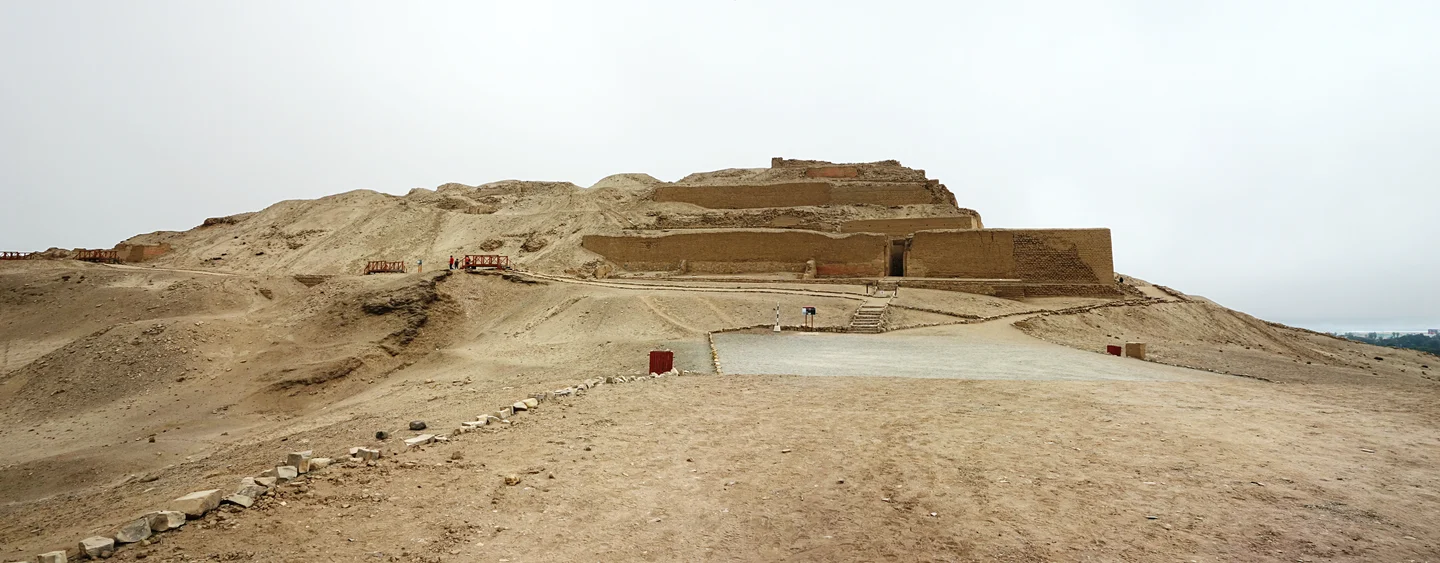
The Incas added the Templo del Sol and Acllawasi, among other structures. The museum associates the Sun Temple with a prominent position in the landscape and the Acllawasi with women involved in the cult. Use these names as starting points for the explanation during your visit. Ask which buildings form part of your particular circuit and where you will view them from; a name on a historical plan does not itself grant access.
The Templo Pintado tells another part of the story. Drawing partly on chronicles, museum researchers associate this building with the chamber of the sacred figure. Research and conservation go together here: archaeologists study the building’s development and painted decoration while working to limit deterioration. Ask your guide what remains visible and which interpretations come from research.
Start with the wooden figure and the textile door
The museum describes itself as an introduction to the sanctuary. That makes a useful order for a visit. Indoors, materials and images help explain things that may be less obvious outside. Choose a few objects to examine properly, rather than passing every case at the same pace. Ask on arrival which parts of the collection are currently on display; an online collection does not guarantee the arrangement on your visiting day.
One important object is the wooden figure associated with Pachacamac. A double figure is carved at the top, with animals, birds and plants among the images below. The collection also includes a textile door decorated with Spondylus shells. According to the museum, both finds come from the Templo Pintado. That connection between an object and a building gives the museum its value: outside, a temple now has a tangible story.
Make time for textiles and ceramics, too. The collection page describes geometric bird and fish motifs on fabrics and Wari offering vessels depicting people, animals and plants. You can look for repetition, material and shape without specialist knowledge. Choose one motif and describe what you can actually see. It also offers a way for children and adults to look at an object together.
The museum and outdoor site each deserve attention
If objects and interpretation interest you most, leave enough room for the museum. If you also want to experience the sanctuary’s scale, discuss the current outdoor circuit on arrival. Ask how much walking is involved, where you can stop and what a guided explanation covers. Those answers help you decide how extensive to make your visit. Keep the museum and archaeological site together as two parts of your plan, allowing time to move between them.
For transport, use the Museo Pachacamac entrance on the Antigua Carretera Panamericana Sur at kilometre 31.5, in Lurín district. Giving only the place name Pachacamac is less precise. Agree where and when you will be collected and how to make contact if the visit changes. Plan the journey from your actual accommodation; a departure from the historic centre and one from Miraflores need not lead to the same day’s arrangement.
On 31 October 2026, the official visiting page listed a general adult admission tariff of S/15 for the museum and archaeological site. This is the published general admission category, not a determination of the price or documents applying to every member of your party. Check those before setting out. The same page treats guiding as a separate service, subject to availability. When booking, ask exactly what your visit includes and which language the explanation will use.
The visiting information describes assistance and accessibility provisions, with different conditions for the museum and archaeological area. Ask about the actual route you want to follow and support for your date. Treat a listed provision as the beginning of that conversation. You need to understand how the indoor and outdoor sections connect and where a shorter visit might be possible. That lets you decide on the actual arrangement without assuming general accessibility.
With children: give looking a small purpose
Each child might choose an animal or pattern in the museum and talk about it afterwards. The museum website also offers educational resources, including origami and “Aprendo y juego”. These are starting points for preparation; ask separately about any guided family programme on your date. Museum guidance asks adults to keep children close and hold their hands. Follow staff directions on the site and discuss together where you can walk and look.
The museum recommends comfortable footwear and clothing, a hat and sun protection. Include that preparation when deciding how long to spend outside. Ask staff to explain the circuit in use and follow museum and security directions. Looking at buildings and preserving them then remain connected. You can understand a temple more deeply while respecting the barriers around it.
Give Pachacamac its own outing within your Lima stay. A city museum such as Museo Larco might raise questions about coastal cultures and materials on another day. Our Lima and Callao regional guide places Pachacamac alongside the urban archaeology of Huaca Pucllana. Choose according to what you want to understand and the shape of your trip. Attention to both objects and their original landscape gives the sanctuary more meaning than simply ticking off another temple.
Places to stay in Lima
Compare accommodation locations in Lima as a city base for your visit to Pachacamac.