
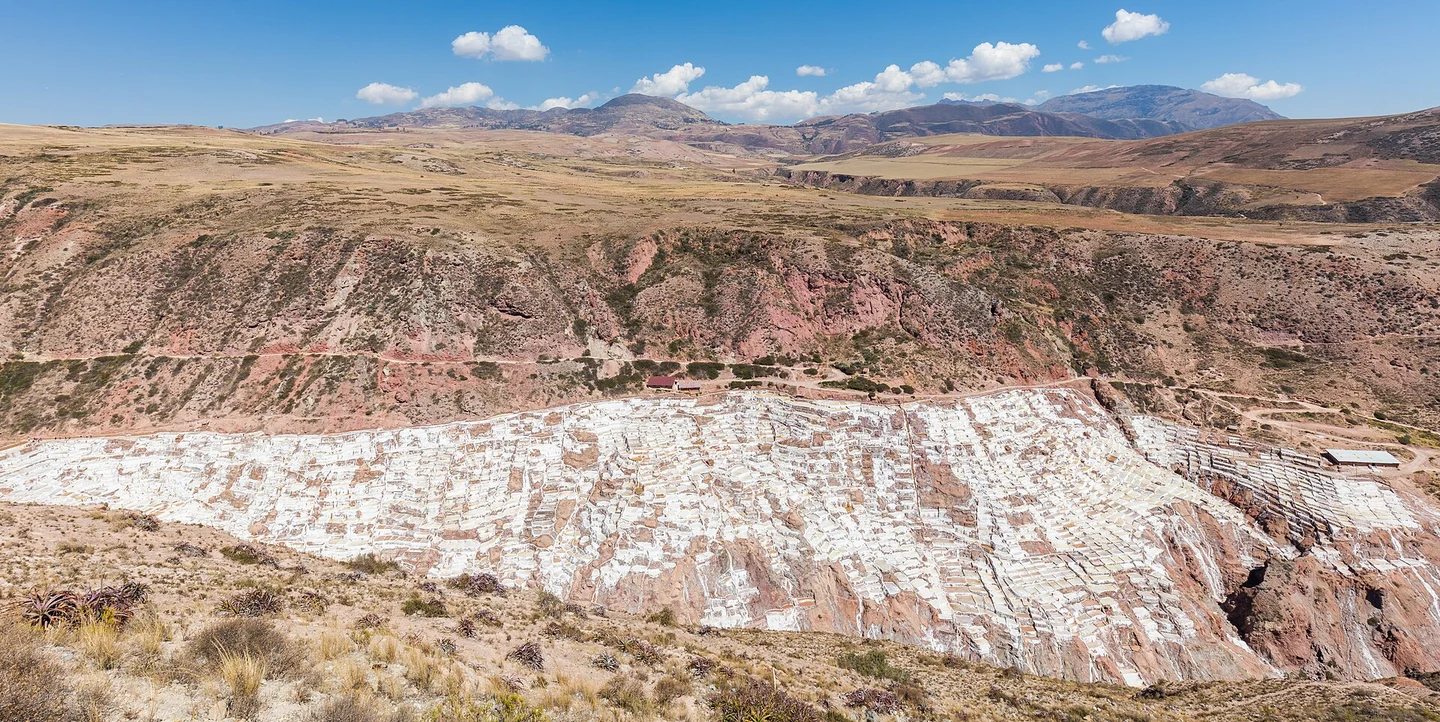

From above, the salt ponds form a large pattern of pale and brown shapes. Closer inspection reveals narrow edges, channels and differences between ponds. Maras is a landscape created through work: brine is distributed, water evaporates and salt remains. Understand that process first, then choose your photograph.
The Ministry of Culture explicitly associates the traditional knowledge and techniques with the Maras and Pichingoto communities, passed from one generation to the next. The hillside is also a record of how people use a resource and organise work. Ask who carries out which tasks and how distributing water relates to the use of individual ponds.
Follow the water through the landscape
Producer MARASAL explains that salty water emerges from a spring near Qoripujio and is distributed through narrow channels to shallow ponds. Evaporation leaves salt for harvesting. Look for ponds containing water, those in production and those resting; the producer specifically describes these different states. The landscape therefore need not match the uniformly white promotional photograph on every visit. Moray: exploring the Inca circular terraces
A guide explaining the spring, water distribution and harvest can add more than directions to a photo spot. Ask about the difference between a newly filled pond and one being harvested. Have them identify what is actually visible that day. A description of the production stages does not guarantee that every task will be performed during your visit.
Visit a production site thoughtfully
MARASAL’s visitor information lists the landscape, brine source, production and storage among subjects to see. Follow the visitor route indicated on site. Stay outside work areas not opened to visitors, and do not step between ponds for a photograph without staff directions. An old photograph of somebody on a narrow pond edge does not establish today’s visiting route.
The producer also lists shops selling salt and other products. If you want to buy something, ask about the product and its origin. A small bag of salt can be a pleasant reminder of the work you have just seen. Buying remains your choice rather than a compulsory part of the excursion. Keep time for looking distinct from time for shopping.
Maras and Moray tell different stories
Combining the visit with Moray is interesting if you want to explore how people use the shape of a hillside. Maras concerns brine and production; Moray is an archaeological terrace complex. Have the time allowed at each written into the excursion plan. A rushed double stop is not automatically better than looking closely at one place with an explanation.
MARASAL publishes its own national and international visitor ticket catalogue. Have admission itemised for each place, including anything you still need to buy. Maras–Moray on a programme does not establish that another admission pass covers both. Check the arrangements individually with MARASAL and Moray’s manager.
Include transport after the visit in the arrangement. The producer describes both vehicle access and walking approaches from nearby locations, but those are different plans. Agreeing a drop-off alone does not arrange the rest of your journey. Decide whether you want a short stop or a longer walking component, and have the provider specify its actual starting and finishing points.
Places to stay in Urubamba
Compare the locations of places to stay in Urubamba as a base for visiting Maras.