
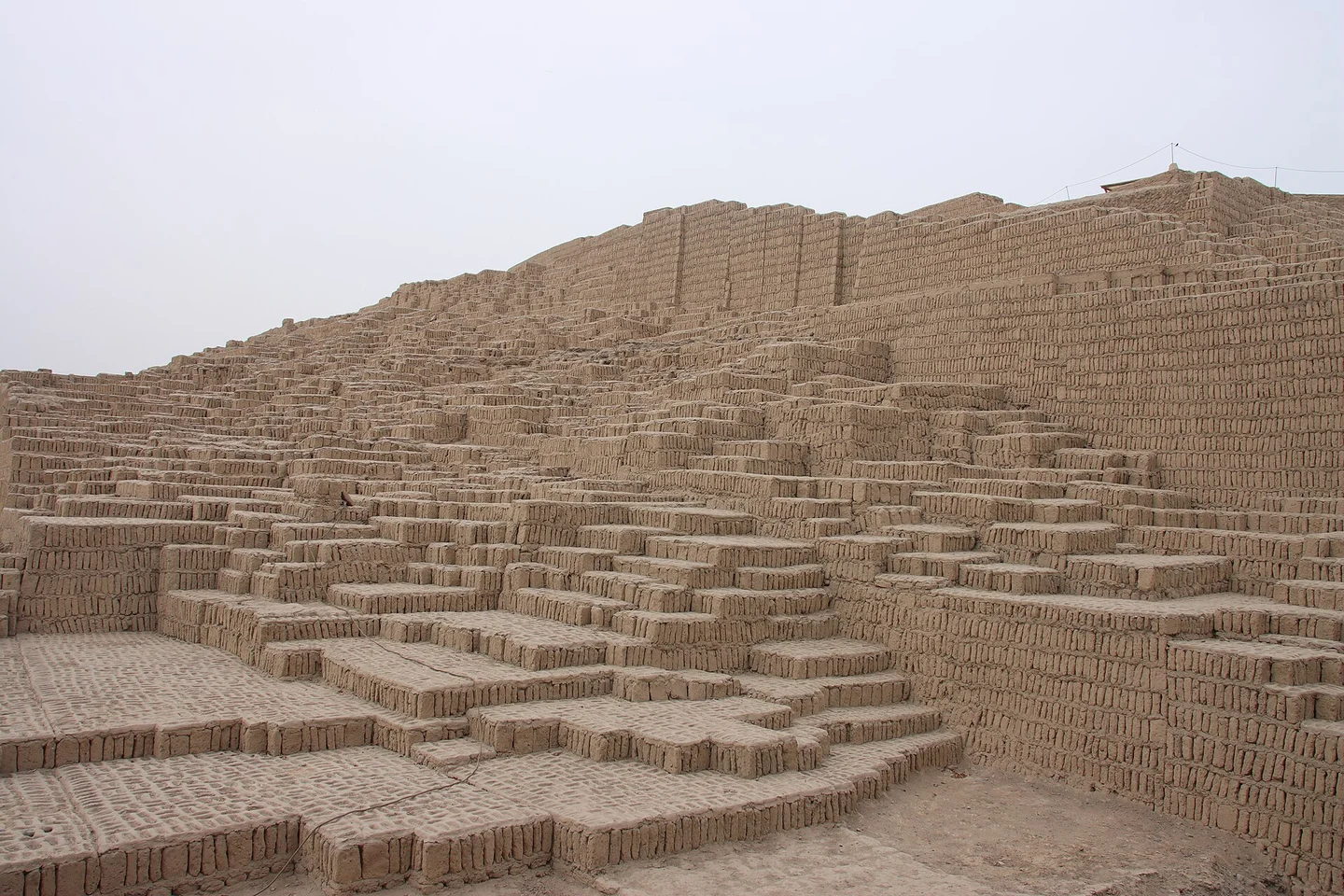
At Huaca Pucllana, the apartment buildings of Miraflores rise behind a large adobe pyramid. The contrast immediately puts Lima into perspective: its history begins long before the colonial squares. The Lima culture built a ceremonial centre here centuries earlier. Look closely at the small bricks. This substantial monument is made from countless modest elements, quite different from the large stone blocks you may see later around Cusco.

Lima, Wari and Ychsma at the same site
PROMPERÚ places construction of the Lima centre at roughly AD 450–650. The building later acquired different uses. Around AD 800, Wari groups used the summit for elite burials; from around AD 1000, Ychsma people also left offerings and burials. Attributing everything here to a single society misses that sequence. A building can survive while the people using it give it a different purpose.
The museum opened in 1984 and holds material from the research project begun in 1981. Its exhibition room, archaeological circuit and native plant and animal park form a connected museum setting. Starting with the excavated objects gives the walls outside more meaning. Look at how an object relates to its findspot and period: a burial find tells a different story from construction material belonging to the original ceremonial phase.
The relationship between old material and present-day interpretation is worth noticing too. A reconstruction helps imagine people using a space, while an original object offers a different kind of evidence. Ask how the two relate in one example. You need not choose between simply enjoying an overall view and trying to retain every archaeological detail.
Look at the building as well as the skyline
A wide photograph captures the contrast between the huaca and the surrounding neighbourhood. Then spend time with a smaller section of wall. How are the bricks arranged? Where does the height or direction change? Which parts are explained during the visit as original construction, later additions or conservation? Those questions offer a useful way into the site without trying to memorise every cultural name and date.
Daytime and evening are different visits
Choose daytime if comparing the different parts of the complex is your priority. The evening format described by PROMPERÚ requires advance booking and excludes ascending the Great Pyramid and visiting the plant and animal park. An evening visit is therefore a different experience, rather than the same circuit under different lighting. Choose according to what matters to you and have the museum confirm the available format and start time for your date.
Allow roughly an hour and a half to two hours in your day for arrival, the circuit and time with the explanations. That is our planning allowance, not a fixed museum duration. Avoid placing an appointment across Lima immediately afterwards. With children, try choosing one building detail and one object mentioned in the interpretation. It gives everyone something specific to discuss without turning every stop into a separate history lesson.
Make it part of a Miraflores day
Pucllana is on Calle General Borgoño in Miraflores. Use the museum’s specific location when arranging your arrival, rather than the neighbourhood name alone. A meal and a coastal walk can show two different sides of the same district. There is no need to append the historic centre, Barranco and another museum. Leaving some space helps the huaca become a visit in its own right rather than a pause before lunch.
If you have one extra day
With an extra day in Lima, choose a visit that raises a different question. Pachacamac puts archaeology in Lurín’s wider landscape and deserves a separate outing. MALI is another choice if Pucllana’s adobe walls make you curious about objects and images across time. Make one of them the main visit. An extra day need not become a catch-up circuit of every remaining museum; a focused addition gives what you have already seen more context. MALI: Peruvian art in the Palacio de la Exposición
Places to stay in Miraflores
Compare the locations of places to stay in Miraflores as a base for visiting Huaca Pucllana.