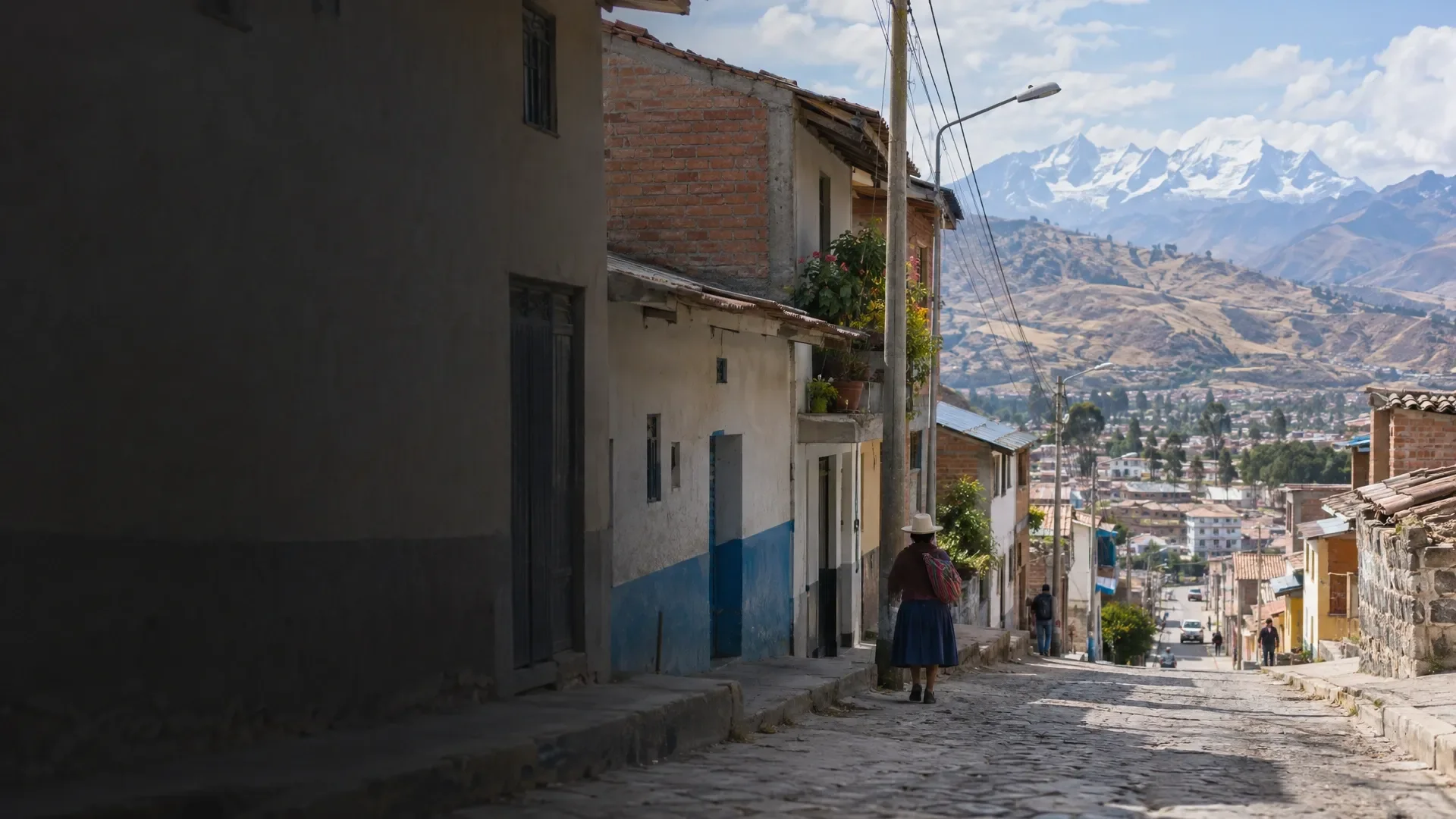
Huaraz sits beside the Cordillera Blanca, a range of snowy peaks, glaciers and deeply cut valleys. Travellers know the lake names, but down in the city there is another story: the history of Áncash, a street that recalls older Huaraz and dishes you do not need hiking boots to enjoy.
The archaeology museum holds stone figures from the Recuay culture. On narrow Calle José Olaya, wooden balconies overlook the paving. Together, these places reveal a long history of settlement and how much Huaraz has changed along the way.
Why Huaraz looks the way it does
The earthquake of 31 May 1970 devastated large parts of Áncash and badly affected Huaraz. Today's city cannot be separated from that rupture and the rebuilding that followed. Do not expect an untouched colonial centre. The places that preserve older features are particularly useful for understanding what you see.
Recuay figures beside the Plaza de Armas
Museo Arqueológico de Áncash Augusto Soriano Infante stands on the west side of the Plaza de Armas. Its collection explores the region before the Spanish conquest through pottery, textiles and metalwork. The adjoining Parque Lítico displays Recuay stone sculptures: a very different introduction to the Andes from a snowy viewpoint.
Look at the faces and poses carved into the stone, then at the objects inside. The museum brings people, materials and landscape together. Its collection also includes human remains; visitors who prefer not to see them can ask which galleries contain them.
Calle José Olaya: a closer look at the city
José Olaya preserves elements of the streetscape from before 1970. The narrow street has white façades, green doors and wooden balconies. Walk through after the museum: the details of the houses make the city's story of rebuilding easier to picture.
Llunca, cuy and cooking underground
Llunca is a wheat and chicken soup. Picante de cuy pairs guinea pig with potatoes and an ají panca sauce. Pachamanca is an underground cooking method using hot stones: meat, potatoes and other ingredients cook together in the earth oven. These dishes are also part of the food traditions associated with José Olaya.
Kanka in Huaraz lists llunca de gallina, jamón serrano and fried trout on its own menu. It also serves shacue, a soup made with broad-bean flour. It is somewhere to consider for a regional lunch, especially if you want to try that soup alongside the better-known dishes.
Llanganuco and Laguna 69 are different visits
Within Huascarán National Park, Chinancocha and Orconcocha lie in the Llanganuco valley between Huascarán and Huandoy. Laguna 69 is a separate destination reached by an uphill walking route. These are not three names for the same photo stop. Ask which lake a proposed trip focuses on and how the day divides between driving, stops and walking.
For a mountain day, the exact route, transport and current SERNANP access arrangements matter. A multi-day trek such as Santa Cruz requires separate preparation, including overnight arrangements and equipment.
A city day that starts after breakfast
Start at the Plaza de Armas and make the museum your main visit. Follow it with lunch and a walk along José Olaya. Keep a mountain outing on a separate day: the drive to the trail is part of it too.
Choosing where to stay
If you want easy access to a city walk or a meal between outings, check your accommodation's position relative to the main square. Ask about luggage storage and room access if you arrive early. For an excursion, confirm the actual pickup point; ‘departure from Huaraz’ does not necessarily mean your hotel door.
What if you do not want to trek?
You do not have to rule Huaraz out. The museum, José Olaya and regional meals give a visit substance without a multi-day trek. If you also want mountain scenery, compare individual park outings first. A drive with a viewpoint stop and a walk to a higher lake require different plans.
Places to stay in Huaraz
Compare the locations of places to stay in and around Huaraz.
Where is it?
Huaraz and the surrounding area.