
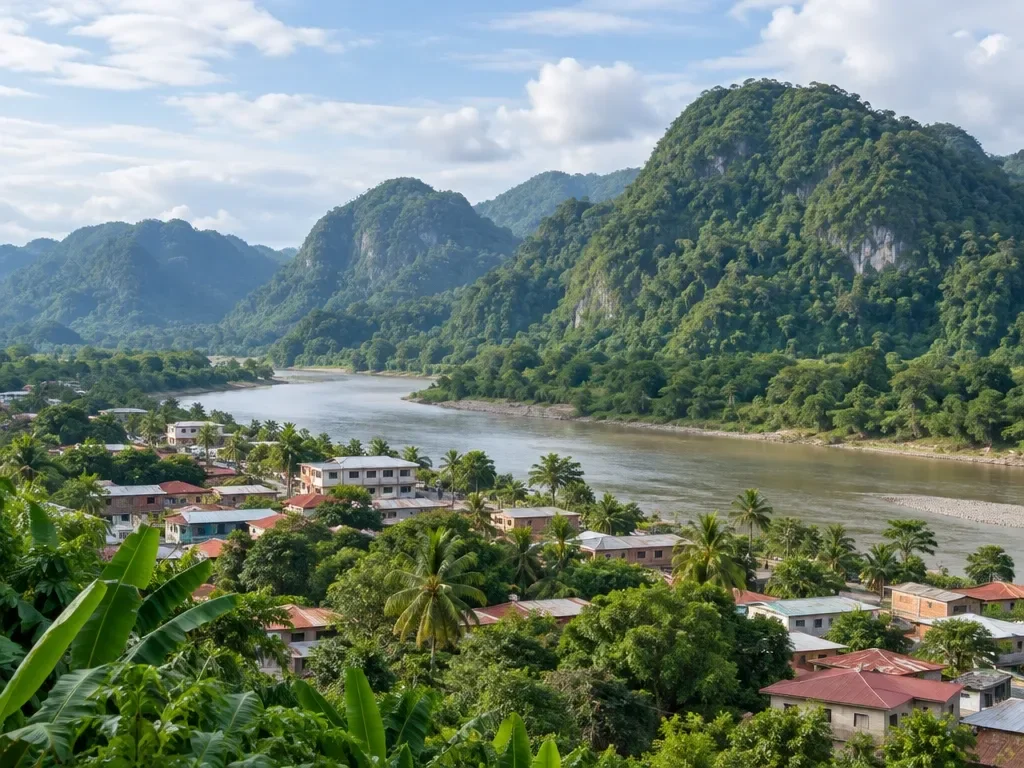
A city below La Bella Durmiente
The ridge of La Bella Durmiente resembles a reclining woman. Its shape belongs to Tingo María’s cityscape, as does the Río Huallaga valley. From Mirador San Francisco La Cruz, city, river and wooded hills come together in one view. It shows how closely the city sits against the landscape of the selva alta, the warm mountain forest on this side of the Andes.
The national park dates from 1965 and protects the mountain range and Cueva de las Lechuzas, among other areas.
Guácharos live in the cave
Cueva de las Lechuzas is a limestone cave with striking rock formations. Its name suggests owls, but its characteristic birds are guácharos, or oilbirds: nocturnal fruit-eaters that are an important conservation focus of the park. Which areas can be visited and what can be seen at that moment need explanation locally.
Tres de Mayo and Quinceañera are different visits
In the Tres de Mayo sector, a walking route leads through forest towards waterfalls such as Gloriapata. The approach, stream and walking form part of the day; this is not a quick addition to the cave. Discuss how far you want to walk, where you turn back and what the return involves. Ask about the whole route rather than only the final metres beside the water.
Quinceañera has its own sector and approach. Its waterfall is not the next stop on the same path from Tres de Mayo. Compare three different starting points as well as three nature names. Choose what you want to experience and coordinate the route for your day with the park. Existing park descriptions do not guarantee that every sector is open today.
A park day from a town base
Tingo María can remain your overnight base for a visit to one of these sectors. Arrange travel to the right entrance and the return as parts of the same agreement. Ask the park where to report and what guidance suits your chosen route. Follow the park rangers’ instructions in force at the time; a route photograph does not show what the path is like after rain.
Two or three nights allow a park day separate from arrival from Huánuco. Work out any onward journey towards Pucallpa separately and check transport for your own travel date.
Where to stay and what to do if it rains
Do I need to sleep in a jungle lodge?
Not to visit these park sectors. Tingo María can be your base; arrange both outward and return transport to your chosen entrance.
What if it rains heavily?
Ask the park which sector is open and suitable. Swap your nature and city days if useful; swimming is not a guaranteed part of the outing.
Places to stay in Tingo María
Compare the locations of places to stay in and around Tingo María.
Where is it?
Tingo María and the surrounding area.