
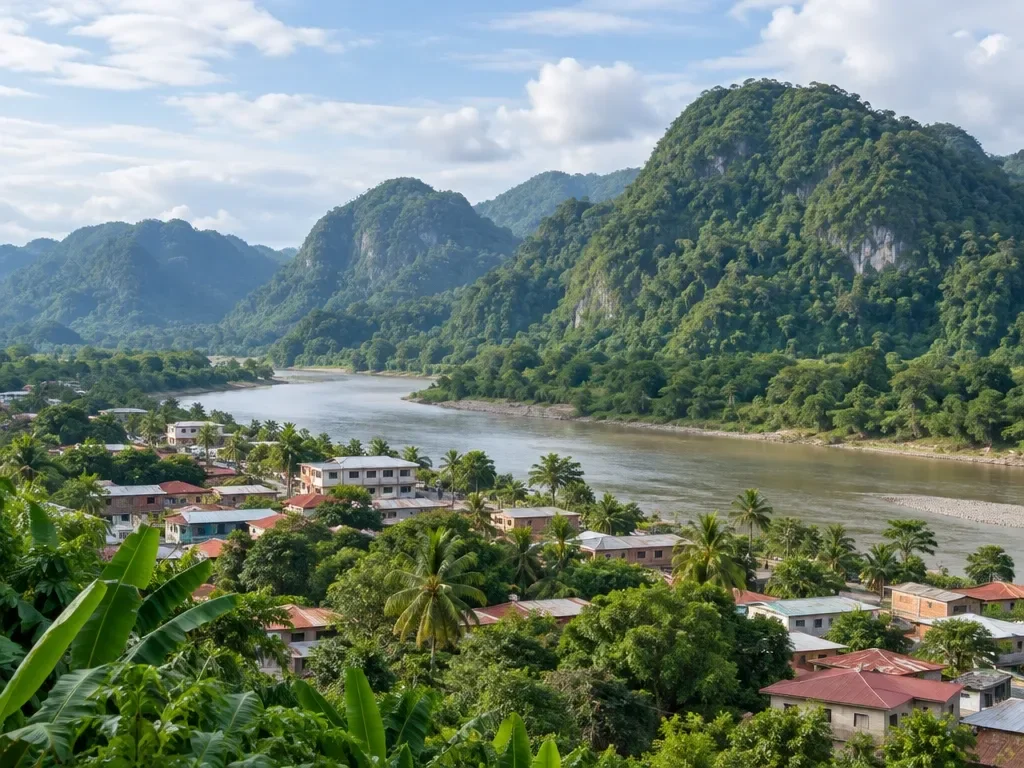
In the dark of Cueva de las Lechuzas you may hear short, sharp clicks. They come from the oilbirds, known locally as guácharos, that spend the day in the cave and go looking for fruit at night. Lechuzas means owls, a misleading name for this cave. The forest outside gives you a very different view of the park. At Tres de Mayo, the trail runs alongside the stream and takes you past several waterfalls.
Inside Cueva de las Lechuzas
The entrance is off the road towards Monzón. There are steps, and inside you follow a walkway. Look up for stalactites hanging from the ceiling and down for stalagmites growing from the floor. Stop for a moment to listen for the birds. Around the cave you can also see La Bella Durmiente, the ridge shaped like a reclining woman.
Walking at Tres de Mayo or Quinceañera
Take the Tres de Mayo entrance off the road towards Huánuco for the forest trails to Gloriapata, Sol Naciente and Salto del Ángel. Gloriapata makes a good destination on its own. If you want to go further, ask at the entrance how much walking that adds and remember to allow for the way back.
Quinceañera has its own entrance. Here you walk to a single waterfall that drops more than 40 metres. After rain, ask park staff which path is passable and whether you can go into the water at the falls.
A day in the park from town
If you only have part of the day, the cave is the shorter walk. Give yourself more time for a waterfall route. When arranging a ride, name the entrance and agree where you’ll be picked up. That gives you room to stop along the way without rushing to meet your ride back. Tingo María