
On a map, Tacna–Arica looks like a straightforward journey between two cities. Planning it involves separate questions: may you cross, what are you carrying and, if you drive, which procedure applies to the vehicle? Start there, then book transport. This guide concerns the Peru-to-Chile direction for a short visit. Returning and travelling for other purposes need their own checks rather than assumptions carried over from the outward trip.
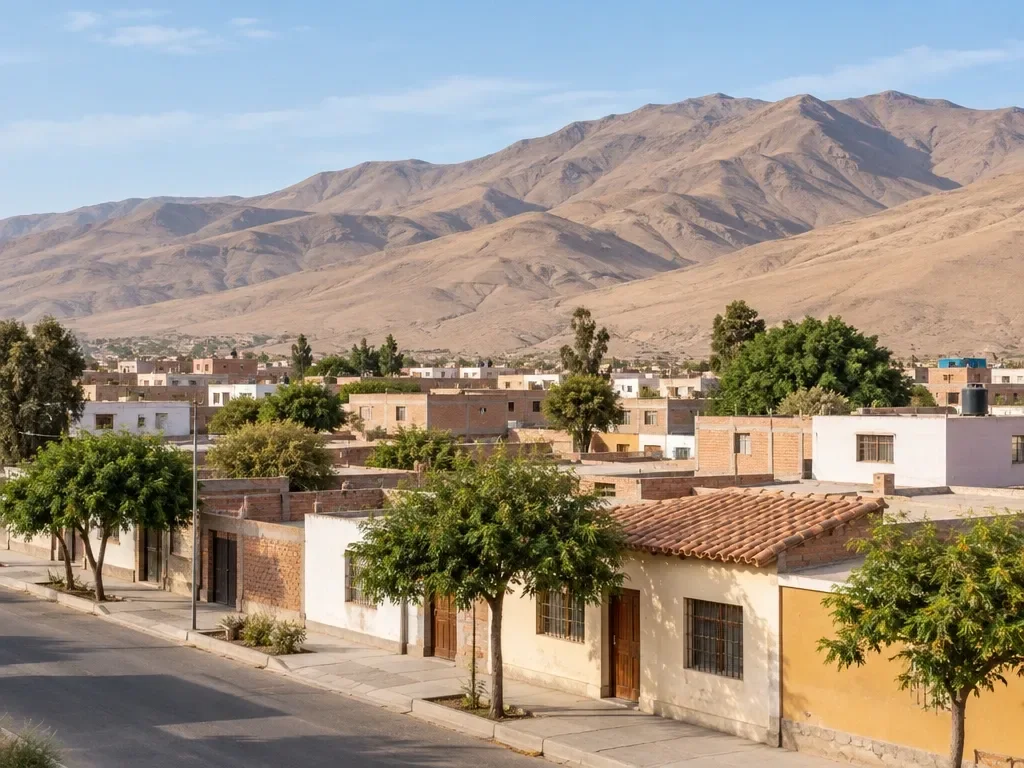
Two cities, two countries and different controls
Santa Rosa on the Peruvian side and Chacalluta on the Chilean side belong to this border corridor. People, baggage and vehicles do not all follow the same procedure. Ask your carrier where you must leave the vehicle on your travel date and what to take to the inspection. Follow the authorities’ instructions there. An account of an earlier crossing cannot establish today’s sequence or your own admission.
As a passenger, establish the actual journey first
On 9 September 2026, Tacna’s municipality announced vehicle control cards for colectivos on the Tacna–Arica route, identifying them at both terminals. This confirms an organised shared-car service, not the quality of every vehicle offered. Ask the terminal or carrier for the authorised boarding point and establish who will operate your journey before getting in.
Ask whether you are buying a seat or an entire vehicle, how luggage travels and where the journey ends in Arica. Have the included charges and contact for delays during inspection stated clearly. Indecopi recommends registered suppliers and payment receipts; keep the transport agreement too. Prices become comparable only when the departure point, arrival point and included services mean the same thing in each quotation.
The documents belong to each traveller
ChileAtiende lists a valid passport or applicable identity document and prior consular authorisation where required for temporary visits. PDI determines the stay actually granted, recorded in the TUM. “Up to ninety days” does not automatically grant ninety days. Check nationality conditions through the official link and keep the record of your authorised stay rather than relying on a general tourism summary.
Peruvian control is separate. The Migraciones explanation reviewed distinguishes foreign nationals entering from residents leaving; it is not a complete exit checklist for every foreign tourist. Put any uncertainty about your travel document, status and earlier entry record to Migraciones. Chilean admission does not resolve an unclear Peruvian departure registration. Check the actual case instead of borrowing another traveller’s documents list.
Make a document record for each traveller, including questions and answers from the consulate or border authority. Minors, residents of either country and other nationality combinations need their applicable conditions confirmed separately. This route guide does not establish anyone’s individual right to enter.
Check your hand luggage as well
SAG requires declaration of plant and animal products, including relevant food and handicrafts. Small quantities or packaging do not automatically create an exception. The declaration is free; declaring an item does not itself authorise its import. An inspector decides. Follow SAG’s current form instructions and information about the available digital procedure, rather than treating a completed form as product clearance.
Check your bag before departure, including snacks, fruit and wooden souvenirs. Ask SAG about the actual product when uncertain. Keep the declaration available as instructed for your control point. Do not choose the completion time from an old video or a message about another border. Baggage preparation is separate from buying transport.
A vehicle needs a second file
SUNAT distinguishes temporary vehicle entry into Peru, with a CIT, from temporary exit, with a CST. The applicable arrangement depends on registration, residence, ownership and previous import. Its CST explanation concerns Peru residents; do not automatically apply it to every tourist renting a Peruvian car. Have SUNAT assess the actual vehicle situation instead of assuming that the rental contract determines the customs procedure.
ChileAtiende describes TITV for private vehicles from countries other than Argentina and Bolivia. It requires ownership evidence and notarised authorisation when the owner is absent. Advance submission does not complete the border process: the receipt and documents must be shown to Aduanas. The TITV application is free. Its conditions and the authorised validity still matter.
Prepare a vehicle file: registration country, owner, driver, authorisation and previous temporary import. Ask customs what this combination requires and how departure and return are recorded. Rental contracts, insurance certificates and customs documents answer different questions. A vague assurance that crossing will be fine does not resolve missing paperwork.
Chile’s CMF describes SOAPEX for temporarily entering foreign-registered vehicles, with an exception for applicable international insurance agreements. It concerns injury and death, not damage to the vehicle. Establish which arrangement applies to your vehicle and check the certificate details and period. A general Perutrip route description cannot confirm cover for your specific registration, contract or journey.
A rental car first needs the rental company’s permission. National’s Lima airport branch, for example, restricts its published contract to driving within Peru. That does not describe every supplier, but it shows why crossing must never be assumed. Request written, route-specific confirmation and the necessary documents before booking. Without that basis, the rental car does not belong in your border plan.
Do not plan a connection from distance alone
Before departure, check a dated official border report for your direction and vehicle category. Read the status date, not just the page title or the time you opened it. Have the carrier confirm departure too. An open complex does not establish an available seat or a departure at your preferred time.
Keep the crossing separate from a tight onward connection. Ask explicitly which local time an arrangement uses, and record the arrival point in Arica. For an overnight stay, decide how to continue from that point as well. A map prediction cannot tell you how long your document and baggage checks will take. Add other visits that day only if you can comfortably abandon the booking or plan.
If returning the same day, treat the return as another border journey. Check documents, stay records, transport and any vehicle procedure in that direction. The outward journey does not complete the return arrangements. If you want to see Tacna properly, give the city its own place in your itinerary. Our Tacna guide and Moquegua–Ilo–Tacna route help fill those days without squeezing border formalities between visits.
Choose around what comes next
If you do not need a car in Chile, compare passenger transport first. If continuing with your own vehicle matters, finish both the personal and vehicle files before committing. A concrete departure needs appropriate documents, a confirmed carrier or vehicle arrangement, and current information for the travel date. Clear answers to those questions are more useful here than an optimistic estimate of the journey time.
Staying in Tacna
Compare accommodation in Tacna before or after the border journey. This is not a map of the border control or Arica.