
A stone arch over a river. A fountain carved from a single block of granite. A coastal city with a much older story of fishing and exchange in its surroundings. Checacupe, Huánuco and Barranca deserve attention for different reasons. A name you pass on the map can become a worthwhile visit in its own right. It helps to start by knowing what you are looking at.
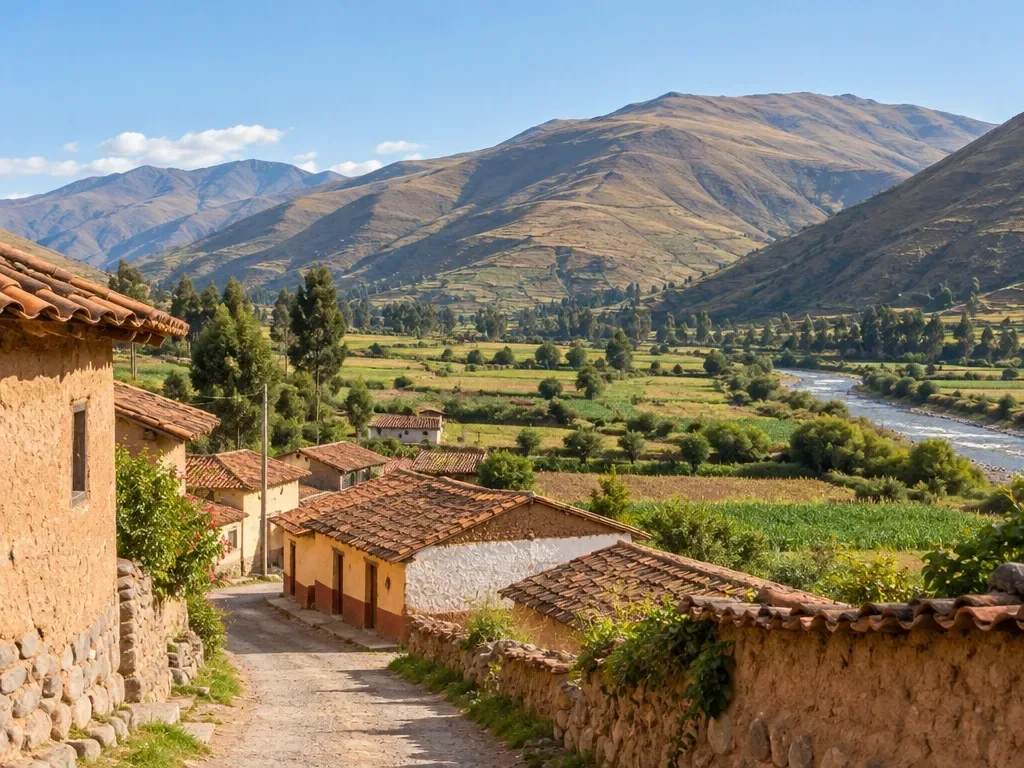
These are three separate possibilities in different parts of Peru. Checacupe is in the Cusco region, Barranca on the coast north of Lima, and Huánuco in the central interior. Choose one that fits your trip and interests. Work out the connection separately; these portraits are not an itinerary linking all three.
Checacupe: a crossing with a character of its own
In Checacupe, the stone bridge over the Pitumarca draws the eye. Its arch frames the water and gives the crossing a clear shape. A bridge changes how you see a river: as something people wanted to cross, with a settlement on either side. Here, the relationship between building and landscape is easy to follow on a small scale.
The bridge is built from dressed stone and lime mortar. The heritage description also mentions the foundations of an older Inca bridge beside it. That makes the crossing more interesting than a single monument with a single date. Different solutions to the same river lie close together. Look at the arch, the way it meets the bank and the small stones worked into the surface.
The Templo de la Virgen Inmaculada adds another layer. Adobe walls on stone foundations, ceramic roof tiles and a separate square tower give the building its form. Its interior is described with wall paintings and an altar featuring twisted, gilded columns. Building materials and religious imagery offer different things to notice. The church deserves attention alongside the bridge, even if a mountain landscape first brought the area into your plans.
Checacupe suits travellers who enjoy the details of a small group of historic buildings. Give the river and the settlement a moment of their own. Continuing farther into the landscape remains a separate plan. The place guide helps with that next question; first, the village itself can be the subject. Checacupe
One detail to look for: three languages
The heritage description records an inscription in Latin, Quechua and Aymara beside the church’s baptismal font. It offers a small starting point for a larger story about religion and language. During an explanation, it is worth asking what the words say and how the languages come together. The building’s contents become more than a list of artistic styles.
Barranca: a city beside coast and valley
Barranca has a coast with distinct names and characters. Chorrillos has older houses and a seafront promenade; Puerto Chico has a stronger association with fishing. Miraflores lies between these two beach areas. See the coast as part of a city: buildings, boats and places to pause. An interest in everyday life by the sea can go alongside a meal and some time without a major excursion.
The Supe Valley gives a stay another direction. Caral stands on a dry terrace, with monumental buildings and residential areas. Pyramidal forms and circular plazas give the layout its distinctive shapes. The settlement dates to around 3000–1800 BC. It offers a very different historical subject from the Inca, who often receive much of the attention on a trip around Peru. Three days: Lima, Barranca and Caral
Áspero reveals the coastal side of that civilisation. This ancient fishing town near Supe Puerto supplied marine resources to other centres in the valley and belonged to a wider exchange network. That gives a combination real substance: Caral is a major centre in a dry valley landscape, while Áspero is a place connected to the sea. They are separate archaeological sites with different settings.
Staying in Barranca becomes interesting if you want to understand those two landscapes and leave time for the modern coastal city between visits. Choose an archaeological subject to explore properly rather than collecting every name in a day. Barranca’s place guide explains the separate locations. Let your interests decide which story comes first. Barranca
Huánuco: the square, the river and much older hands
In Huánuco’s Plaza de Armas stands a fountain carved from a single block of granite. Large trees and the buildings around the square give the stone an urban setting. The cathedral and houses with balconies are part of the scene. The square invites you to pause: look at the fountain’s scale, the surrounding façades and the arrangement of its open centre.
At the Huallaga, the Puente Calicanto comes into view. It links Huánuco with Amarilis and has three stone arches. Semicircular projections are part of its design. Comparing it with Checacupe’s bridge is an interesting way to look without treating the places as one itinerary: a different river, a different scale and another arrangement of arches.
Kotosh adds a much earlier building history. The temple complex is known for the Templo de las Manos Cruzadas, with two pairs of hands and forearms made from clay. A small motif draws attention within a larger archaeological place. Listen for where the hands belong and how they relate to the different building phases. A recognisable image can help you look beyond a general description such as ancient ruins. Kotosh
Huánuco suits an interest in a city as well as archaeological context. Give the square and river a place alongside Kotosh. A stay can then alternate between looking at façades, eating in town and making a separate heritage visit. Huánuco
An interest worth staying for
Choose Checacupe for the relationship between bridge, river and church. Look at Barranca if the contrast between coast and archaeological valley interests you. Huánuco is appealing if you like combining an urban square and time beside a river with a very different historical period. A stop gains character once you know which part you want to explore more closely.
An overnight stay can let you see a place at more than one point in the day and give a meal space between appointments. Start with the content of the visit, though. What would you like to understand, and do you also want time in the city or village? That is a more useful starting point than adding a night simply because there is an empty box in the schedule.
Then work out arrival and onward travel with the existing place and route guides. A local visit and a through journey are separate parts of the trip. Let the actual connection determine the time available. A place can become a reason to travel without assuming a short detour or an effortless onward connection.
The bridge, the fountain and the ancient fishing town tell different stories. You need not collect them together. One place that holds your attention can give a stop a story of its own.
Places to stay around your chosen stop
Choose Checacupe, Barranca or Huánuco to explore accommodation locations. These three places do not form a single route.