
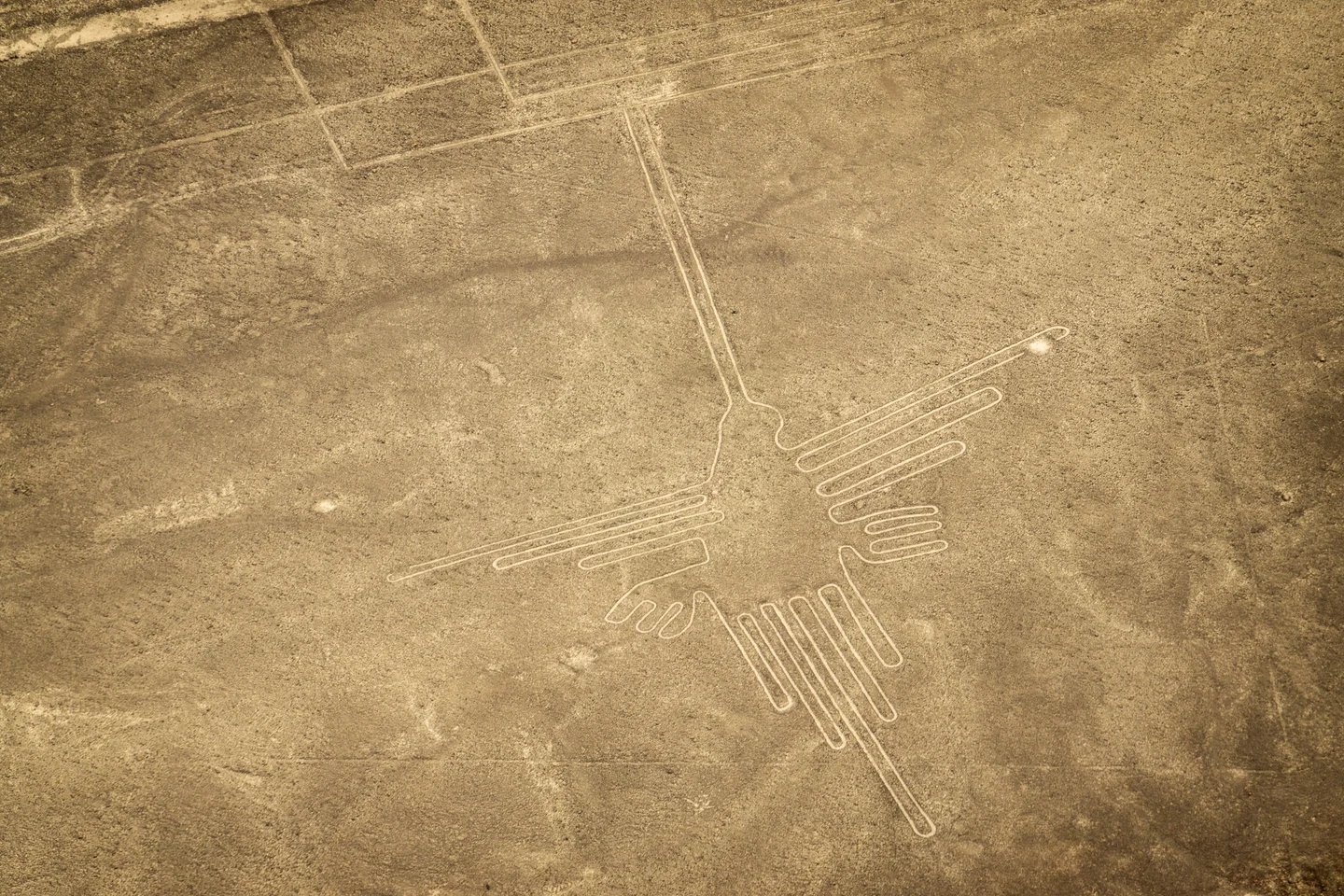

A hummingbird is the image many people associate with the Nazca Lines. The landscape is less neatly contained than that single photograph: animal figures, plants, long lines and geometric shapes are scattered across the dry coastal plain between Nasca and Palpa. The World Heritage property includes that wider relationship. You are choosing how to approach a much larger whole, rather than visiting one drawing with a single obvious entrance.
That makes the decision more interesting than simply whether to fly. A viewing point gives you a limited section of the landscape. A museum brings you closer to the people and objects from the same cultural setting. A flight offers another perspective again. Decide what interests you before arranging the entire day around a single photograph.
More than an animal drawn in the desert
UNESCO describes the geoglyphs as designs scratched into the ground between around 500 BC and AD 500. Alongside recognisable creatures are shapes and straight lines extending across the plain on a large scale. A visit is therefore also about distance and landscape: where does a line begin, what lies beside it and how much can you actually see from your position?
Their meaning cannot be reduced to one conclusive explanation. UNESCO refers to probable ritual and astronomical functions. Treat an account involving a calendar or ceremony as an interpretation that needs supporting evidence. A good guide can explain what supports it and where questions remain. That offers more than a confident answer to every mystery.
What a viewing point can show you
PROMPERÚ lists a metal lookout beside the road as a way of seeing geoglyphs from an elevated position. Expect a particular view, rather than every figure from an aerial photography book. Ask which shapes can be recognised on your chosen visit and how the guide will point out the lines. Use a map as well, so that the figure has a place in the wider area.
A ground visit suits an interest in explanation while keeping your visit on land. Compare the full programme: the drive out, the viewing point, other possible stops and the return journey. A brief roadside stop has different content from an excursion with time for museum context. The name “Nazca Lines” on an offer does not explain that difference.
Put people back into the landscape
Museo Antonini in Nasca is dedicated to Nasca culture. It is associated with CISRAP and CEAP, the organisations involved in archaeological research in the area. Their description connects the museum with material recovered during Proyecto Nasca excavations. This gives the desert visit another point of reference: the objects and society behind the landscape deserve attention too.
Combine a museum and viewing point if you would rather explore one subject than move between a string of attractions. You might gather background first, then look at the lines, or use the museum to pursue questions raised by the view. Ask the museum about current visiting arrangements and guiding. Old opening times in a travel blog do not confirm your afternoon’s plans.
A flight is a separate decision
If you want to see the figures from the air, treat the flight as its own part of your preparation. Ask about the operating airline, programme, confirmed departure arrangements and what happens if it changes or is cancelled. Compare that separately from a ground excursion. A museum and lookout are not a shortened flight; a flight does not automatically supply the historical explanation either.
Do not choose simply because you think everybody visiting Nazca must fly. Travellers who do not want a flight can deliberately choose a ground programme. If the aerial perspective is your main reason for coming, first establish how that flight fits the rest of the journey. Assessing a specific flight’s safety and conditions requires current official aviation information and the operating airline; this guide does not assess an aircraft or provider.
Make Nazca a stay, rather than a gap between journeys
Set the visit beside the bus journey bringing you in and the one taking you onwards. A museum, the drive to a viewing point and a later departure all take time. List them separately. If you also want Cahuachi or other heritage visits nearby, choose the story you want to follow rather than adding every name to the same afternoon.
With children, one recognisable shape can be a useful starting point. Let them choose an animal or pattern beforehand, then discuss what is visible from the viewing position. Finding every figure is not necessary to understand the idea. At the museum, focus on an object instead: what can you see, and what would you like to ask about it?
The designs belong to a protected heritage landscape. Use the official visiting arrangements for the place you choose and follow the instructions there. A line on an online map is not an invitation to walk across to it. Choose a viewing point and explanation that clarify something together; it is perfectly reasonable to leave with another question.