
Laguna de Salinas occupies a high basin in the volcanic landscape around Arequipa. Salt, water, low vegetation and surrounding mountains create the view together. This is habitat where birds feed and a place where communities use natural resources. That makes the lagoon interesting even when it looks different from the photograph that first caught your attention at home. Plan around the landscape you want to understand, with time to stop and look.
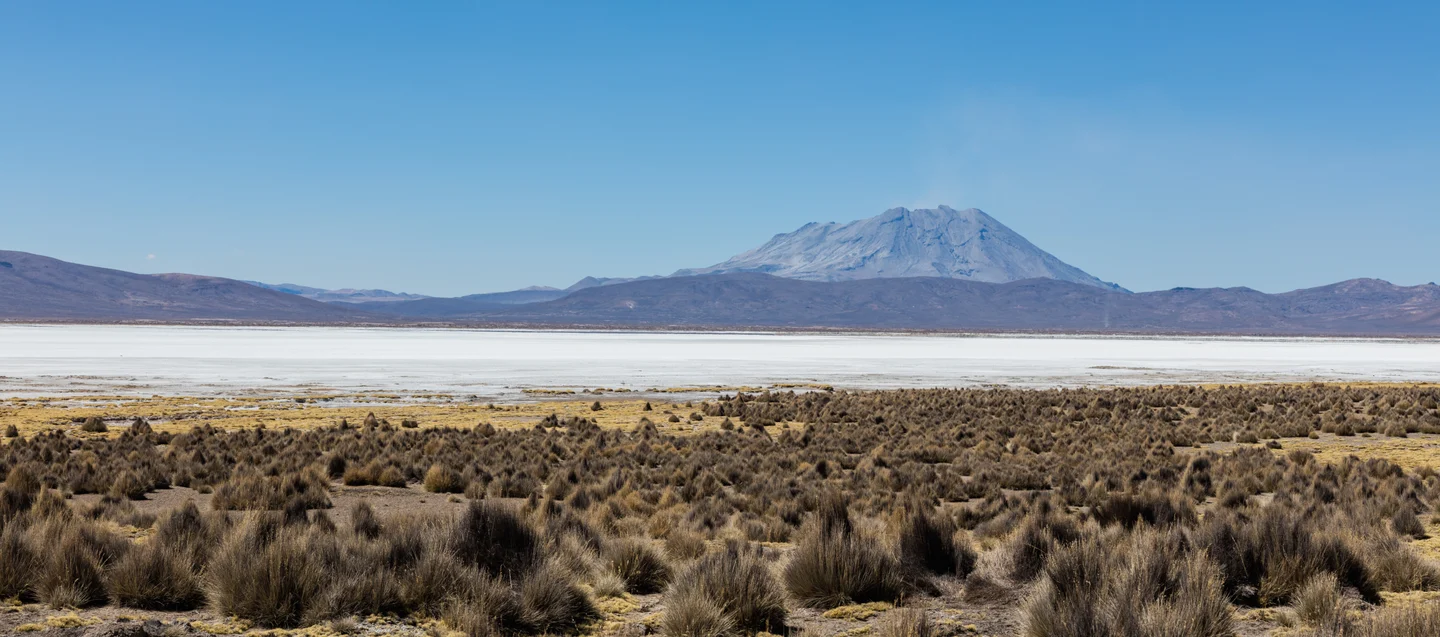

A salt lake in a closed basin
The Ramsar description places the lagoon at around 4,300 metres in an endorheic basin: water gathers here without a normal outlet to the sea. The lake and surrounding bofedales belong to the Reserva Nacional de Salinas y Aguada Blanca. The international wetland register has listed “Bofedales y Laguna de Salinas” since 2003. The name helps you see the whole area: the lake and wet vegetation around it are part of the same story.
Peru’s Autoridad Nacional del Agua describes reduced water quantities in the dry period and an increase during the rainy period. The water level and visible surface therefore change. Ask shortly before departure what the area actually looks like. A photograph of a broad water surface, a salt plain or a reflection records a particular moment. Use it as inspiration for what you want to explore, rather than a promise of the view on your day.
Bofedales are highland wet grassland and peat areas. They provide habitat and are also used by camelids for grazing. SERNANP describes the wider reserve as important for storing water and releasing it gradually. That gives the green vegetation beside a salt lake another significance. Notice the transitions between water, plants and drier ground. These edges help reveal different parts of one landscape.
Give the flamingos time
The source descriptions record three flamingo species: Chilean, Andean and James’s flamingos. Their presence in the area does not guarantee that you will see all three on your visit. Ask your guide which features help tell them apart. If identification takes time, watch their behaviour: how they stand together, feed or move. A quiet observation can offer more than a checklist of names.
Binoculars can help you study details without moving closer for every photograph. The 2025–2030 management plan stresses that wildlife observation should preserve animals’ natural behaviour. Follow the designated route and directions on site, leaving birds room to continue their activities. No universal distance in metres or guaranteed encounter is supplied here. The aim is attentive observation within the possibilities of the visit.
A landscape where people work, too
The management plan describes traditional salt extraction by communities around the lake, alongside other forms of mineral extraction. Salinas is therefore both a protected natural area and a place where people make a living. Ask for an explanation of local activities if this forms part of your visit. A workplace or village is not automatically open as an attraction; meetings and visits should follow arrangements with the people concerned.
The full reserve extends well beyond Laguna de Salinas, including highland plains, volcanoes, other lagoons and bofedales. An excursion called “Salinas y Aguada Blanca” therefore does not identify exactly where you will go. Ask to see the programme on a map. If this lagoon is your priority, specify Laguna de Salinas and the chosen visiting points. You can then understand what an offered route actually involves.
Place Salinas alongside your other Arequipa days
The official 2023 PROMPERÚ brochure maps a connection from Arequipa through Chiguata to Laguna de Salinas and onwards through the reserve. This provides geographical orientation, not current road confirmation or a fixed driving time. Ask the operator about the route, stopping points and return to your accommodation. Have them distinguish driving sections from places where you can actually walk or observe. That balance shapes much of the day.
If you are also visiting Colca, compare the plans. The reserve’s name appears in different travel routes, but individual visiting points are not interchangeable. Ask what each day adds: a lagoon visit, a roadside view, a walk or an explanation of wildlife and water. Then decide which experience deserves your time. Our Arequipa and Colca itinerary helps organise the wider stay; a confirmed Salinas outing needs its own detailed arrangement.
Include the highland plan in your preparation
Discuss your intended highland route, activities and any health questions with a qualified healthcare professional. Bring the actual programme, including options you are still considering. A place description at around 4,300 metres does not establish whether the visit suits you or your children. Our altitude guide helps prepare questions; it cannot replace a personal assessment. Also ask the operator for elevations and activities at each stop so that you know which plan to discuss.
PROMPERÚ recommends warm clothing, suitable walking shoes and sun protection for the reserve. Discuss current weather and conditions with the operator before leaving, too. The programme should explain how much time you spend outside and any walking involved.
With children, focus attention on one recognisable element: observing birds, comparing landscape colours or investigating where the water goes. These are our ideas for looking, not a declaration that every excursion is a suitable family programme. Ask what you will actually do, how far you will walk and where you can pause.
Check the exact lagoon, visiting points, departure time, language and inclusions in any proposal. Ask how the operator communicates changes in weather or access and which alternatives would be discussed. Do not assume meals, admission, an additional bathing stop or a community visit are included without confirmation. A broad route is the start of an agreement; the purpose of each stop makes the day understandable.
Choose Salinas when you want to spend time with a highland landscape where water, salt, birds and human use meet. Looking back through your photographs, make room for what you learned: a bird you now see differently, the edge of a bofedal or an explanation of salt extraction. That gives the outing its own place alongside Arequipa’s buildings and your other days in southern Peru.
Places to stay in Arequipa
Compare accommodation locations in Arequipa as your departure base for a day at Salinas.