
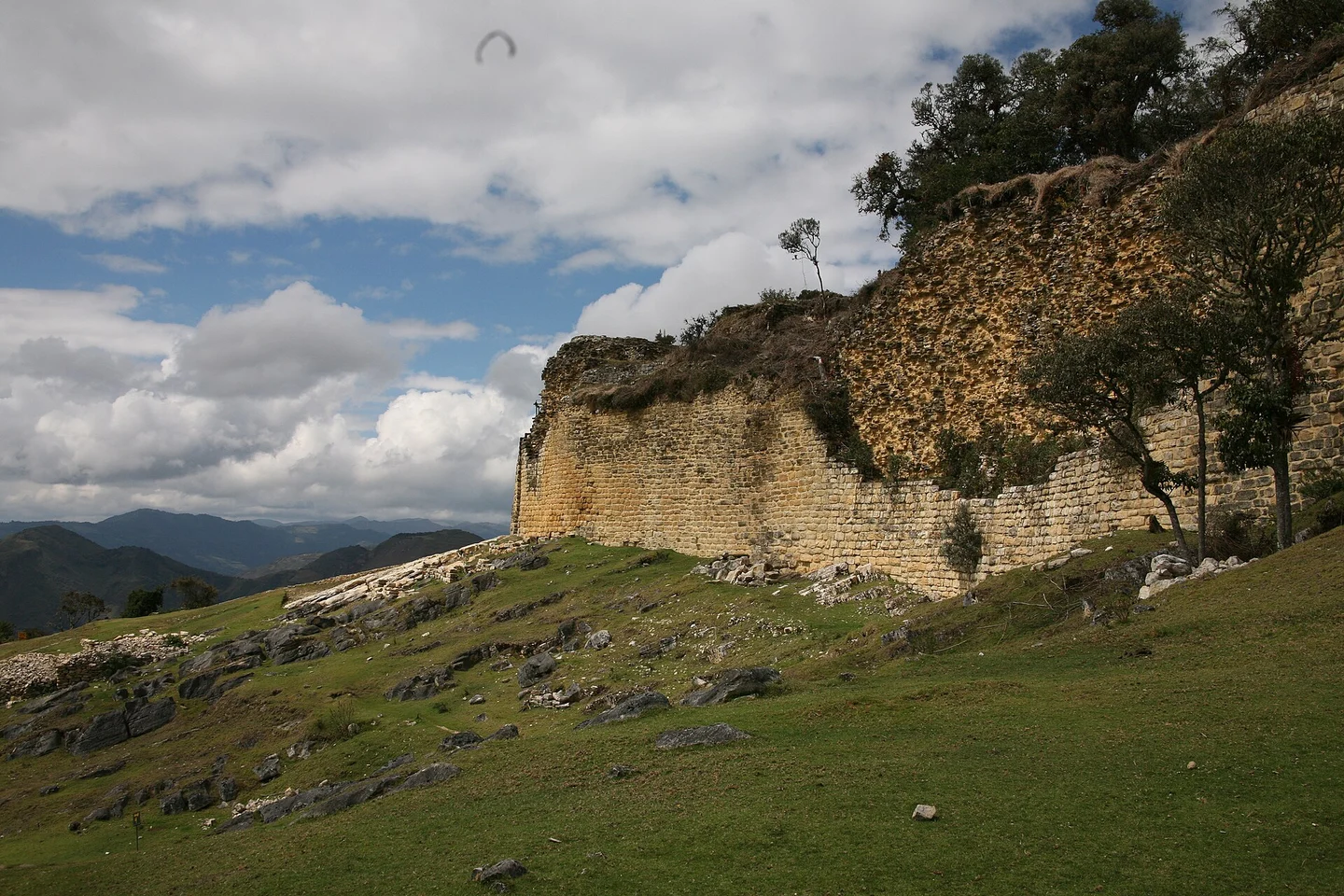

A tall stone wall follows the mountain ridge. Behind it are circular buildings, some with zigzags and diamond patterns worked into their masonry. Kuélap has a distinctive architectural language. The Chachapoya built a walled settlement here whose story deserves more than a photograph of its outer wall.
Look at the relationship between the round structures, their decoration and the large platform supporting them. From a distance, a wall can seem like one surface; closer inspection reveals individual decisions about stone and shape. Ask your guide which spaces were homes and how archaeologists identify their use. A circular foundation becomes much more interesting when you understand what it belonged to.
A monument still being investigated
Part of the southern wall collapsed in April 2022. The Ministry of Culture’s timeline shows how investigation, restoration and reopening have since proceeded alongside one another. Conservation is part of the Kuélap story. Scaffolding, barriers and a revised walking direction belong to that work; a photograph from an earlier visit is not a map of the present circuit.
The complex and the llaqta are different visits
CAMK refers to the wider archaeological complex. The llaqta is the walled section. PROMPERÚ distinguishes a CAMK visit outside the llaqta, taking in La Malca’s visitor centre and a replica Chachapoya house, from visits that enter the interior. For the latter it describes a full circuit and a shorter one. Kuélap on an excursion voucher therefore does not tell you exactly what has been reserved.
If you mainly want the exterior and landscape, a visit outside the llaqta matches that interest. To understand the settlement and its buildings, look explicitly for a circuit including the llaqta. Ask which structures it covers on your date. The manager has changed routes during restoration; an old entrance number or daily visitor quota is insufficient information for a current booking.
If you have one extra day
With an extra day near Chachapoyas, give Gocta its own outing rather than adding the walk to Kuélap. From Chachapoyas, I would give Kuélap a separate day and leave Gocta for another. Fitting the greatest number of names onto a booking form need not be the aim. Allow time for the approach, explanations at the walls and a return journey already arranged. Have the provider itemise transport, admission and guiding. One seller can combine them without making them the same ticket. Gocta: choosing Cocachimba or San Pablo
Ask where you will be dropped off and what remains to be walked. A shorter circuit describes a visit within the complex, not necessarily the entire journey from your accommodation. Have the approach, any steps and the collection point explained separately. You can then compare excursions by what they involve rather than by the labels short and complete.
A booking that matches your visit
The Ministry of Culture directs monument-ticket buyers to Tu Boleto. Check the visit type and assigned time before fixing the rest of the day. PROMPERÚ also says to bring your identity document and respect the allocated entry slot. For a trip in a later year, check the circuits actually offered then; an announced extension does not confirm your future visit.
Places to stay in Chachapoyas
Compare the locations of places to stay in Chachapoyas as a base for visiting Kuélap.