
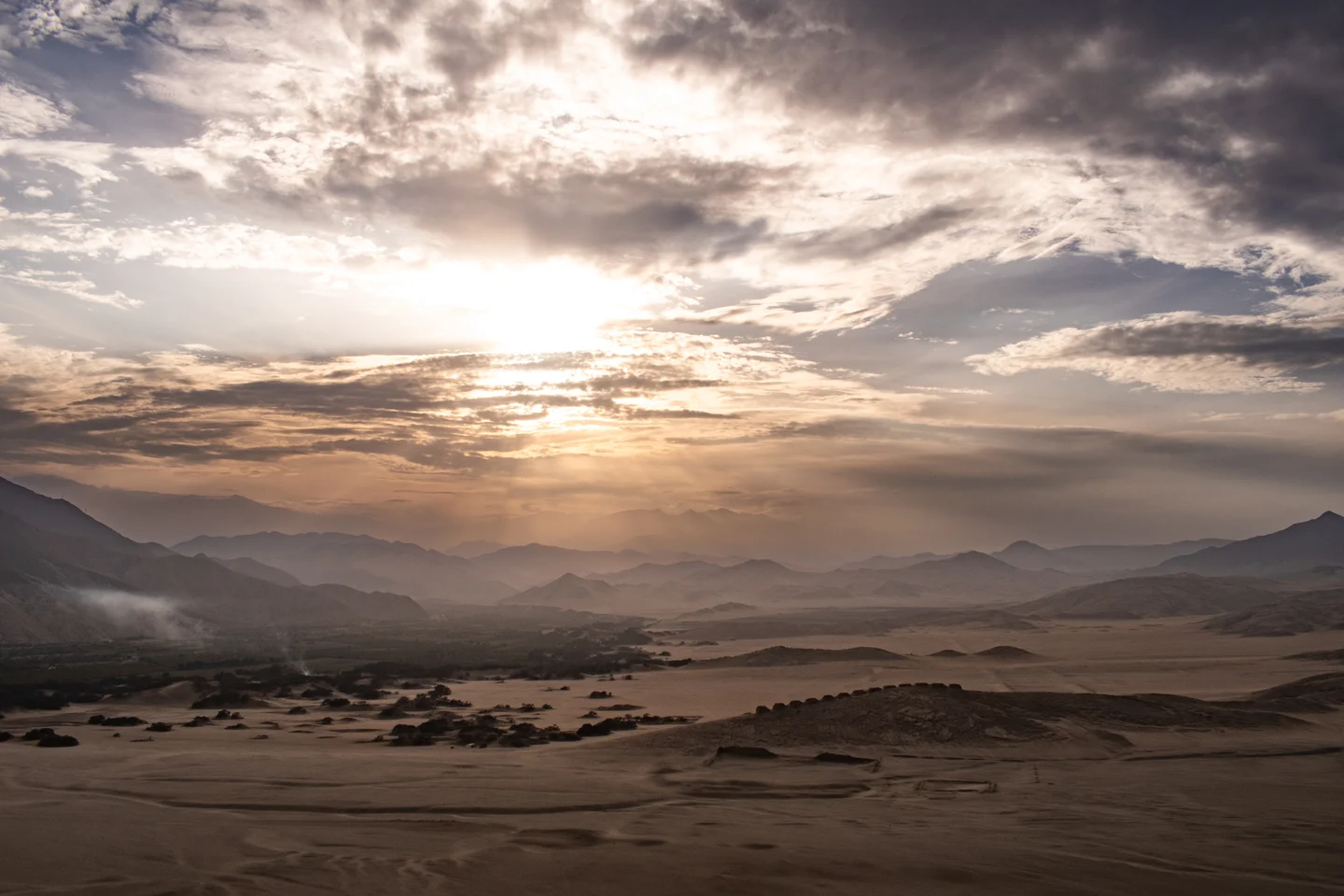

Thirteen towers stand along a ridge in the dry Casma Valley landscape. Looking only at the row reveals Chankillo’s most striking feature, but not yet how it worked. The towers, horizon and observer’s position formed an instrument for following the year. That relationship makes this archaeological place on the Áncash coast particularly interesting.
Chankillo rewards looking with an explanation. If you enjoy understanding why buildings occupy a particular position, this is a different visit from an ornamented facade or a large museum collection. You examine spaces between structures, a viewpoint and movement you must imagine over a whole year. A plan helps bring those separate elements together.
A calendar in the horizon
UNESCO dates Chankillo’s use to around 250–200 BC. The complex used the annual shift in the points where the sun rises and sets. The tower row forms an artificial horizon. From fixed observation points, the sun’s position relative to those markers could indicate which part of the year had been reached.
The important detail is that the system did not focus on one solstice alone. UNESCO describes an arrangement covering the annual range of sunrise and sunset positions. During an explanation, ask about a date between those extremes too. It helps explain why the entire row mattered and why looking only at the two outer towers leaves the story incomplete.
Your viewing position changes the story
Different observation points for sunrise and sunset lay on either side of the tower row. The calendar therefore cannot be read in the same way from any arbitrary angle. Ask for the relationship between viewpoints and towers to be shown on a map. Then consider which parts can be understood from the permitted visitor route.
One simple question helps: according to this explanation, where would the sun appear on another date? Ask the guide to indicate it on the horizon or a drawing. Knowing the technical vocabulary of astronomy is not necessary. The step from a row of structures to a working system is the subject of this visit.
More than the thirteen towers
The UNESCO property also includes a fortified hilltop temple with three enclosing walls and structures described as an observatory and administrative centre. Cerro Mucho Malo provides a natural marker within the wider system. The landscape beyond the tower row is therefore more than an empty background that happens to appear in the photograph.
UNESCO also describes the whole as a ceremonial centre, probably connected with a solar cult. Keep the distinction between surviving structures, calculated sightlines and interpretations of ritual in mind. A guide can connect them without pretending every action of past inhabitants is precisely known. That distinction adds depth to a place with little elaborate decoration.
Must you visit at a solstice?
Not to understand the system: it followed the course of the year, rather than one special day alone. A visit with a clear explanation can therefore be worthwhile outside a solstice. An advertised sunrise event is a different programme from an ordinary daytime visit. Have the exact time, access and guiding confirmed for that particular offer.
Astronomical significance does not promise access before daylight or permission to stand on an ancient observation point yourself. Follow the permitted route and instructions on site. If you want a particular view or guided explanation, discuss it when arranging the visit. The booking can then reflect what you want to understand as well as the photograph you hope to take.
Give the Casma coast its own place in the journey
Chankillo is in the coastal Casma Valley. Treat it as part of a coastal stay or journey, rather than an extra walk during a day in Huaraz. Put your starting point, drive, visit and return into the plan separately. Ask who will provide the transfer and explanation on site and how much time the complex will actually receive.
If you can add only one short coastal visit, decide which subject appeals. At Chankillo, it is the relationship between sky, horizon and structures. Someone chiefly looking for an extensive museum or a city visit wants something different. World Heritage status can prompt curiosity; the content determines whether you want to make room for it in your trip.
For children, the calendar question may be more concrete than a list of dates. Have them count the towers and locate the observation point on a map. Then ask why the view changes with position. Make it an exercise in looking, rather than a climbing or treasure-hunting game on the structures. The visitor route remains the starting point.
Peru’s Ministry of Culture describes research and conservation as responsibilities of Unidad Ejecutora 010 Chankillo. The heritage information supplies background, rather than current confirmation of a visit. Check practical arrangements for your date. With a plan and the right question about the horizon, you can begin seeing more than thirteen separate towers.