
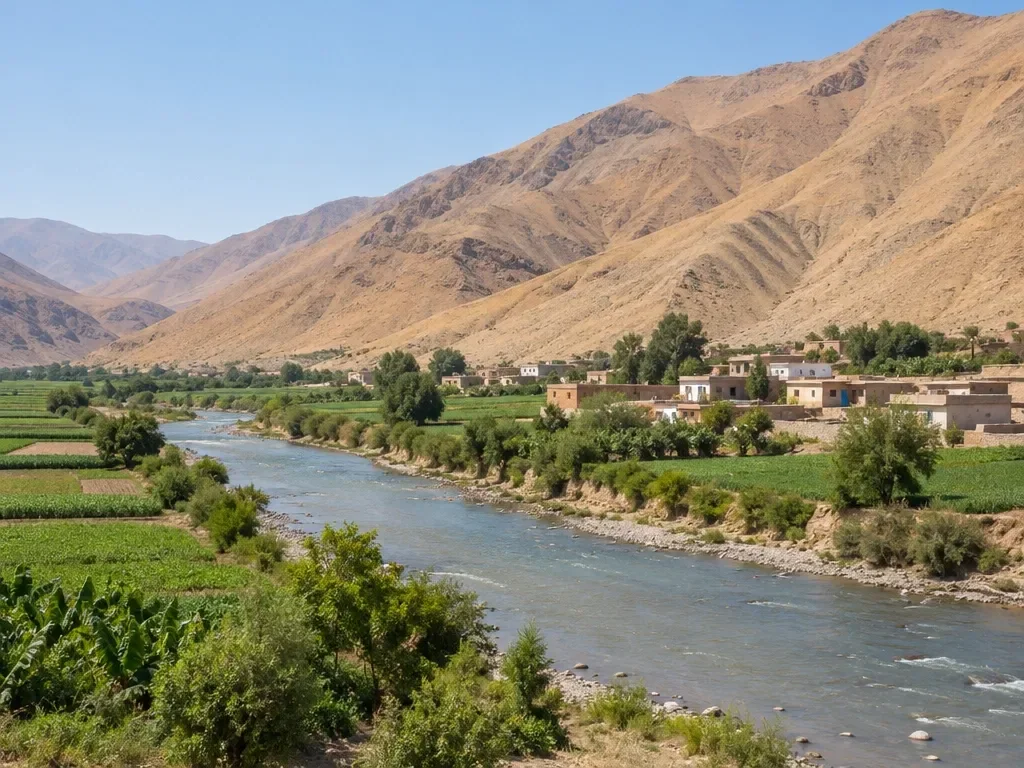
The Cañete River draws a green strip through dry hills. Fields, orchards and vineyards line the water; the road connects Lunahuaná with settlements such as Catapalla and Paullo. Separate places make up the valley: a village square, a winery, farmland and the walls of an Inca complex.
Water connects several sides of the valley. Rafting is a well-known activity, but the same river supports farming. Grapes become wine and pisco. Cañete dishes such as sopa seca with carapulcra appear on the table. At Paullo, Incahuasi adds an archaeological visit.
A river and a series of separate addresses
The official river inventory describes the Cañete as a river fed from the upper parts of its catchment. Around Lunahuaná, irrigation supports grapes, fruit, maize and yuca, among other crops. Green plots against dry slopes show the river’s role in the landscape.
Look at the address when choosing where to stay. A room near the centre, accommodation along the river road and a bodega farther down the valley lead to different days. Note where you arrive and where each visit starts. You can then see which journeys need separate arrangements and whether you want to return to the centre for dinner.
Discuss a rafting outing separately
If you want to go rafting, discuss the river section, meeting point and activity leaders with the provider before booking. Ask what the briefing covers, which equipment is supplied and which conditions the provider sets for your group. Also establish what happens if the activity changes or is cancelled.
You can also build your stay around the valley, food and a winery. Leave room for that choice when discussing a river activity: booking rafting and staying in Lunahuaná are separate decisions.
From grapes to a bodega
Lunahuaná forms part of the Lima region’s Pisco Route. Grape growing and processing into wine and pisco take place close together in the valley. A bodega is therefore also somewhere to talk about the harvest, grapes and the producer’s work.
Agree beforehand what a visit includes: a tasting, a conversation about production or a tour as well. Ask which grapes the winery uses and what part of production you can see during your visit. If you want to buy a bottle, take time to read its origin and product information on the label.
Incahuasi at Paullo
Incahuasi stands near Paullo. The official inventory distinguishes a ceremonial area with an ushnu, defensive zones, residential quarters and storehouses. Those different areas give the complex functions beyond defence: administration, ritual and supplies also feature in its description.
For a planned visit, establish where to report, which areas you can see and what explanation is included. Confirm those arrangements before travelling to Paullo. Current reception and access are separate questions; a description of the old buildings does not establish either.
Sopa seca and carapulcra
Sopa seca is a pasta dish. The described Cañete version includes basil, onion and ají, among other ingredients. It is often paired with carapulcra. A meal in Lunahuaná can give those dishes their own place alongside the river and wineries.
Look at the day’s menu and the ingredients the kitchen uses. The regional cuisine includes more than one preparation, and ingredients differ by dish. Grapes and other fruit connect with farming along the valley. Ask what is being served when choosing a juice, fruit plate or regional dish.
Stay near the centre or along the river road
Near the centre, the square and a meal fit more easily into the same walk. Farther along the valley, your accommodation’s address becomes more important for every arrangement. Ask who organises local journeys and agree how you will get back after a visit.
The approach from Lima follows the coast before entering the valley through the area around San Vicente and Imperial. When booking, check the exact drop-off point and connection to your accommodation. A winery or Incahuasi then has its own visiting address.
Nor Yauyos-Cochas lies farther into the highlands and needs a separate travel plan. For a stay in Lunahuaná, first choose what interests you in the valley and how many separate visits fit. Your existing arrival and overnight addresses make a useful starting point.
Without rafting and with local transport
Is it worth coming without rafting?
Yes, if staying in the valley appeals to you. Choose accommodation and daily plans accordingly rather than letting the best-known activity dictate your trip.
Do I need a car?
Start with actual addresses: arrival point, accommodation and activity location. Ask what your host can arrange and where excursions collect guests. That reveals which journeys still need separate transport.
Places to stay in Lunahuaná
Compare the locations of places to stay in and around Lunahuaná.
Where is it?
Lunahuaná: the river, vineyards and Cañete Valley and the surrounding area.