
Fish with lime and red onion, a creamy ají sauce or rice with beans: food gives a Peru trip many different flavours. A dish’s name tells part of the story. For the rest, ask the kitchen: which ingredients are used and how is this portion prepared?
My wife eats gluten-free. We managed that well while travelling through Peru in 2025. That is our personal experience. Discuss the ingredients and preparation again at each meal.
Five dishes to start a conversation
These examples follow published Perú Travel recipes. They show one preparation. Use them to think of questions for the kitchen where you will eat.
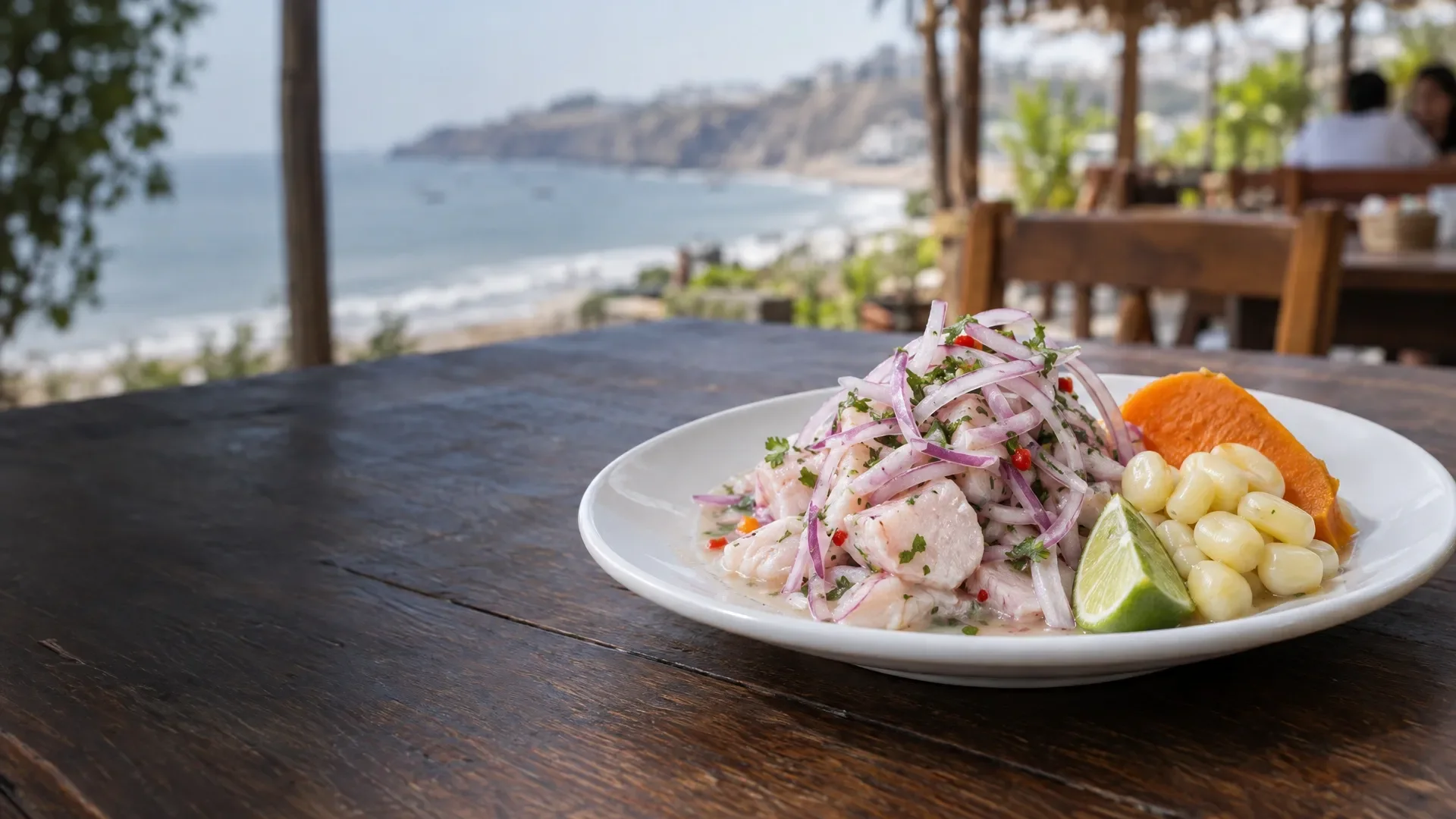
In the published recipe, ceviche de pescado combines raw fish with lime, red onion, ají and coriander, with corn and sweet potato alongside. Ask how the kitchen stores and prepares the fish. If you want something else, look at dishes prepared with heat on the menu too.
The described papa a la huancaína sauce contains cheese and milk, and the dish is served with egg. For a dairy-free or egg-free preference, ask about both sauce and garnish. Potato as the main ingredient does not tell you that.
The published ají de gallina recipe uses bread, milk, pecans, Parmesan, broth and egg as well as chicken. Ask about the whole preparation when any of those ingredients matters to you.
In the version described, tacu tacu combines rice and beans with pork lard and comes with a fried egg. For vegetarian or vegan food, the base preparation and accompaniments are useful things to discuss.
The lomo saltado recipe also includes sillao, or soy sauce. If you need to avoid an ingredient, ask which product the kitchen uses and whether you can see its label. Sauces and seasonings belong in the explanation of the dish.
Drinking water, ice and a long travel day
If you are unsure whether water is suitable for drinking, choose an unopened factory-sealed bottle or water appropriately treated for drinking. This also applies to water in ice and drinks, and to brushing teeth. CDC includes these uses together in its general precautions for travellers.
Where hygiene conditions are unknown, fully cooked food served hot is generally a lower-risk choice than raw or undercooked meat, fish, shellfish or eggs. This is general food-hygiene information; it cannot establish how a particular kitchen handles food or prepares a specific dish.
Before an early train or long transfer, ask what food and drinking water you have arranged along the way. Bring something that fits your own way of eating. That gives you room to pass on a meal you know too little about and look again later.
Make your dietary question specific
Name the ingredient that matters to you. Ask about broth, sauce, marinade, garnish and drinks too. For vegetarian or vegan food, for example, ask about meat broth, lard, fish, egg, milk and cheese. Establish with the kitchen what is already in the base preparation and what is added separately.
If avoiding an ingredient is medically necessary, prepare the trip with your healthcare professional and follow your personal arrangements. A translation card can help explain your needs to the kitchen. A conversation or card does not in itself establish the ingredients or preparation.
Ingredients and cross-contact in gluten-free food
Wheat, barley and rye contain gluten. Rice, potato, corn, cassava and quinoa are examples of naturally gluten-free base ingredients. Additions and later preparation remain separate questions; a base ingredient does not describe the entire meal.
Gluten can reach a meal through shared surfaces, utensils or other preparation. Alongside ingredients, ask about the oil, pan, chopping board and storage, for example. NIDDK’s explanation distinguishes the ingredients themselves from cross-contact during processing and preparation.
Short questions in Spanish
For an ingredient: “¿Este plato contiene [ingrediente]?” Also ask: “¿El caldo, la salsa o la guarnición contiene [ingrediente]?” For preparation: “¿Se prepara con el mismo aceite, sartén, parrilla, cuchillo o tabla?”
For gluten-free food, ask: “¿Este plato lleva trigo, cebada o centeno?” and “¿Lleva pan, pan rallado, rebozado o empanizado?” For soy sauce: “¿Puede revisar la etiqueta del sillao o de la salsa de soja?” Then ask for an explanation of how the dish is prepared.
Discuss food before a multi-day booking
For a lodge or multi-day trip, establish before booking which meals are provided and whom to speak to about dietary needs. Keep the arrangements, including when different people organise transport, accommodation and food.
Raw fish and refilling water
Does lime make ceviche safe?
No. Raw fish remains a food-safety consideration; acidity does not replace adequate cooking. Discuss particular health risks with your clinician.
Can I refill my bottle anywhere?
Ask whether the water is suitable for drinking and how it has been treated. A tap or cooling jug alone does not answer that question.