
At Tingana, you look into the forest from the water. The Río Avisado runs among aguaje palms, renaco trees and their root formations through a seasonally flooded landscape in Alto Mayo. Water also shapes the visit: reaching the reception area and quietly observing from a canoe are separate stages. Give this forest a day of its own. It becomes more interesting when you have time to listen and look without another stop constantly waiting.
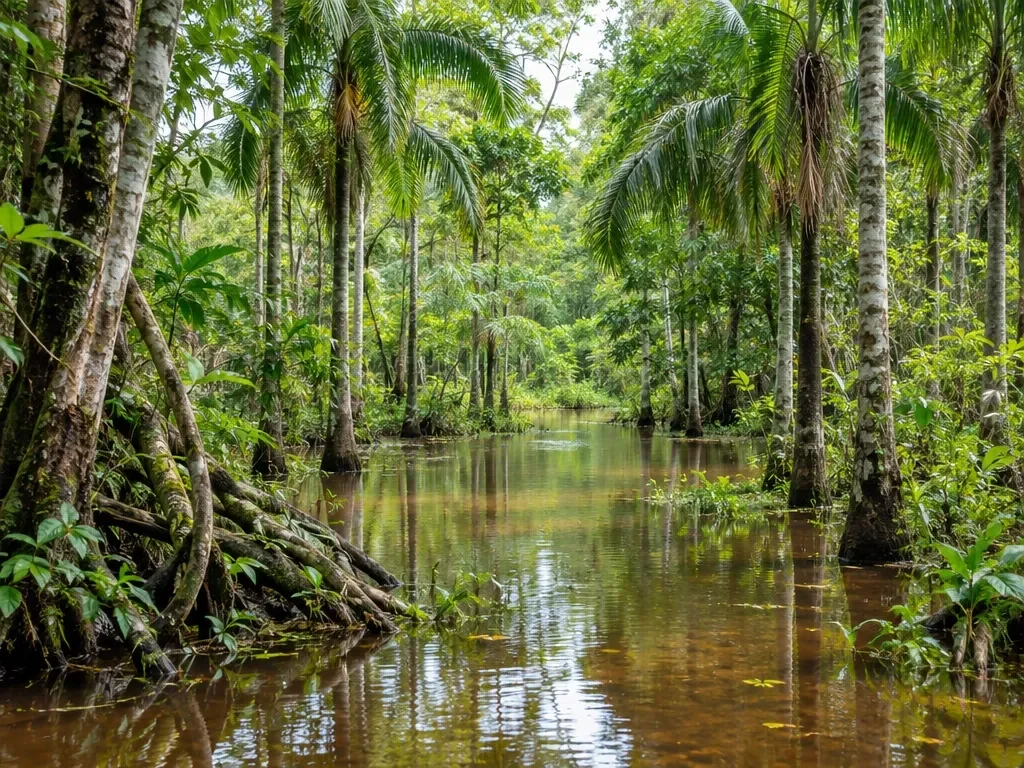
A forest of aguajales and renacales
MINCETUR’s official inventory places Tingana along the lower Avisado before it joins the Río Mayo. Aguajales here are palm swamps; renacales are associated with renaco trees. The inventory also describes ferns, orchids, root formations and lianas along the canoe route. You are visiting a whole landscape. Notice the vegetation and the relationship between water and forest, including the moments when no animal appears.
Decide whether you mainly want to experience the wetland forest or arrange a focused birding visit. For the latter, explain your interest: identification, photography or waiting longer in one place. A species list is background information, not an appointment with a bird or monkey. Let your guide explain what you see and hear. A rewarding visit can come from noticing things you would otherwise miss.
What a day programme actually includes
Tingana Experiences describes Conexión Natural as a day programme from Moyobamba with land and water transport, breakfast, lunch and local guiding. Its route combines a canoe outing or walk with Finca Don Pepito. This is that operator’s offer, checked on 31 October 2026; confirm the exact sequence and inclusions for your date.
The operator’s route sheet distinguishes the outboard-motor journey on the Mayo and Avisado from the later canoe visit. Put more than “boat trip” on your wish list. Ask which sections use a motorboat, canoe or walking, and where you change between them. The same sheet makes canoeing or walking dependent on the season. A canoe photograph does not establish how every departure will run.
Finca Don Pepito adds another perspective. The activity booklet lists vanilla growing, an orchid and bromeliad nursery, and a meliponarium with native stingless bees. Choose this element if you also want to understand what people grow here. Ask what will actually be shown on your date. Learning about a crop differs from harvesting it yourself or following an entire production chain.
Staying overnight changes the choice
The operator’s two-day Explorando la comunidad offer lists bungalow accommodation, transport, local guides and meals according to the itinerary. It gives you a different distribution of time from the day outing. Ask which evening and morning activities are agreed and when you will return to your next accommodation. “Community” does not automatically mean sleeping in a family home here.
For a longer stay, read the separate activities too. The booklet includes an introduction to camera traps and reviewing previously recorded images. Its Huascawasi entry uses the words “sacred medicinal plants” and names ayahuasca among them. It also lists tasting drinks made with roots and plants, without specifying which plant goes into which drink. This does not establish ayahuasca ingestion, but it leaves the actual drink ingredients unclear. Have the organiser describe the specific content and included activities separately.
From Moyobamba to the reception area
The published route sheet starts with collection in Moyobamba, then Puerto Boca de Huascayacu and the river crossing. Have the organisation confirm the correct pickup point and port. A city office address is not a forest landing point. Agree the return to your hotel too. Treat arrival from or departure to Tarapoto as a separate journey, without inserting an unconfirmed tight connection.
Before the boat sections, ask how boarding works, who assists and which appropriately sized lifejackets are available, including for accompanying children. Describe any difficulty boarding or carrying bags specifically. A package description does not assess your personal situation. Have the operator explain the actual arrangements; this guide does not certify a boat, equipment or participation as suitable for you.
Where does Tingana fit in your trip?
While staying in Moyobamba, I would choose Tingana if the river and wetland forest are your main interest. Waqanki has a different emphasis: plants, a garden and focused bird interest. Our Moyobamba guide helps compare those choices. Avoid automatically squeezing both into one day. With limited time, one clearly chosen visit can offer more than two partial introductions separated by more travelling.
ADECARAM, the Asociación de Conservación de Aguajales y Renacales del Alto Mayo, describes itself as the local association behind Tingana. Use its own information or the official referral to Tingana Experiences to identify your hosts. When using an intermediary, have it name who receives you and confirms route changes. You then know who you are making arrangements with, without treating the conservation label as proof about every individual service.
A useful confirmation tells you more than “Tingana full day”: where you start, which boat and walking sections are agreed, what you will explore and where you finish. Then leave room to really observe. The wetland forest need not follow a checklist to make the journey worthwhile.
Places to stay in Moyobamba
Compare accommodation locations in Moyobamba as a city base for your visit to Tingana.