
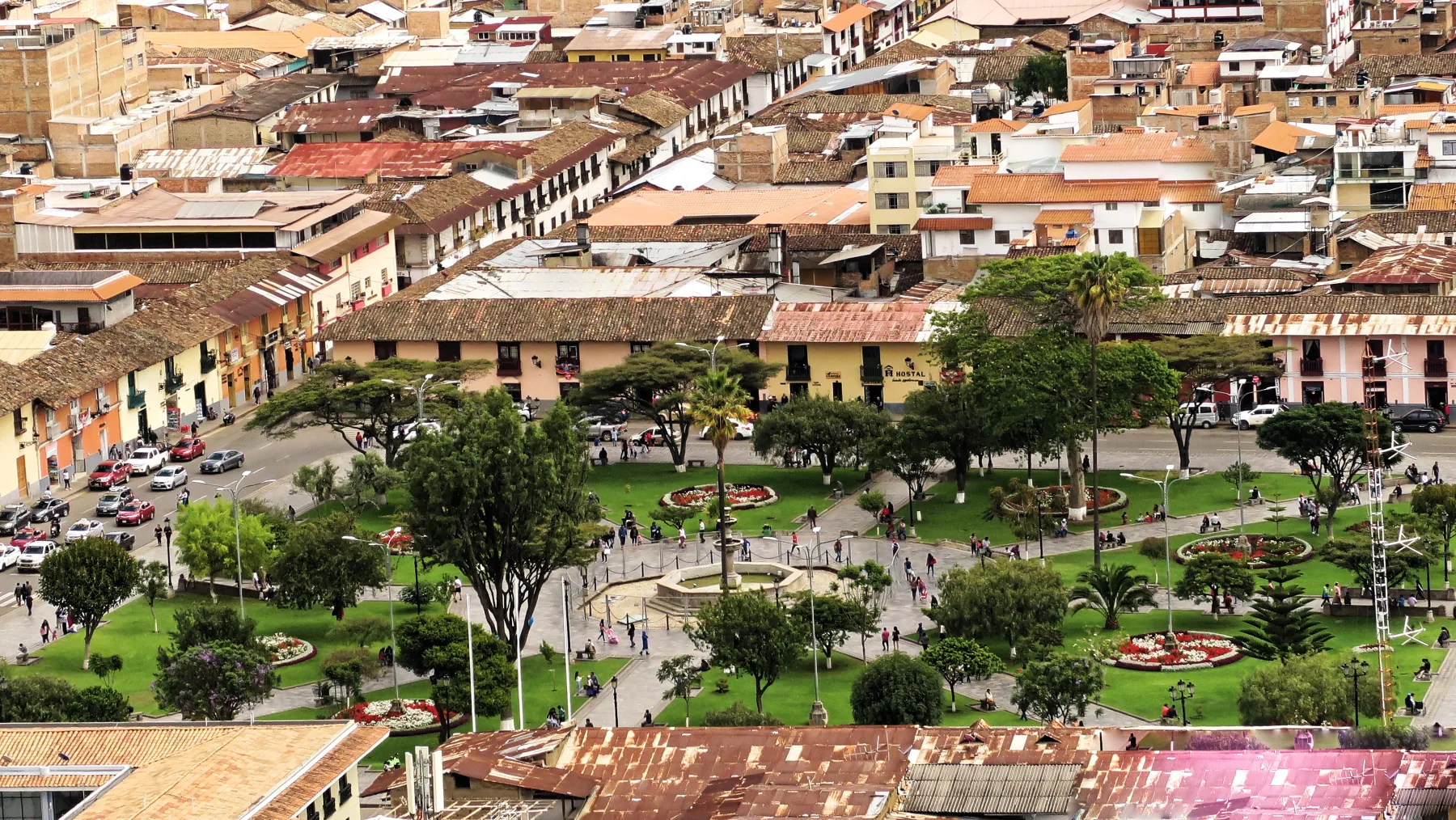

Around Cajamarca’s Plaza de Armas, your eyes soon drift upwards. The cathedral and San Francisco church face the square, with a carved stone fountain in the middle. Up close, the stonework deserves a longer look. Niches, columns and plant motifs fill the cathedral façade, including grapes among the ornament. A church front can take up a fair part of your walk here.
Several histories sit behind that townscape. Cajamarca is associated with the capture of the Inca ruler Atahualpa, as well as colonial religious buildings and the everyday culture of the surrounding region. The Cuarto del Rescate and the Belén complex give those subjects separate settings. They tell different stories.
The square and Santa Catalina’s stonework
The cathedral is also known as Santa Catalina. Its official heritage description identifies volcanic stone and a richly carved front. Look at the way columns and niches divide the façade, then at the smaller shapes between them. That gives a walk around the square more substance than a distant photograph of the whole church. San Francisco on the same square is a separate building; the two names do not describe a single complex.
San Francisco has its own carved façade with three entrances. Twisted columns stand out between the niches, with leaves, flowers and fruit worked into the stone. After the cathedral, look at which details you recognise in this front and which differ.
Atahualpa and the Cuarto del Rescate
The official inventory associates the Cuarto del Rescate with Atahualpa’s imprisonment. It offers a place to consider the encounter between the Inca ruler and the Spanish conquerors. The present roof is modern, and the openings at the front were altered later. Alongside the wider story, look at the stone walls and trapezoidal niches.
Belén: buildings and objects
The Conjunto Monumental Belén is a stone complex dating from the early eighteenth century. Its archaeological and ethnographic museum brings together objects from different periods of the region. Ceramics and textiles appear alongside items connected with farming and weaving. The visit therefore also concerns work and daily life in Cajamarca, rather than just the names of rulers.
At Belén, give both the building and its collection some attention. A façade tells a different story from a weaving tool or a ceramic object. Ask which rooms and parts of the complex will be open on your visiting day. The museum address appears in the practical questions below.
Stay in town and visit Cumbemayo separately
Accommodation around the centre suits a stay built around the square, churches and Belén. Compare the actual address with the places you want to visit and agree where any excursion will collect you. The existing map helps you compare locations; Cajamarca in a booking listing does not tell you how to get there from the square.
Cumbemayo belongs to a different part of your stay. Outside town, volcanic rock formations stand beside a channel cut into rock. Visiting involves both the journey and time on the site. Allow a separate half day or a full day according to the outing you arrange, leaving room between your return and an onward bus or flight.
Questions about staying in Cajamarca
What can I do without an outing outside the city?
The Belén complex museum has a specific Cajamarca address: Jr. Belén 571. Plan it as an urban visit, checking opening for your date.
Is Cumbemayo in the centre?
No. It involves a road journey from Cajamarca followed by a site visit. Plan those as separate parts.
Places to stay in Cajamarca
Compare the locations of places to stay in and around Cajamarca.
Where is it?
Cajamarca and the surrounding area.